In this article, we explore the definition of a floor plan, its importance in architectural design, the types of floor plans found today, and we teach you how to read a floor plan, step by step!
A floor plan is a fundamental element in the field of architecture and interior design. It consists of a technical drawing that represents in a detailed and precise way the spatial distribution of an environment or building on a horizontal plane, seen from above. In this article, we explore the definition of a floor plan, its importance in architectural design, the types of floor plans found today, and we teach you how to read a floor plan, step by step!
Humanized floor plan of a single-story house with 3 bedrooms. Source: Tanzania Project/ArchShop
A floor plan is a fundamental element in the field of architecture and interior design. It consists of a technical drawing that represents in a detailed and precise way the spatial distribution of an environment or building on a horizontal plane, seen from above.
The floor plan is created based on specific measurements and scales, allowing a clear visualization of the dimensions and proportions of the rooms, walls, doors, windows, and other structural elements present in the project. This type of graphical representation is essential for understanding the layout and functionality of a space even before its construction.
It is considered one of the main documents of an architectural project. It is used both for the initial conception of the building and to guide the execution of the work. In addition, it is fundamental for the structural project, electrical and plumbing installation projects, HVAC, and other systems that make up the space's infrastructure.
The floor plan can have different levels of detail, depending on the stage of the project and the purpose of the drawing. It can include elements such as furniture, equipment, precise measurements of each room, arrows indicating circulation flows, and even symbols representing the materials to be used.
Through the floor plan, it is possible to analyze the arrangement of the rooms, the interconnection between them, and the flow of people within the environment. This allows the architect to evaluate functionality, propose space optimization solutions, and anticipate potential problems before the project's execution.
The importance of the floor plan in architecture
The floor plan performs several important functions in architectural design, being the basis for creating a functional, comfortable, and aesthetically pleasing environment. Some of these functions include the distribution of spaces, the definition of circulation, and the consideration of ergonomics.
The distribution of spaces is one of the main concerns in the conception of an architectural project. The floor plan allows the architect to visualize and plan the arrangement of rooms, environments, and service areas, taking into account the needs and preferences of the users. It allows determining the location of bedrooms, living rooms, kitchens, bathrooms, offices, and other areas according to their functionality and interrelation.
In addition, the floor plan also helps in defining circulation within the architectural space. The arrangement of doors, corridors, and passage areas is strategically planned to allow a fluid and efficient circulation between the different spaces. The floor plan takes into account accessibility, the connectivity between environments, and the arrangement of elements that facilitate movement, such as stairs, elevators, and ramps.
Another important aspect is ergonomics, which refers to the study of the relationships between users and the built environment. The floor plan is used to ensure the comfort and usability of the spaces, considering factors such as adequate dimensions of the rooms, harmonious proportions, positioning of furniture and equipment, natural and artificial lighting, ventilation, and acoustics. Through the floor plan, it is possible to plan the correct positioning of elements such as doors, windows, and access points to public services.
Types of floor plans
There are several types of floor plans used in different contexts. Here are the 3 most common types: humanized floor plan, technical floor plan, and digital floor plan.
Humanized floor plan of a ready-made single-story house project with 2 suites. Source: Nevada Project/ArchShop
Humanized floor plan
The humanized floor plan is a graphical representation of an environment or house, being more illustrative and less technical. It is often used in interior design projects to communicate ideas and concepts to clients in a more visual and understandable way. The humanized floor plan usually includes decoration elements, textures, and color indications, providing a more realistic representation of the final space.
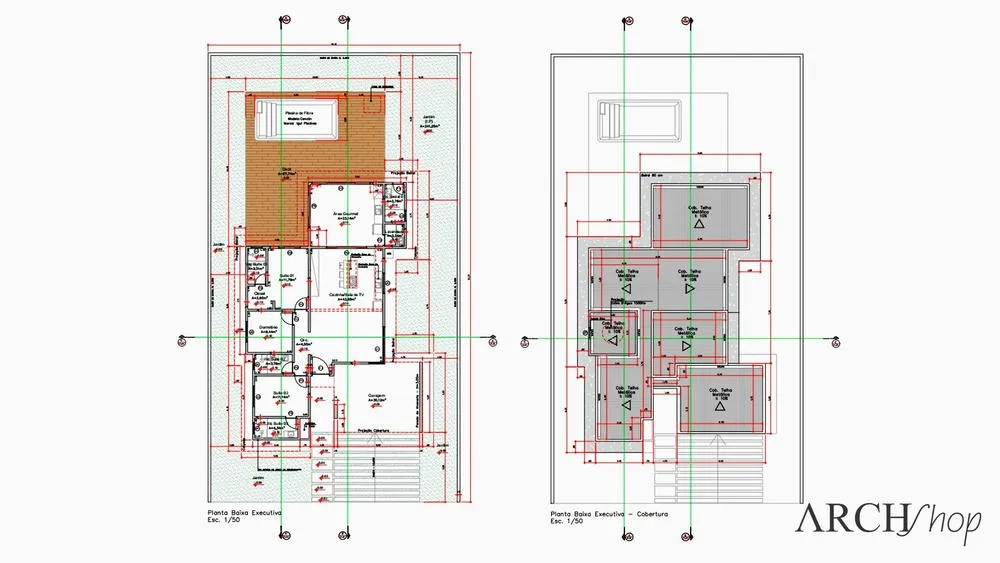
Executive floor plan of a ready-made single-story house project with 2 suites. Source: ArchShop
Technical floor plan
The technical floor plan is a more precise and standardized representation of an environment. It is prepared using technical drawing tools, such as rulers, set squares, and compasses, or with the help of software. This type of floor plan is used in architecture, civil engineering, and interior design to create a clear and detailed view of the space. The technical floor plan shows the arrangement of rooms, the location of walls, doors, windows, fixed furniture, and other important features. It is essential for planning the construction, renovation, or decoration of an environment, allowing a precise understanding of the space's dimensions and proportions.
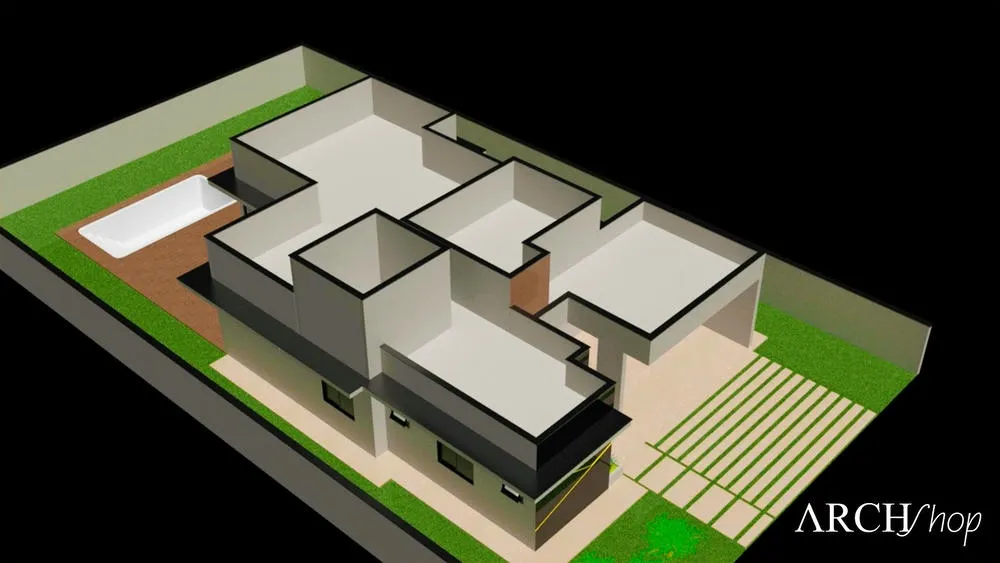
Digital floor plan for a 3D model of a ready-made single-story house project with 2 suites. Source: ArchShop
Digital floor plan
The digital floor plan is an electronic version of the technical floor plan. It is created using computer-aided design (CAD) software or three-dimensional (3D) modeling software. The digital floor plan is highly accurate and offers additional advantages, such as the ability to easily manipulate and modify the project, generate 3D visualizations, perform lighting simulations, and create realistic renderings. This type of floor plan is widely used in architectural projects, civil engineering, and interior design, as it allows for better communication between the professionals involved and a more immersive visualization of the final project.
It is important to note that, regardless of the type of floor plan used, the main objective is to provide a clear and understandable representation of the space in question. Each type of floor plan has its own characteristics and specific uses, but all play a crucial role in the planning and visualization of architectural and design projects.
How to read a floor plan?
When you first encounter a floor plan, it might seem like a tangle of indecipherable lines and symbols. However, understanding a floor plan is essential to comprehend the distribution of spaces in a building. Therefore, we will explain here step by step how to read a floor plan simply, even for those without prior knowledge in architecture.
First step: the scale
Before we start analyzing the floor plan, it is important to understand the scale used. Typically, floor plans are drawn on a reduced scale, such as 1:50 or 1:100, where each unit in the drawing represents a larger amount in reality. The scale is essential for understanding the proportions and dimensions of the represented rooms.
Second step: identification of rooms
Look at the title or legend of the floor plan to identify the different rooms represented, such as the living room, kitchen, bedrooms, bathrooms, etc. Each room will be indicated by a name or an acronym, making it easier to understand the overall layout of the building.
Third step: analysis of walls and divisions
Walls are represented by thick lines on the floor plan. They define the shape and size of the rooms. Exterior walls are usually represented by thicker lines compared to interior ones. Pay attention to walls of different thicknesses, as they may indicate structural elements, such as columns and beams.
Fourth step: doors and windows
Openings, such as doors and windows, are symbolized by lines with different shapes and sizes. Doors are represented by rectangular lines, while windows can have different shapes, depending on the type. Observe the symbols and indications near the openings to understand their dimensions and characteristics.
Fifth step: complementary elements
In addition to walls, doors, and windows, floor plans may feature other complementary elements, such as stairs, bathrooms, service areas, among others. Each of these elements will have its own symbol or specific indication on the plan. Look for the legend or the corresponding symbol to identify them correctly.
Sixth step: arrows and indications
Arrows on the floor plan indicate the north orientation and can help to understand the position of the rooms in relation to the external environment. In addition, there may be indications of measurements, such as the length and width of the rooms. Pay attention to this information to get a more precise idea of the space available in each room.
Conclusion
With these simple steps, you will be better prepared to understand a floor plan and interpret the essential information about the distribution of rooms in a building. Remember that practice is fundamental to improving your ability to read floor plans. Therefore, do not hesitate to practice with real examples and explore other sources of knowledge to delve even deeper into this fascinating universe. In general, the floor plan is an essential graphical representation in architecture, providing detailed information about the spatial distribution of an environment or building. It is a fundamental document for the conception, planning, and execution of architectural projects, allowing a clear and precise visualization of the space before its construction.
ArchShop is redefining the concept of residential architecture in Brazil, making high-quality projects accessible to everyone. Combining over 20 years of expertise in the construction sector with technological innovation, the company offers a complete digital platform that simplifies and democratizes the process of building the dream home.
We believe that the best ideas arise from the exchange of experiences and the sharing of different perspectives. Open the doors to new opportunities and be part of our blog! If you have an interesting article, an amazing work, a product or service that deserves to be highlighted, contact us.