Vernacular architecture can be understood as an architectural expression of certain local peoples and communities. Built by the residents themselves using traditional techniques, it uses materials available in the region to create a completely ecological system. It is the oldest architectural method in the world.
With the accelerated development of large cities and the urgency of sustainable discussions, vernacular architecture is being revisited by professionals in the field. It is now considered a viable option for creating sustainable projects that are more connected with nature.
In this article, we will delve into the origin of vernacular architecture, its historical development, and the main characteristics for identifying this type of construction.
Vernacular architecture can be understood as a particular architectural expression of a certain people. Dispensing with architects and other legally qualified professionals, it reinforces the idea of a local cultural identity. It works with traditional techniques passed down from generation to generation and uses materials from the region itself. It is the oldest architectural method in the world.
As it is an extremely plural concept, vernacular architecture cannot be summarized in the same way as other architectural styles. Its materials and characteristics vary, which makes a general definition similar to other types of architecture difficult. Its breadth even causes occasional debates among professionals and scholars in the field.
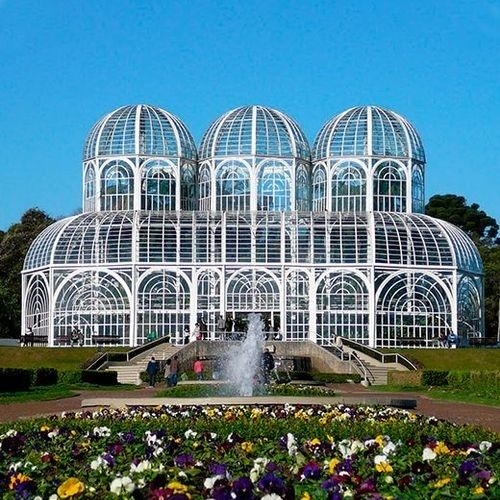
Paul Oliver, an important historian of English architecture, argued that the concept of vernacular architecture is better understood when exemplified, not defined. Let's use, therefore, the igloos of the Arctic and the Cathedral of Campinas as two examples of vernacular. The disparity is clear when we place them side by side - but, still, they are not buildings with vernacular systems.
Directly influenced by the climatic, geographical, cultural characteristics, and local biodiversity, we have in vernacular architecture numerous construction manifestations. Present around the world and faithful to their respective regions, they often share similarities with other architectural concepts. This overlap of concepts further reinforces the disagreements among scholars and keeps the discussion about its definition alive.
A good starting point for talking about vernacular architecture is the etymology of the word. We know that the term architecture comes from the Greek arkhitekton (or “science of construction”), but what is the meaning of vernacular?
According to Oxford Languages, vernacular comes from the Latin vernaculus, which means native. This is a linguistic term used to describe the particular languages of each region or country. In architecture, it comes to represent local buildings, without foreign influences. It is the architectural language loaded with dialects and regional traits, therefore, the "native science of construction".
In his 2006 book Built to Meet Needs, the historian Paul Oliver sketches a possible definition of this architectural method. “All types of buildings made by people in tribal, folk, peasant, and popular communities, in the absence of architects or other specialists”. The title of the book, in fact, explains very well the main objective of a vernacular.
In free translation, “built to meet needs” effectively summarizes the purpose of this type of construction. Aligned with the environmental aspect, vernacular architecture prioritizes functionality, practicality, and the essential demands of its residents. It is basically born to serve as a shelter and to help with protection. Its format is the opposite of what we know as high architecture, which praises, on the other hand, design and aesthetics.
Vernacular construction also establishes a friendly relationship with the environment. In this relationship, the vernacular builder is seen as part of the ecosystem and, therefore, responsible for modifying it respectfully. There are no ulterior motives or objectives that deviate from its essence, making this a peaceful exchange.
The environmental dynamic is also present in the materials used in the work, since all of them are natural and collected from the place itself. The organic aspect makes the materials perishable and subject to the action of time. Therefore, they can be returned to nature as soon as the construction is no longer useful.
Speaking of sustainability, it is evident that the vernacular system is full of ecological factors. This is one of the most promising architectural models in this regard. Not surprisingly, many professionals today seek inspiration in vernacular architecture for their plans. Through the recent wave of sustainable constructions, vernacular techniques have gained space and have become more valued.
We will see in the next topic that this appreciation has not always existed. Contrary to it, discussions about vernacular architecture began in a derogatory way, being seen as inferior to other architectural models.
History of vernacular architecture
The history of vernacular architecture follows the history of human evolution from a very early stage. Still in Prehistory, the great advances generated by the Neolithic Period made possible the transition from a nomadic to a sedentary lifestyle. This transition generated significant consequences, which influenced the creation of the first villages and the construction of fixed dwellings.
Such dwellings, as we can deduce, would be the first examples of vernacular constructions in history. Their buildings sought more resistant structures than the previous ones, starting to use everything from stones and clay to wood and foliage. The materials were collected from the place itself and the construction techniques - developed empirically - were later shared among family members.
One of the factors that contributed to the strengthening of sedentary life in the Neolithic Period was the growth of agriculture. The availability of food in a fixed and secure way made a definitive stay possible for nomadic peoples. This period is also referred to as the Neolithic Revolution for originating changes still seen in our daily lives.
As for vernacular architecture, it is said that a large part of the buildings prior to the mid-17th century were built using this method. This is because there was no formal teaching on the subject until then, nor professionals in the field.
Despite being prehistoric, vernacular architecture took a long time to be seen as an object of study. In fact, it was only in the second half of the 19th century that the first academic mention of the subject appeared. And, as we indicated at the end of the previous topic, it was not the most positive.
The term "vernacular" is used for the first time in architecture in 1857, by the English architect George Gilbert Scott. In his book Remarks on Secular & Domestic Architecture, Present & Future, he exposes his point of view on the vernacular constructions of the time.
Being an active part of the neo-Gothic architectural movement, Scott saw vernacular manifestations as inferior to the style he was trying to disseminate.
Treating the concept with a pejorative connotation, he criticized the style of English vernacular architecture and argued that it was “unworthy” of the civilization of that period. His main disagreement was with the so-called "spontaneous" constructions, in which "no external influence was exerted". He praised, however, the nobler vernacular manifestations.
The first signs of appreciation for vernaculars appeared only in the 20th century. One of the episodes responsible for this turning point occurred in 1964, at the MoMA.
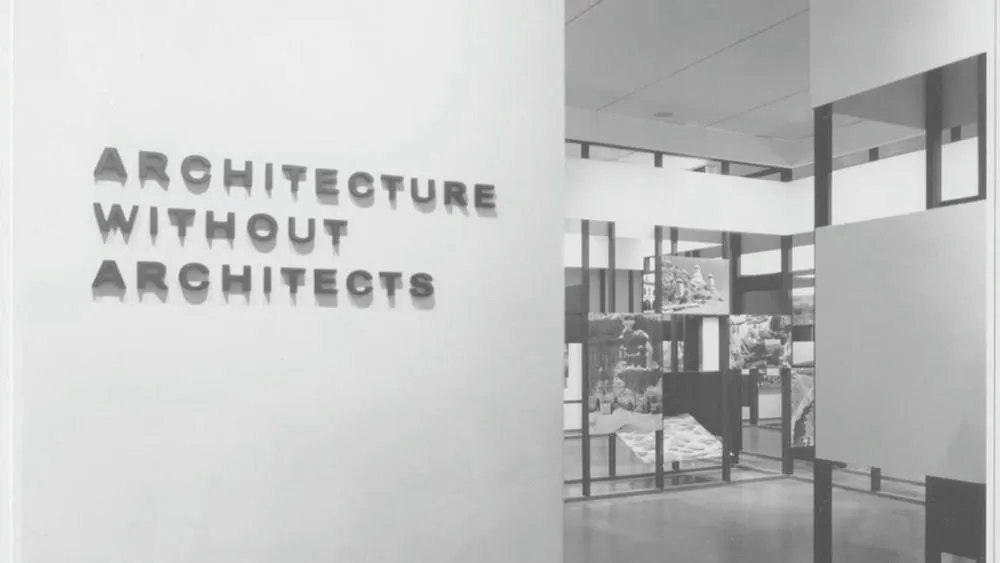
Designed by the architect Bernard Rudofsky, the exhibition Architecture Without Architects was composed of 200 black and white photographs. In the photographs, records of vernacular manifestations found around the world. Its objective was to break the limitations of the construction arts, introducing the world of "non-pedigreed architectures".
For the architect, vernaculars were the result of spontaneous and continuous activities. Their builders shared a common origin and had no formal specialization in the subject. He argued that this type of architecture brought tangible evidence of more humane and intelligent ways of living.
The cities produced by vernacular techniques were now seen as utopian representations of society. What was once seen as archaic was now read as a functional and time-resistant solution.
“Furthermore, there is an instinctual understanding in this kind of architecture that we do not have today. Vernacular builders do not risk the general well-being in pursuit of profit or progress. They know that progress that does not take into account human needs is self-destructive.” (Bernard Rudofsky, 1964 - our translation)
Despite being heavily criticized, the exhibition became one of the most successful in the history of MoMA.
It wasn't long before vernacular aspects began to be identified in new architectural movements. Frank Lloyd Wright, for example, was a great admirer of vernaculars. Through them, he established the concept we know today as organic architecture. An architecture inspired and idealized as part of nature.
Wright saw vernacular architecture as popular constructions adapted to the environment. Their builders had no professional knowledge and acted in response to the needs of the community. For this reason, the constructions were shaped in a natural and native way.
In addition to Wright, other architects also expanded their fields of study and saw new forms of development in vernacular architecture. Among the most diverse motivations, sustainability was one of the great highlights. This was the period when environmental concern gained strength in the world. In 1972, mainly, through the Stockholm Conference held by the UN.
Despite being more valued today, vernacular architecture still carries some historical marks. A popular sense was created that certain constructions are more legitimate and accepted than others. In the vast majority of cases, the vernacular is read as “illegitimate”.
In addition to recognizing the sustainability of this architectural method, it is equally important to evaluate its historical importance. Vernaculars represent the various local peoples around the world and record the climatic, geographical, and cultural aspects of their regions.
Characteristics of vernacular architecture
We have seen throughout the article that vernacular architecture is multiple and cannot be standardized by specific characteristics or materials. Even if this statement is true, we can still identify it through other more generalized aspects that do not threaten its plurality.
Below we list some of the main characteristics of vernacular architecture and how they are found in these buildings.
Identity
Vernacular architecture is the cultural identity of local peoples.
With the help of the etymology of the word, we learned that vernacular is a linguistic term that seeks to designate the language of local peoples. When used by architecture, it begins to see buildings also as a language. They represent the ethnic, regional, and local values of their creators.
In other words, vernaculars become a symbol of local peoples because they carry cultural aspects in their construction. Architectural manifestations occur exclusively for each community, generating a unique identity found only in similar regions.
Absence of professionals
Vernacular architecture is architecture before the architect.
As we have already highlighted earlier in the article, one of the major factors that differentiate vernacular architecture from other “styles” is the absence of architects. This is one of the definitive points for recognizing when a building is vernacular or not.
The construction processes of a vernacular arise empirically, through builders without formal knowledge in the area. They learn the construction methods based on observation of the place and the materials available in the region. There is no official planning because there is no standardized discipline for this method, much less a pre-defined architectural project.
Tradition
Vernacular techniques are part of a people's tradition.
In the absence of architects, local peoples develop vernacular solutions that serve the community and respect the environment. In the long run, these solutions become a tradition for that people, who pass on their construction techniques as a heritage to the next generations.
Its traditional character also reaffirms the local cultural identity, further stimulating the historical importance of vernaculars in the world. It is a mistake, therefore, to try to classify constructions according to their format, technology, or durability. Tradition and cultural contexts are the real determining factors.
Plurality
Vernacular manifestations are plural and found all over the world.
Vernacular architecture has accumulated over the years an extremely wide variety of materials and construction techniques. Found in all parts of the world, the buildings reflect the peculiarities of each region and are developed with maximum adaptation to the environment.
Its diversity is born according to the geographical, climatic, and cultural characteristics of the place. The materials used and the construction techniques vary according to the availability of the region. For each location, there is a different combination of elements. The standardization of this type of architecture is, therefore, mistaken, since its plurality does not fit into a single description.
Sustainability
All vernacular architecture is sustainable, but not all sustainable architecture is vernacular.
The ecological aspect of vernacular architecture is not the determining factor for its construction. In fact, it is the consequence of the survival activities of that people.
Vernacular builders make the environment the main influence in the execution of the house. Integrated into the ecosystem, they modify it only when necessary. This characteristic openly influences the social organization of the community and its low housing cost.
The sustainable factors of vernacular architecture have transformed it into a beneficial resource for the future - especially with the strengthening of environmental discussions. As early as 1997, the historian Paul Oliver pointed to vernaculars as a solution for cultural and economic balance. For him, all forms of vernacular meet specific needs and accommodate the values, economies, and ways of life of diverse cultures.
Examples of vernacular architecture in the world
Throughout the article, we understood that the results of vernacular architecture depend essentially on the place where it is inserted. The climatic, geographical, and cultural characteristics of the region are directly influential and determine the materials and techniques to be used. In the examples below, we highlight the differences between some of the vernacular constructions scattered around the world.
Igloo
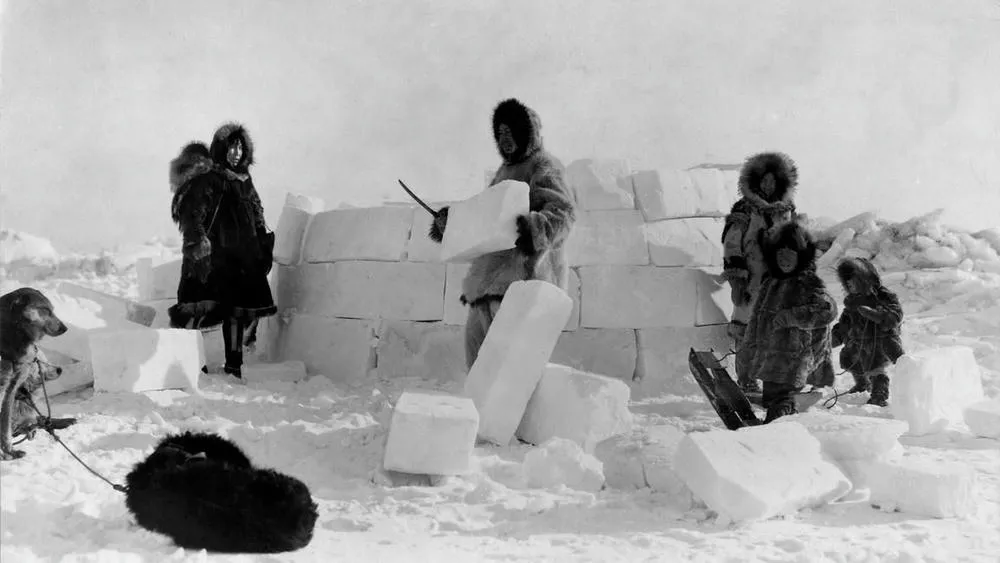
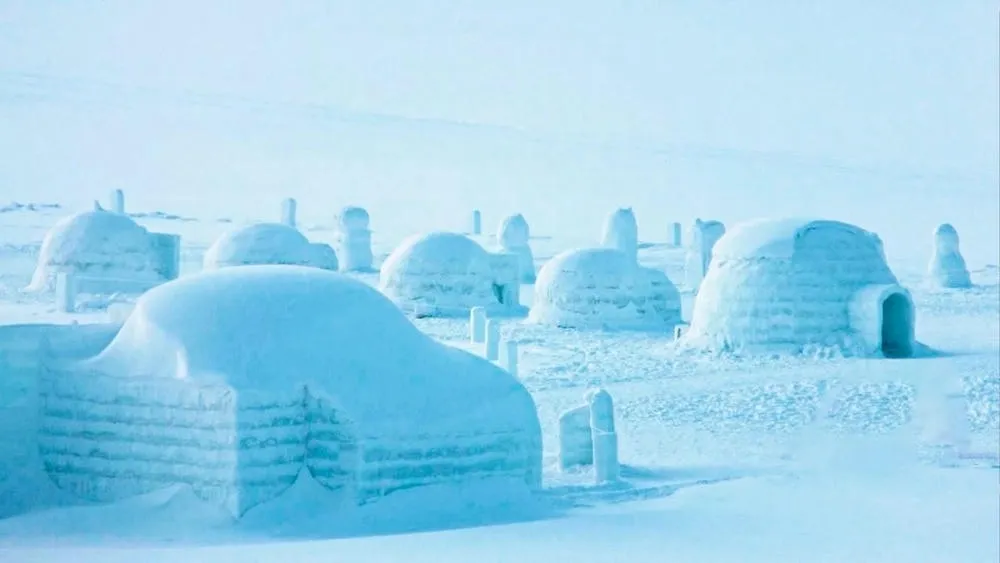
Igloos are vernacular housing built by the Inuit indigenous nation. Also called “snow houses,” they are found mainly in the Central Arctic regions, Canada, and Greenland and have existed for centuries. They can be used by residents temporarily or permanently, for hunting, or as a fixed family residence. They are found in different sizes and can shelter about 20 people.
The material used in the construction of igloos is one of its great characteristics. Composed basically of snow blocks, it generates thermal insulation that keeps its interior warm. Variations of this technique can be found among other Inuit peoples, depending on the region. One of them, for example, includes covering with animal skins on the interior of the building.
Its external design also draws attention and is another of its great characteristics. Designed in a dome shape, its objective is to avoid the accumulation of snow on top of the house. The rounded shape ensures that unwanted weights do not threaten its structure. Vernaculars tend to be functional constructions that prioritize the demands of residents. Igloos are a great example of this system, in addition to also reflecting the climatic, geographical, and cultural needs of their region.
Great Mosque of Djenné
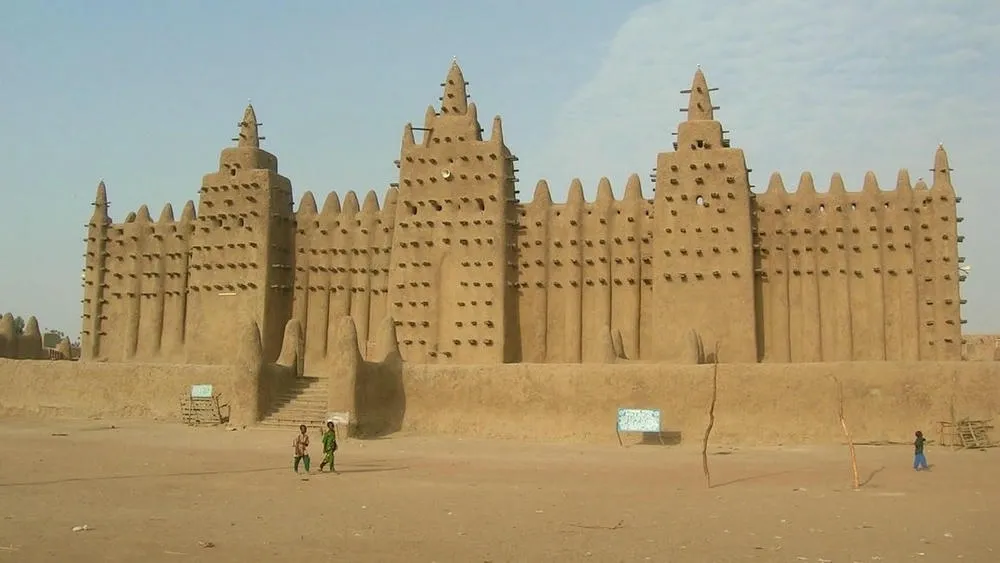
The Great Mosque of Djenné is the largest adobe building on record in the world. Approximately 16 meters high, it is located in Mali and was designed by King Koi Konboro. Documents suggest that its construction took place between the 13th and 14th centuries, but there are no records that point to a precise date.
Throughout history, political, ideological, and climatic conflicts have led the mosque through a series of changes. It was demolished at the beginning of the 19th century and rebuilt at the beginning of the 20th century. The organic nature of the material used also contributed in this sense.
The adobe bricks were made in an artisanal process and applied in a rudimentary way. In the composition, they included clay, straw, manure, and other natural components. For many scholars, the mosque is the greatest architectural manifestation of the Sudano-Sahelian style in the world. Still active today, it relies on the help of the entire community for an annual maintenance of its structure. It is one of the most important landmarks on the African continent and was declared a World Heritage Site by UNESCO in 1988.
Tulou
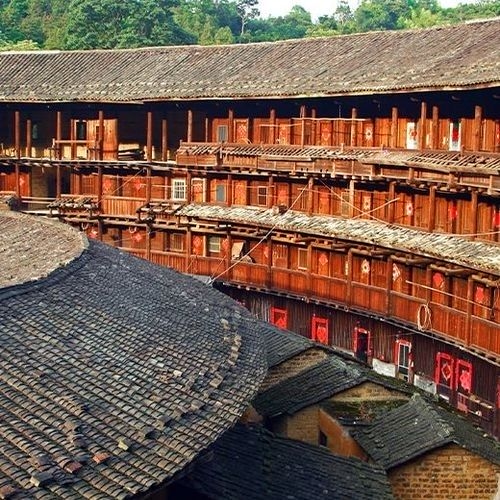
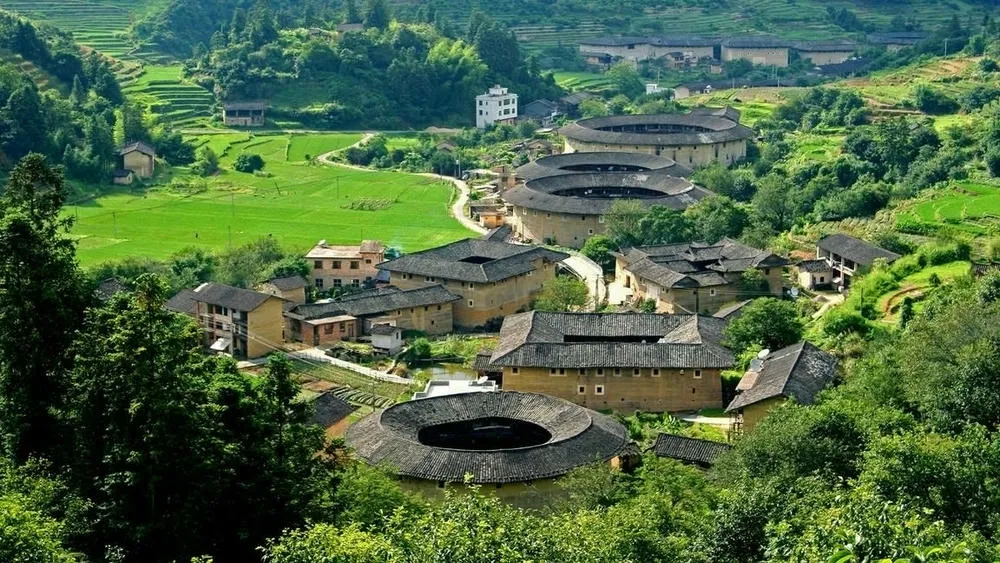
Sheltered in the southeast of Fujian province, tulous are traditional rural constructions of the Chinese Hakka people. Built in the midst of rice, tea, and tobacco fields, they date from the 12th to the 20th centuries and are built mainly with compacted earth. Their dimensions allow them to accommodate about 80 families, making the construction a community environment.
The shape and height of the tulous stand out when seen from a distance. Commonly circular or rectangular, the constructions can reach 3 to 5 stories. They have thick walls and a fortified bearing - a result of the materials used in the work. Stones, wood, and bamboo are some of the components that make up this building.
In tune with the climate and the mountainous relief of the region, tulous are designed in light and well-ventilated structures. They protect residents from earthquakes and adjust to external temperatures: it is warm in winter and cool in summer.
In 2008, 46 tulou constructions were added to the list of World Heritage Sites by UNESCO. According to the organization, tulous are notable examples of a harmonious relationship with the environment. The sense of equity among residents is reflected in the architecture itself. The residences are divided equally and the circular format preserves the traditional spirit of community.
Turf houses
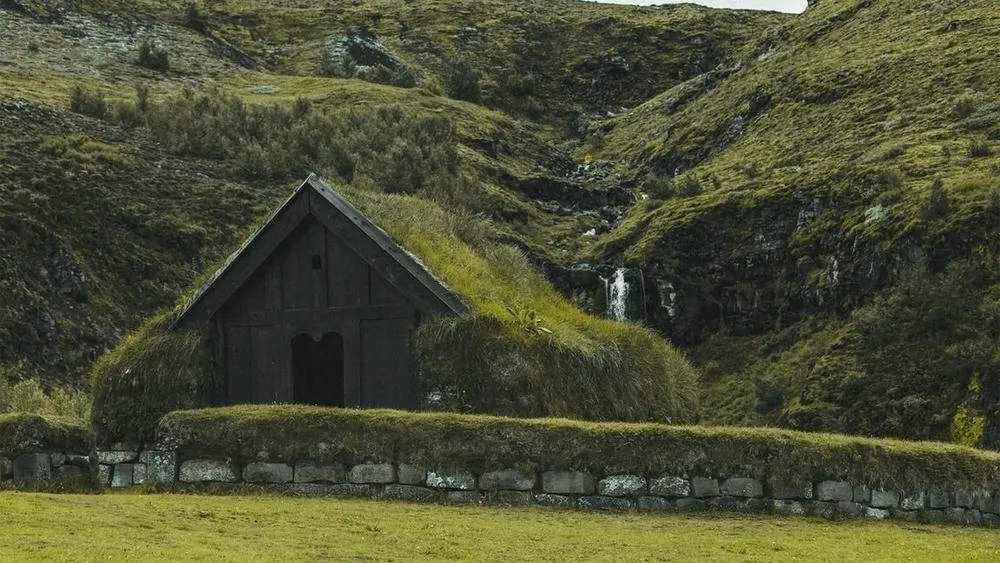
From the Icelandic torfbæir, turf houses are traditional vernacular constructions of Iceland and have been scattered throughout the country for centuries. Their historical context begins with the Viking colonization in the mid-9th century, which accelerated the deforestation of birch trees. Corresponding to 30% of the island, they acted as the main raw material for the construction of houses.
Given the scarcity of materials, the inhabitants were forced to look for new construction solutions. The mountainous relief and the icy Icelandic climate required the buildings to have thermal insulation and to follow their geographical characteristics. Turfs came as an answer to this search. Abundant in the region and with great construction potential, they were quickly adopted for the new Icelandic architectures.
Turf is a plant material produced organically by the partial decomposition of other plant remains. The most traditional turf houses were built with a stone base, then covered with turf walls and more stones. The roof was covered with grass and the decorative facade was made of wood.
Turf houses could have different materials and construction techniques depending on the region. With the addition of turf, the constructions guaranteed the desired thermal insulation and escaped the severe island climate.
ArchShop is redefining the concept of residential architecture in Brazil, making high-quality projects accessible to everyone. Combining over 20 years of expertise in the construction sector with technological innovation, the company offers a complete digital platform that simplifies and democratizes the process of building the dream home.
We believe that the best ideas arise from the exchange of experiences and the sharing of different perspectives. Open the doors to new opportunities and be part of our blog! If you have an interesting article, an amazing work, a product or service that deserves to be highlighted, contact us.