Interior design is an area of architecture that focuses on creating functional, attractive, and harmonious environments in indoor spaces. It involves the selection of materials, colors, furniture, and other decorative elements to create and transform the atmosphere of environments. The ultimate goal of interior design is to develop rooms and spaces that meet the needs and desires of users. In this article, we will explore in more depth what interior design is, its importance in the architectural project, and the differences between it and architecture.
Interior design is a discipline concerned with the creation and planning of indoor spaces. It seeks to develop functional, pleasant, and safe environments for human occupation. It is a practice that involves the organization and configuration of architectural elements. This includes the selection and application of materials, colors, textures, lighting, furniture, and accessories. The composition aims to improve the quality of life and well-being of the users of the space.
Interior designers work on a wide variety of projects, including residences, offices, shops, restaurants, hotels, hospitals, schools, among others. They use their technical and creative skills to create more attractive and efficient spaces. The goal is to meet the needs and preferences of clients, applying intelligent and practical solutions.
In addition, interior designers must make spaces more accessible and follow safety standards. Environmental and sustainable issues can also be taken into account for a more appropriate project. They must work in close collaboration with other professionals to ensure that the project is executed in the best possible way. Collaboration between architects, engineers, and contractors can also help keep the project within budget.
Interior design emerged in response to the growth of urbanization and the need to design efficient and comfortable indoor spaces. Initially, architects were responsible for designing both the external and internal structure of a building. However, as architecture became more complex and buildings larger, a specialization in interior design became necessary.
The modernist movement of the early 20th century was responsible for promoting interior design as a separate discipline. The modernist style emphasized the functionalism and simplicity of spaces. This influenced how interior designers thought about the use of environments. The emergence of new materials and technologies made it possible to create new solutions for interior projects.
Since then, interior design has constantly evolved and follows the trends and innovations of design and technology. This field of activity can be found in a variety of spaces, from residences to offices, hotels, and shops. Interior designers create environments that reflect the personality and lifestyle of clients. Their plans take into account ergonomic, sustainable, and accessible issues.
In short, interior design is the art and science of designing and planning indoor spaces. It is concerned with the aesthetic and functional form of environments and aims to improve people's quality of life.
What is the briefing in interior design?
The briefing is a fundamental part of the interior design process. It is the first stage of the project, where the professional gathers information about the client's needs and preferences and the space. The briefing is an opportunity for the designer to understand the client's expectations and determine the goals and objectives of the project. Some of the most common questions asked in the interior design briefing process are:
What is the objective of the project?
What is your preferred design style?
What are the colors, textures, and materials you like?
What is the available budget for the project?
What is the function of the space?
What are the limitations of the space (areas with little natural light, lack of space, etc.)?
Based on the client's answers, the interior designer can start developing ideas and concepts for the project. It is important that the briefing is detailed and that all information is recorded. They will serve as a reference for the creation and development process. The development of a plan for the project happens after collecting the information. The plan includes the preferences cited by the client and the technical and budgetary requirements for the execution of the work. It must take into account the limitations of the space and seek creative and innovative solutions to meet the client's needs.
In short, the briefing in interior design is a crucial part of the entire process. It allows the professional to obtain important information about the client's needs and preferences and the space. It is an important opportunity to ensure that the project is successful and meets the client's needs.
What does an interior designer do?
An interior designer is a professional who works with the creation and planning of indoor spaces. The function of an interior designer is to create pleasant, functional, and safe environments for their clients. They work on projects that involve the organization and configuration of architectural elements. They select and apply materials, colors, textures, lighting, furniture, and accessories.
The fields of activity for an interior designer are diverse. They include residential projects for houses and apartments and commercial projects for shops, restaurants, bars, and offices. They can also work in the corporate sector, designing companies and industries, in hospitals creating clinics and consulting rooms, and in hotels designing hotels and resorts. In addition, professionals can participate in the development of more specific areas. Sustainable projects, luxury projects, that prioritize accessibility, among others.
Interior designers need to have a wide range of skills and knowledge to execute projects. Communication, technical drawing, project management, knowledge of materials and suppliers are some of them. It is also important that the professional is up-to-date on market trends and innovations. Collaboration with other professionals is also essential to ensure a safe and efficient project.
In short, an interior designer is a highly qualified professional who works on creating indoor spaces. They are concerned with planning attractive, functional environments that meet the needs and preferences of clients. The fields of activity are varied and are part of people's daily lives.
What is the importance of interior design?
Interior design is an area that has been gaining more and more importance in the context of architecture and civil construction. People have been increasingly looking for beautiful, comfortable, and functional environments, capable of meeting their needs. This search was directly affected by the COVID-19 pandemic, which changed the way indoor spaces are perceived. With more people spending more time at home, interior design has become even more important. It ensures more comfortable, functional, and safe rooms.
Interior design, in this context, assumes a fundamental role. It is the one largely responsible for thinking about all the aspects involved in creating an environment. It must take into consideration everything from the choice of colors, textures, and materials to the layout of the furniture, lighting, and acoustics of the space. In addition, a good interior design project can bring numerous benefits, both for the client and for the environment.
First, it is important to highlight that interior design is essential in valuing the property. This is because a well-planned and decorated environment can make the space more attractive and valued in the market. In addition, it can contribute to improving the quality of life of the people who use the environments. The choice of appropriate materials and furniture can provide more thermal, acoustic, and visual comfort, making the project more pleasant and functional.
Another important aspect is that interior design can contribute to the optimization of space and the improvement of its functionality. The arrangement of furniture and the choice of decorative elements can directly influence the circulation areas. In addition, the development of design for indoor spaces can create personalized environments that reflect the client's personality. This can be done through the composition of colors, textures, and materials. The choices must be compatible with the tastes and preferences of the users, thus creating a more unique and exclusive space.
In short, interior design is a fundamental area for creating attractive, functional, and personalized environments. It contributes to the valuation of the property and to the increase in people's quality of life. The optimization of spaces is also possible in a well-articulated interior design project, creating unique and functional rooms. Therefore, it is important to consider and include interior design in the development of environments, ensuring that the spaces meet your needs.
Why buy an interior design project?
When thinking about building or renovating a house, attention is often focused only on the architecture and structure of the property. However, one aspect that can make all the difference in the quality of life of the residents is interior design. Therefore, in this topic we will answer the question: why buy an interior design project?
Personalization of space
An interior design project takes into account the needs, tastes, and lifestyle of the residents. Thus, it is possible to personalize each environment of the house, making them unique and reflecting the personality of those who live there. In addition, interior design can also be adapted to different stages of life: the growth of children, changes in routine, and aging.
Improvement in functionality
The interior design project is also responsible for ensuring that each environment of the house is functional and meets the needs of the residents. With a well-done plan, it is possible to make the most of the available space. It avoids waste of resources and creates intelligent solutions for problems such as lack of storage, inadequate lighting, among others.
Increase in comfort and well-being
Contrary to what many people think, interior design is not just about aesthetic issues. A good project also considers aspects related to the comfort and well-being of the residents, such as temperature, acoustics, lighting, and air circulation. All of this can make a big difference in the quality of life of the people who live in the house.
Valuation of the property
A well-done interior design project can also contribute to the valuation of the property. This is because it increases the comfort and functionality of the environments, making the house more attractive to those who want to buy or rent. In addition, a unique interior design can be a differential when selling the property.
Saving time and money
Finally, an interior design project can also help save time and money. With a well-done plan, it is possible to avoid errors and rework, reducing the costs of the work. In addition, by buying an interior design project, it is possible to have a clear vision of the final result, avoiding unpleasant surprises.
Buying an interior design project can bring many advantages and benefits for those who are building or renovating a house. It personalizes and improves the functions of each environment, increases the comfort and well-being of the residents, and helps in the valuation of the property. Therefore, if you are thinking about building or renovating, do not forget to consider including interior design in your purchase!
How to become an interior designer?
Interior design is a profession that seeks to create functional, aesthetically pleasing, and harmonious indoor spaces. Anyone can become an interior designer in Brazil, as long as they have the skill and interest in the activity. However, to practice the profession legally, proper training and registration are required. In Brazil, a degree in Interior Design or Architecture recognized by the MEC (Ministry of Education) is required. In addition, one must be registered with CREA (Regional Council of Engineering and Agronomy) as a technologist in interior design or architect.
The profession of interior designer is regulated in Brazil thanks to Law No. 13,369, sanctioned in 2016. According to the law, the professional can develop interior projects, specify materials and products, as well as manage works and renovations of indoor spaces. To become an interior designer, a diploma in the field and a professional registration are required. Architects can also be interior designers as long as they have a specialization in the field. It is important to remember that the attributions of each profession are specific and should not be confused.
What is the difference between architecture and interior design?
Architecture and interior design are distinct areas that are related to each other. Both involve the creation of habitable spaces, but they have different characteristics that distinguish them. The main difference is that architecture is responsible for the structure and overall form of a building. Interior design, meanwhile, focuses on the layout of indoor spaces, the distribution of furniture, and the style of the project.
Architecture is a broad area that involves the planning, design, and construction of buildings, structures, and public spaces. The architect is responsible for designing buildings and public spaces that are safe, functional, aesthetically pleasing, and sustainable. The architect's work involves studying the land, preparing plans and technical drawings, choosing materials, and coordinating the work.
The architect is responsible for thinking about the space as a whole. They take into account various related aspects, from the location to the environment in which the project will be inserted. They also take into account the function of the space, ventilation, natural lighting, safety, and accessibility. The architect can also be responsible for interior decoration, but this is not their main activity.
In interior design, on the other hand, we have a field that focuses on creating more pleasant and comfortable indoor spaces. The interior designer is responsible for creating environments that meet the needs and expectations of clients. They take into account aspects such as the lifestyle of the users, the budget of the work, and the aesthetic preferences.
The work of the interior designer involves the composition and distribution of internal elements. Choosing furniture, accessories, colors, materials, and lighting are part of their daily routine. The planning of the layout and the arrangement of the internal components are also taken into account and studied. The interior designer can work on both residential and commercial projects, such as shops, restaurants, offices, and other public spaces.
While the focus of architecture is to develop projects for buildings in general, interior design focuses on the creation of indoor spaces for these projects. The architect has a broader view of the space, being concerned with the environment in which the property will be inserted, for example. In the case of the interior designer, the space is seen from a more specific perspective. They are mainly concerned with the organization and decoration of the elements within the project.
Another important difference between the two areas is the type of training required to practice each of them. Practicing as an architect requires an exclusive training in Architecture. Practicing as an interior designer can include training in Interior Design, Architecture, or related areas (Product Design and Visual Arts).
In short, although architecture and interior design are related, they are distinct areas with their own characteristics. Both areas are important and complementary, and it is common for professionals to work together on construction and decoration projects. When the areas are worked on together, it is possible to create harmonious, functional, and pleasant spaces for clients.
Interior design at ArchShop
If you are building or renovating your house, you certainly know that an architectural project is essential. However, often, the importance of interior design is underestimated. The interior design project is responsible for bringing personality and coziness to the environment, in addition to optimizing the use of space and ensuring functionality.
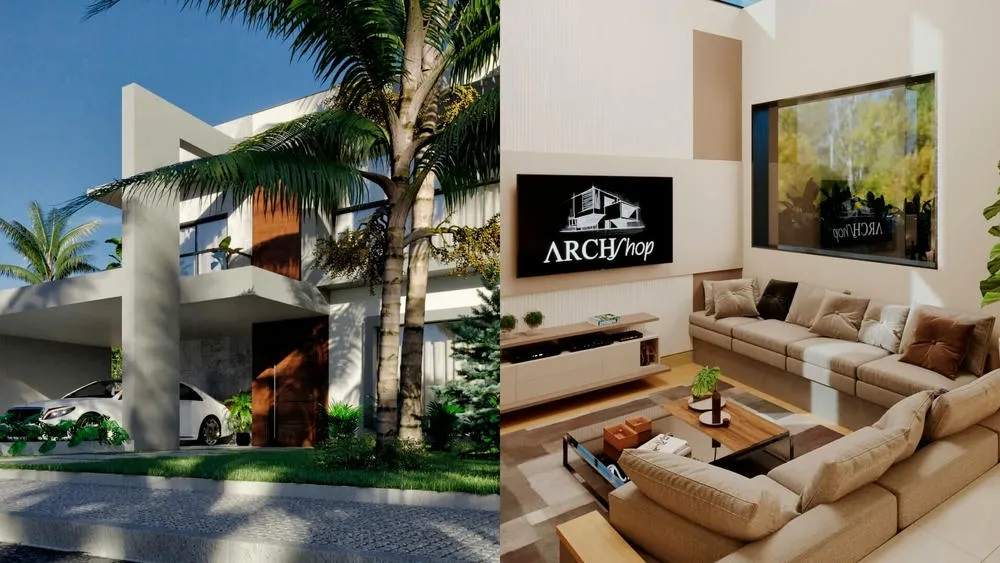
The online architecture store ArchShop understands this importance and offers complete interior design projects to complement the architectural project. By purchasing an interior design project at ArchShop, you receive all the guidance and material necessary to make your house the way you always dreamed. Among the available files are: The layout plan, which defines the arrangement of furniture and circulation in the environment. The floor tiling plan, which indicates the position of the pieces and the most suitable type of flooring for each room. The lighting plan, which determines the light points and the ideal intensity in each environment, details, and suggestions for fixtures.
By including the interior design project in the purchase of the architectural project, you ensure a more complete and harmonious result since one complements the other. In addition, the development process can be done in conjunction with the architectural one, ensuring a perfect integration between the spaces.
The ArchShop is an online architecture store that offers personalized interior and architectural projects, according to the needs and desires of each client. In addition to the projects, the store also provides a variety of decoration and furniture products, selected by experienced professionals. Do not underestimate the importance of interior design when building or renovating your home. Invest in a complete and personalized project from ArchShop and ensure a beautiful, functional, and cozy environment for you and your family.
ArchShop is redefining the concept of residential architecture in Brazil, making high-quality projects accessible to everyone. Combining over 20 years of expertise in the construction sector with technological innovation, the company offers a complete digital platform that simplifies and democratizes the process of building the dream home.
We believe that the best ideas arise from the exchange of experiences and the sharing of different perspectives. Open the doors to new opportunities and be part of our blog! If you have an interesting article, an amazing work, a product or service that deserves to be highlighted, contact us.