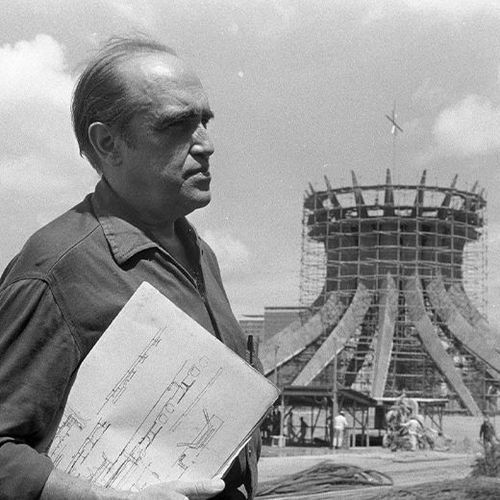
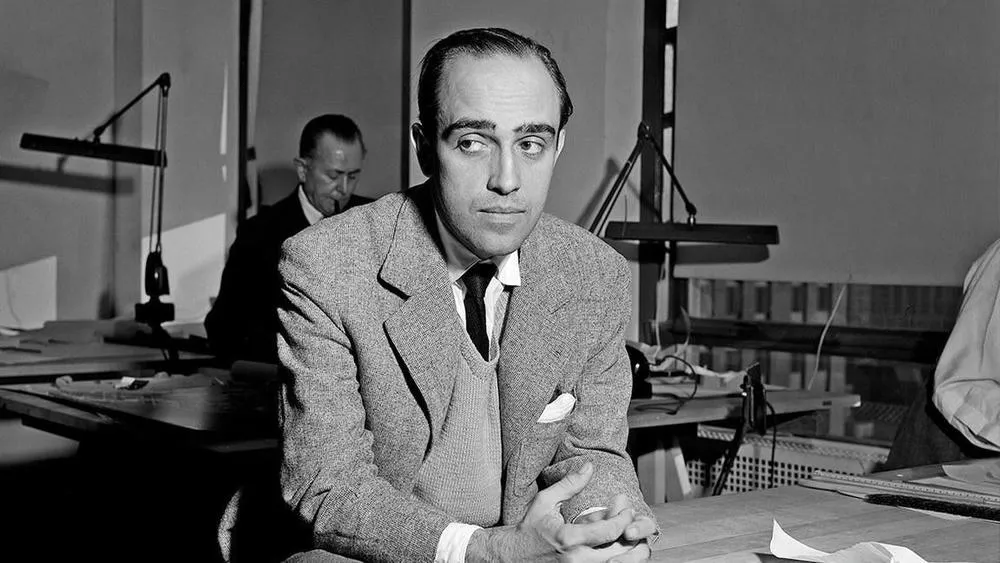
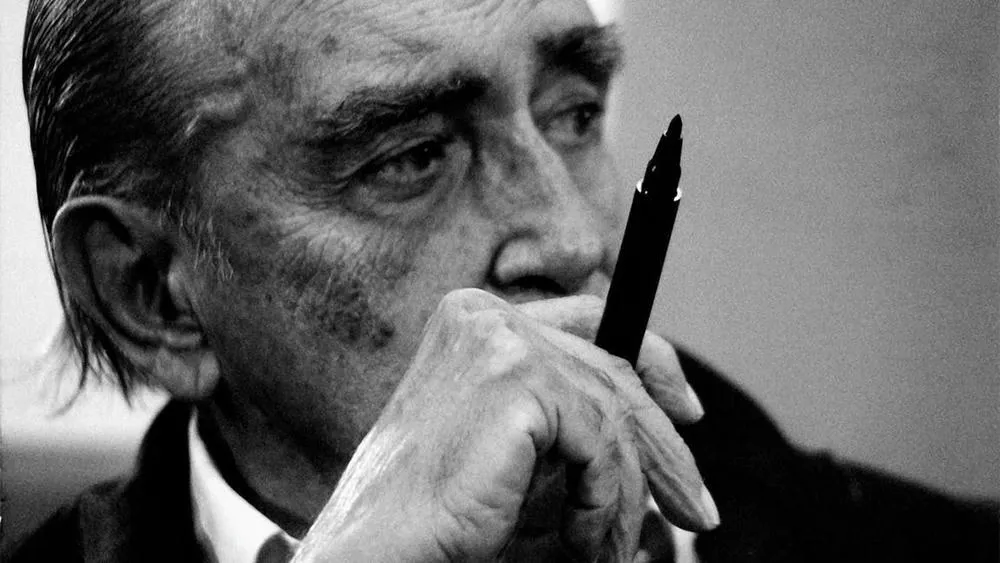
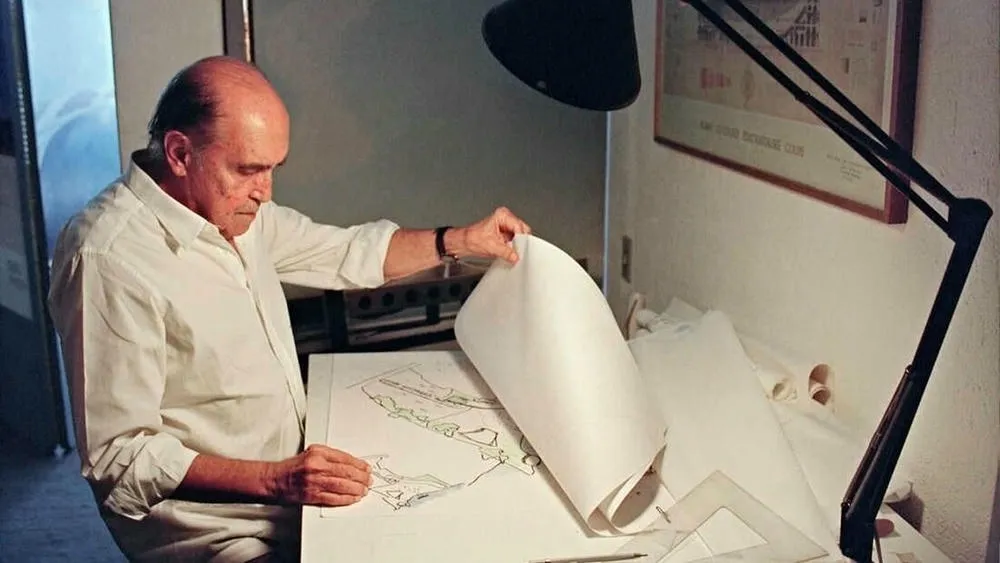
Oscar Niemeyer, one of the most renowned architects of the 20th century, left an impressive legacy in the modern architecture of Brazil. His bold vision, marked by the use of curved and organic forms, made him an iconic figure in the history of architecture. With innovative and revolutionary projects, Niemeyer transformed the Brazilian architectural scene and left an indelible mark on the world stage. This article provides an introductory exploration of the life and work of Oscar Niemeyer, examining his architectural approach, his most important projects, and his lasting impact on modern architecture.
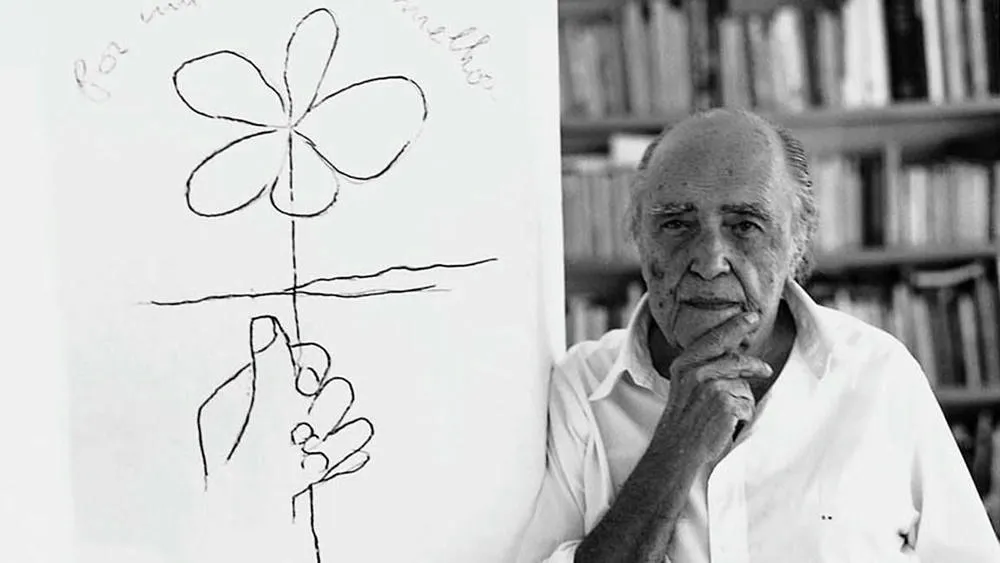
Oscar Niemeyer, born on December 15, 1907, in Rio de Janeiro, Brazil, was a renowned Brazilian architect known for his innovative style and iconic contributions to modern architecture. His career spanned over eight decades, during which he designed emblematic buildings around the world.
Niemeyer studied architecture at the National School of Fine Arts in Rio de Janeiro, where he graduated in 1934. He began working in the architectural office of Lucio Costa, an influential architect with whom he collaborated on several future projects. However, his career began to stand out when he joined the team that designed the Ministry of Education and Public Health in Rio de Janeiro, during the government of Getúlio Vargas.
It was during this time that Niemeyer met the Swiss-French architect Le Corbusier, who had a great influence on his working style. Niemeyer incorporated the principles of the modernist movement, such as the use of simple geometric forms and the creative use of reinforced concrete, into his own projects. He was also known for his passion for the curve, which became a distinctive feature of many of his works.
The turning point in his career occurred in 1940, when Niemeyer was invited to participate in the project for the new Ministry of Education and Health building in Rio de Janeiro, which later became known as the Gustavo Capanema Palace. This innovative project marked the beginning of modern architecture in Brazil and established Niemeyer's reputation as a talented and visionary architect.
In the following years, Niemeyer designed a series of iconic buildings throughout Brazil and abroad. Some of his most famous works include the Cathedral of Brasília, designed in 1958, which stands out for its hyperboloid shape and colorful stained-glass windows; the Niterói Contemporary Art Museum, completed in 1996, which resembles a futuristic spaceship; and the Copan Building in São Paulo, a huge curvilinear apartment complex that has become a symbol of the city.
Throughout his career, Niemeyer received numerous international awards and recognitions for his contributions to architecture. In 1988, he was awarded the Pritzker Prize, the highest honor in the field of architecture, in recognition of his ability to combine modern aesthetics with social sensitivity.
Oscar Niemeyer passed away on December 5, 2012, at the age of 104, leaving behind an impressive legacy and a lasting impact on modern architecture. His bold and innovative vision continues to inspire architects and architecture enthusiasts worldwide, and his works serve as a testament to his unparalleled talent and creativity.
Niemeyer's legacy in architecture
Oscar Niemeyer left a lasting legacy and a significant influence on modern architecture. His works were characterized by an innovative approach, marked by the creative use of curved forms, reinforced concrete, and a harmonious integration between architecture and the surrounding environment.
One of the most distinctive features of Niemeyer's works was his love for curves. He believed that curves were softer and more natural, providing a sense of fluidity and harmony to architectural spaces. His curvilinear structures challenged the traditional conventions of rectangular and straight architecture, adding a touch of elegance and smoothness to his projects.
Furthermore, Niemeyer was known for his mastery in the use of reinforced concrete. He explored the possibilities of this construction material, creating bold and sculpted structures. His works featured organic forms, large free spans, and daring surfaces, which challenged the technical limitations of the time.
Another notable aspect of Niemeyer's works was his concern for the integration between architecture and the environment. He sought to incorporate natural elements and the surrounding landscape into his projects, creating a fusion between the built environment and the surrounding nature. His buildings often featured large open spaces, terraces, suspended gardens, and glazed facades, allowing natural light and panoramic views to merge with the internal spaces.
Moreover, Niemeyer had a humanistic approach to architecture. He believed that architecture had the power to transform society and improve people's lives. His works reflected his commitment to the social function of architecture, especially in projects such as schools, hospitals, and public spaces, where he sought to create welcoming and inspiring environments for people.
The legacy of Oscar Niemeyer transcends geographical boundaries and has influenced architects all over the world. His bold and visionary architecture has inspired a new generation of professionals, who seek to incorporate elements of his architectural language into their own works. His vision of an organic, curvilinear, and environmentally integrated architecture continues to be a source of inspiration and a reference for contemporary architecture.
Main works of Oscar Niemeyer
Although there is no exact number of his works, it is estimated that Niemeyer designed more than 600 works throughout his career of over 70 years. These works include public, residential, cultural, religious, and institutional buildings, among others. His vast production includes projects in Brazil, but also in other countries, such as the United States, France, Algeria, Italy, and many others. Below we list 10 of his main works:
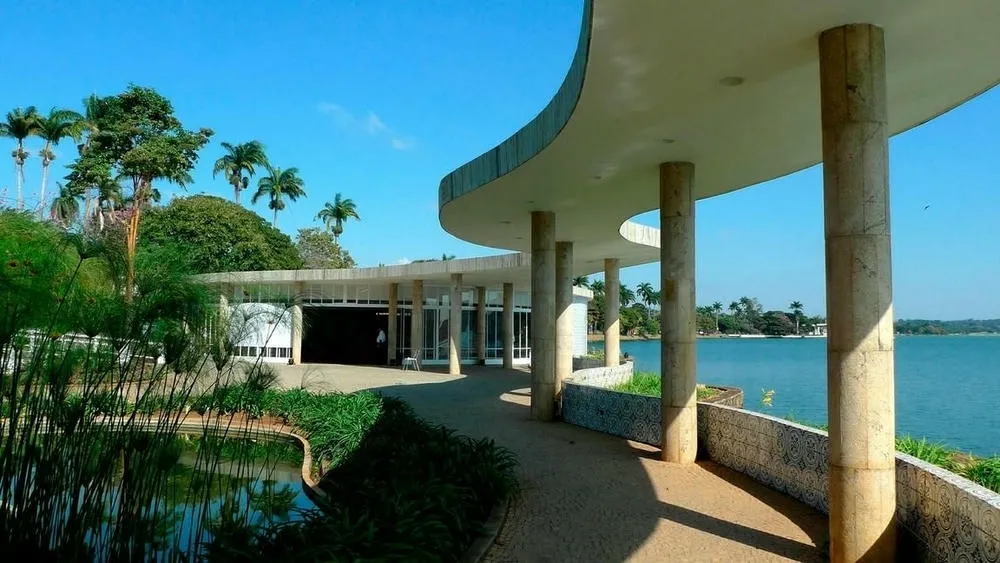
Pampulha Architectural Complex - Belo Horizonte, Brazil (1942-1944)
The complex is composed of four main buildings: the Church of São Francisco de Assis, the Casa do Baile, the Iate Tênis Clube, and the Pampulha Art Museum. It is marked by modernist architecture, highlighting curved and asymmetrical forms, harmonious integration with the natural landscape, and synergy between the different functions of the buildings. The complex uses an innovative composition of materials, such as reinforced concrete and colored tiles, and was recognized as a World Heritage Site by UNESCO in 2016.
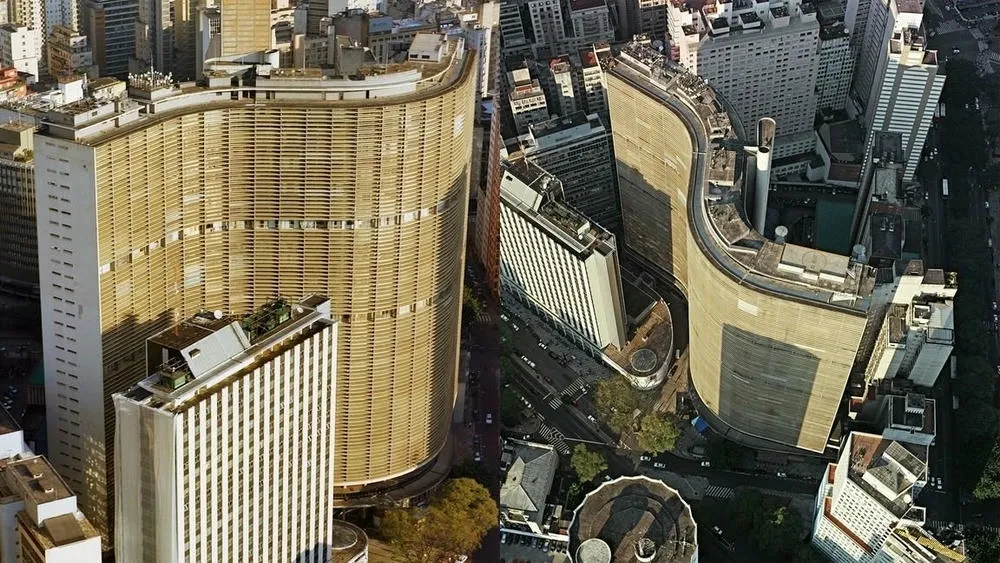
Copan Building - São Paulo, Brazil (1951-1966)
The Copan is a concrete residential complex that rises majestically on the São Paulo city skyline. With its S-shaped curvilinear structure, the building is approximately 120 meters high and has over a thousand apartments. It is famous for its wide range of services, including commerce, offices, restaurants, and a series of cultural activities. Its historical and aesthetic importance has made it an internationally recognized architectural icon and an integral part of the São Paulo urban landscape.
Niterói Contemporary Art Museum - Niterói, Brazil (1991-1996)
With its futuristic design and stunning curves, the Niterói Contemporary Art Museum is one of Niemeyer's most iconic works. The panoramic view of Guanabara Bay is one of the main features of this space, which houses a vast collection of contemporary Brazilian and international art. The museum combines art, architecture, and nature in a unique way, seeking to provide a unique and enriching cultural experience.
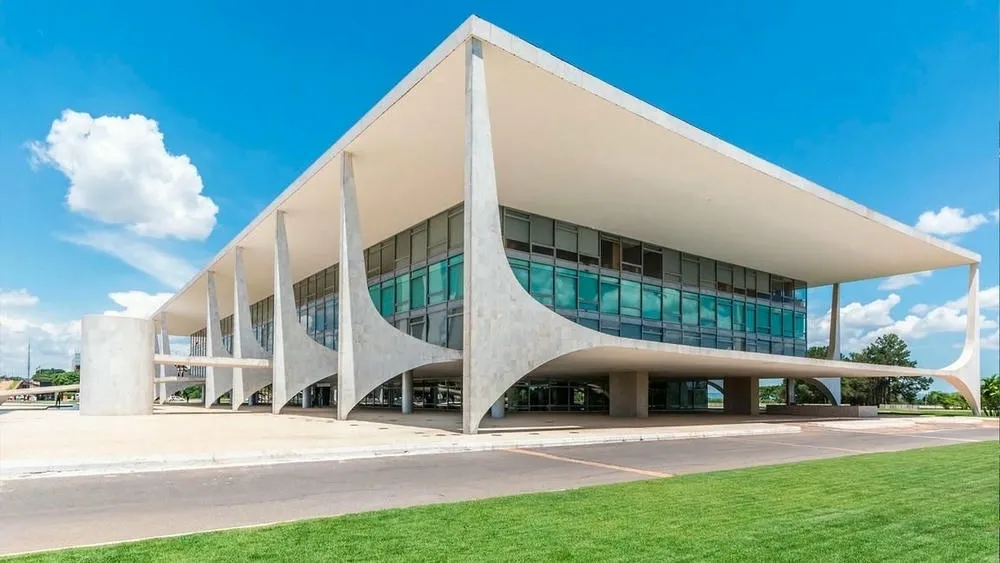
Planalto Palace - Brasília, Brazil (1958-1960)
The Planalto Palace is the seat of the Federal Executive Power. With an iconic modernist architecture, the palace stands out for its curved lines and its imposing dome. Housing the Presidential Office and several ministries, the Planalto Palace is a symbol of Brazilian political power. Its functional and elegant design reflects the pursuit of administrative efficiency, while its central location on the Esplanade of Ministries reinforces its role as the center of the Brazilian government.
National Congress - Brasília, Brazil (1958-1964)
The building is composed of two twin towers, one representing the Federal Senate and the other the Chamber of Deputies, connected by an impressive central space in the shape of a dome. The dome, known as the "Congress Dome," has a bold design and houses a large internal square where visitors can enjoy a panoramic view of the city. The curved lines and the predominance of reinforced concrete are striking features of Brazilian modernist architecture, present in the National Congress, which has become an icon of the country and an international reference in the field of architecture.
Metropolitan Cathedral of Brasília - Brasília, Brazil (1958-1970)
The cathedral features a unique structure in the form of intertwined hyperboloids, creating an impressive visual. At 40 meters high, its interior houses four suspended bronze sculptures representing the evangelists. The 16 concrete columns that support the cathedral symbolize the pillars of faith. The cathedral is a space for worship and contemplation, as well as an important tourist and cultural point in Brasília, attracting visitors from all over the world.
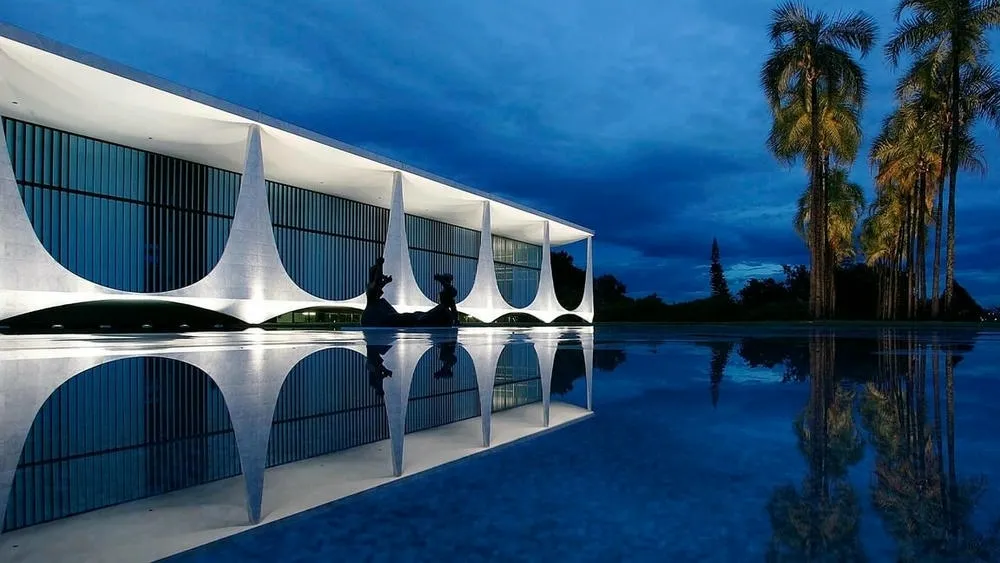
Alvorada Palace - Brasília, Brazil (1957-1958)
The Alvorada Palace is the official residence of the President of the Republic. An icon of Brazilian modernist architecture, its design includes elegant curved lines, a large glass facade, slender pillars, and a reflecting pool that reflects the building's grandeur. Surrounded by beautiful gardens designed by Burle Marx, the Alvorada Palace stands out for its sophistication and symbolism, representing the grandeur and modernity of the Brazilian capital.
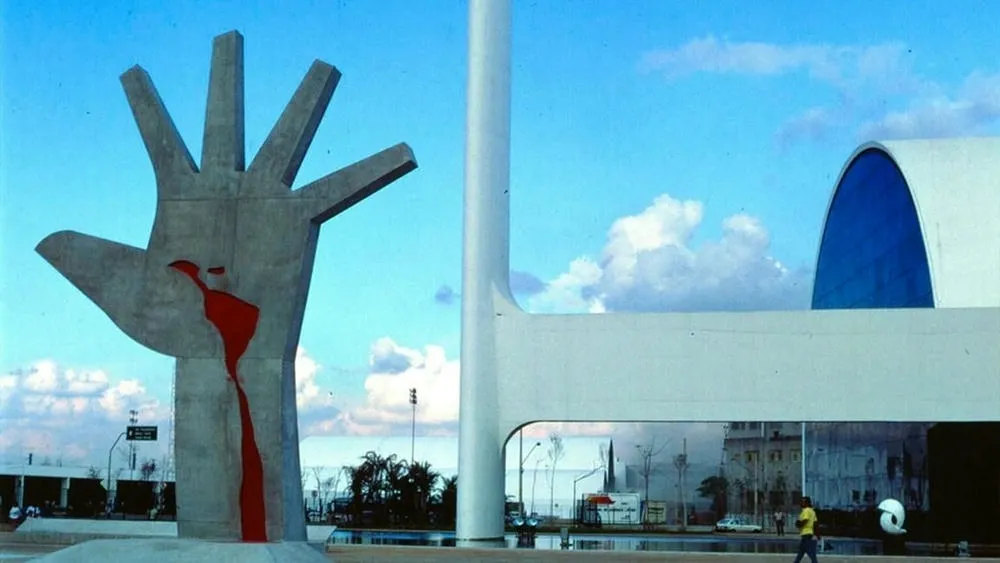
Latin America Memorial - São Paulo, Brazil (1987-1989)
The Latin America Memorial is an architectural and cultural complex that celebrates the diversity and integration of Latin American countries. The memorial houses a series of spaces for events, exhibitions, and artistic manifestations. Its iconic modernist architecture is marked by the imposing hand sculpture, which symbolizes the union of Latin American peoples. In addition, the complex has a vast cultural collection, with a library, art galleries, and theaters. The Latin America Memorial stands out as an important center for the preservation and dissemination of Latin American culture, promoting cultural exchange and strengthening ties between the countries of the region.
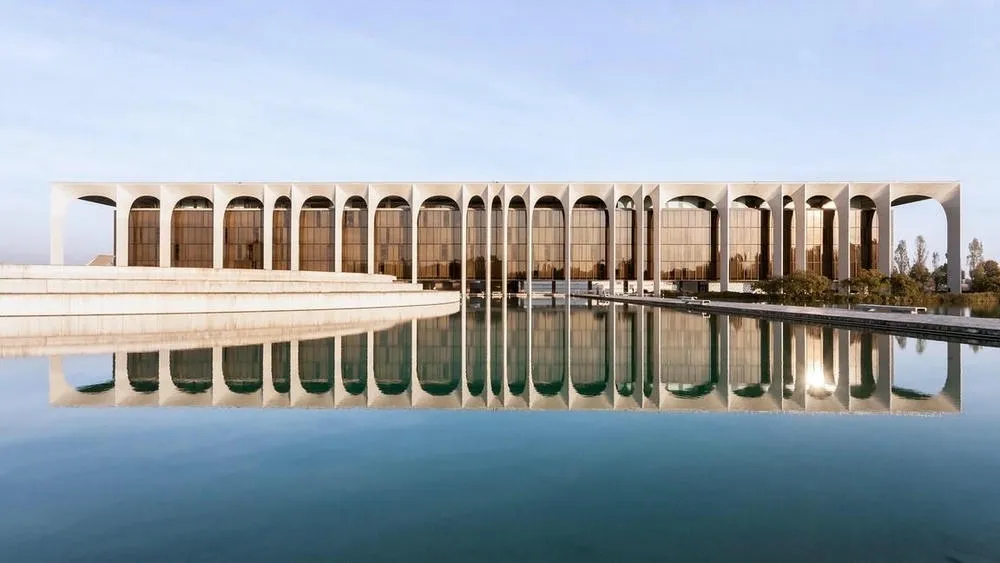
Mondadori Headquarters - Milan, Italy (1968)
The Mondadori Headquarters in Milan is an iconic architectural structure that stands out for its modern and functional design. The building houses Mondadori, one of the largest Italian publishing houses, and is known for its innovation and energy efficiency. With multiple floors and large windows, the building provides an abundance of natural light inside, creating a pleasant and inspiring work environment. The Mondadori Headquarters is an international architectural landmark by Niemeyer, symbolizing the fusion of art, design, and functionality.
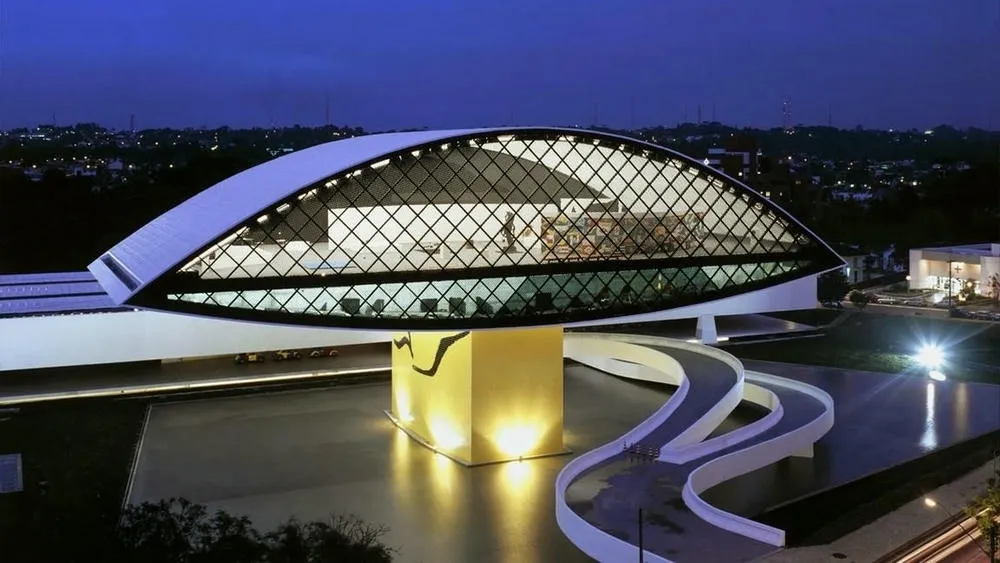
Oscar Niemeyer Museum - Curitiba, Brazil (2002)
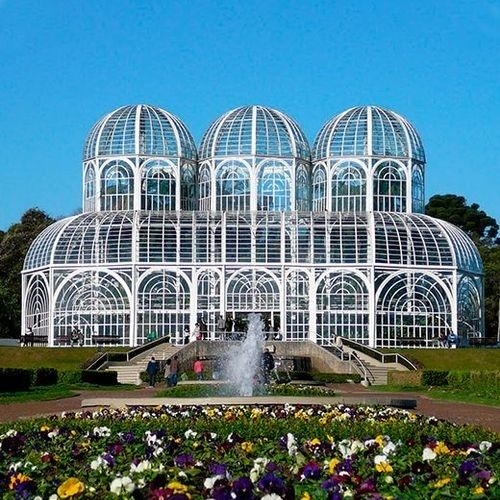
The MON (Oscar Niemeyer Museum) is recognized for its bold geometric forms and modern structure. Characterized by its imposing white concrete dome, the museum stands out in the urban landscape. Its minimalist and futuristic architecture creates large and fluid spaces, where natural light plays a fundamental role in illuminating the environments. Combining bold design with functionality, the Oscar Niemeyer Museum has established itself as an architectural icon and reinforces the architect's importance in the country's history.
Quotes by Oscar Niemeyer
"Form follows function, and function magically derives from a free form."
This quote emphasizes Niemeyer's view that architecture should be functional, but can also be expressed through free and organic forms. He believed that architectural form should not be limited only by function, but could also be an artistic expression that transcended mere utility.
"It is not the right angle that attracts me. Nor the straight, hard, inflexible line created by man. What attracts me is the free and sensual curve, the curve that I find in the mountains of my country, in the sinuous course of its rivers, in the waves of the sea, in the body of the beloved woman."
In this quote, Niemeyer highlights his preference for curves over straight lines. He believed that curves were softer, more natural, and sensual, finding inspiration in the beauty of the curved forms of nature and the human body. This preference for curves was a striking feature in many of his architectural projects.
"My architecture is movement. It is the incessant search for light, balance, surprise. Architecture is an object of beauty that should be within everyone's reach."
In this quote, Niemeyer highlights his desire to create dynamic architecture, which incorporates light, balance, and surprising elements. He believed that architecture should be accessible to everyone and that it should be appreciated as an object of beauty. This visionary approach by Niemeyer sought to challenge architectural conventions and inspire people with his art.
"My architecture is not based on functional problems, but on emotions that architecture can arouse."
Niemeyer valued the ability of architecture to evoke emotions and create meaningful experiences. He believed that architecture was not limited to functional concerns, but should also be able to touch people's sensibility, awakening feelings and providing a gratifying aesthetic and emotional experience.
"It is not the right angle that attracts me. Nor the straight, hard, inflexible line created by man. What attracts me is the free and sensual curve, the curve that I find in the mountains of my country, in the sinuous course of its rivers, in the waves of the sea, in the body of the beloved woman."
This quote reinforces Niemeyer's preference for curves and his belief that they have a sensual and seductive quality. He sought to create an architecture that connected with nature and the human body, valuing the fluidity and smoothness of curved forms in his projects.
Oscar Niemeyer was a visionary architect who transformed the urban landscape with his curved and innovative forms. His unique and revolutionary approach to architecture left an indelible mark on the history of design and influenced generations of architects worldwide. His iconic projects and his philosophy of integrating architecture and the environment continue to inspire and enchant people to this day. Niemeyer's legacy is a celebration of creativity, the pursuit of beauty, and the ability of architecture to create spaces that move and transform. His contribution to modern architecture is a testament to his genius and will remain a lasting symbol of his influence and unique architectural vision. Oscar Niemeyer left an extraordinary legacy that transcends time and continues to inspire all professionals in the field of architecture.
ArchShop is redefining the concept of residential architecture in Brazil, making high-quality projects accessible to everyone. Combining over 20 years of expertise in the construction sector with technological innovation, the company offers a complete digital platform that simplifies and democratizes the process of building the dream home.
We believe that the best ideas arise from the exchange of experiences and the sharing of different perspectives. Open the doors to new opportunities and be part of our blog! If you have an interesting article, an amazing work, a product or service that deserves to be highlighted, contact us.