Architecture is an art that has developed throughout history, creating various marked styles and influences. The modern and contemporary styles are two of the most prominent in the 20th century. Although they share similar characteristics, they also have many differences.
In this article, we will explore the main differences between modern and contemporary architecture. We will journey through their origins, definitions, characteristics, and notable examples found in the world. You will learn to identify each style by its expression and understand how to distinguish them. If you are passionate about the field or want to expand your knowledge, you are in the right place.
Modern architecture is an architectural style that emerged in the late 19th century and developed until the mid-20th century. It is characterized by the use of industrial materials, the simplification of forms, and a constant search for functional and practical solutions.
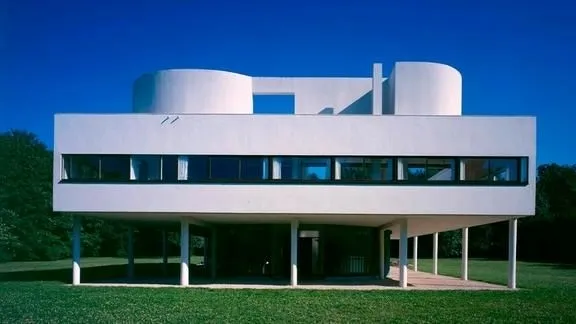
One of the main aspects of this style is the adoption of rationalism. Through it, the aim was to eliminate decorative and ornamental excesses, prioritizing construction efficiency. The Swiss architect Le Corbusier was one of the main exponents of this movement, bringing minimalist, yet very functional proposals. One of his most famous projects is the Villa Savoye, built in the French commune of Poissy.
Modernist buildings also valued the use of industrial materials, allowing for taller and more resistant constructions to be designed. Reinforced concrete and glass are two of the main materials most used in the modern style. A well-known case is the Altino Arantes Building in São Paulo, which bears the signature of the architect Plínio Botelho do Amaral.
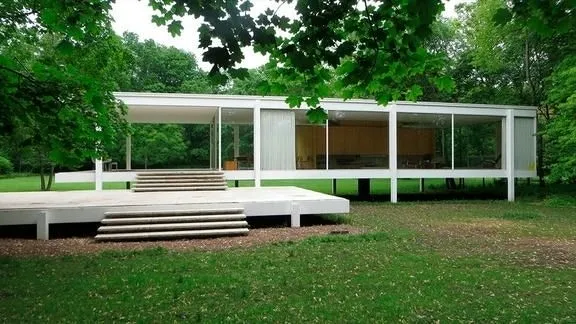
Modern architecture also seeks to optimize natural light and ventilation in indoor spaces. Projects designed in this style usually feature the distribution of large windows and large openings. This aspect is very present in Frank Lloyd Wright's Fallingwater, for example.
The modernist style was responsible for creating the aesthetic of modernizing cities. Many iconic buildings were developed during this period and became, years later, architectural symbols. Two of the best-known examples of this era are the Eiffel Tower in Paris and the Empire State Building in New York.
In short, the modern language seeks to value the functional and the practical, using industrial materials for its construction. This architectural movement had a great impact on history and influenced many other movements that came after.
How did modern architecture emerge?
Modern architecture has its roots in Europe, in the period between the two world wars. Society at the time faced new challenges and problems that needed to be solved. Among them, we can mention accelerated urbanization, large-scale industry, and the need for more accessible and functional housing.
Modernist architects, in turn, began to seek new architectural languages. Rejecting the historicist and ornamental styles of the past, they aimed to adapt to the needs of modern society. Their approaches became more rational and functional. They valued simplicity and the clarity of form.
Among the main influences of the modern style are the theories of architect Walter Gropius, founder of the Bauhaus. The art and design school became one of the main centers of the modern movement and is still seen as a reference today. Gropius advocated an interdisciplinary approach, combining art, architectural processes, and technology. His main goal was to meet the practical needs of society.
Another important influence on the modern style was Cubism, which valued geometry and simplicity of form. For modernist architects, the artistic movement helped transform buildings into true works of art, adopting simple, pure, and beautiful forms.
Technology and industry were also very present in the development of this style. It was through them that taller and more complex constructions became a possibility. Architects explored materials and developed innovative structures that mirrored geometric forms.
In short, modern architecture emerged as a response to society's challenges. Combining technology, art, and architectural theory, a movement was created that enabled more functional and aesthetically attractive buildings. Its ideas and influences continue to be a source of inspiration for contemporary architects. It left for history the goal of meeting the needs of individuals, while honoring modern traditions and values.
What defines modern architecture?
The modern architectural style emerged in the early 20th century and had a great influence on the way we build and inhabit our cities. With its clean and functional forms, it stood out as a break from the ornamental style that prevailed at the time.
Some of the characteristics that define modern architecture are:
Function: it values the function of the space, with projects that meet the needs of users in a practical and efficient way. Spaces are designed to be used intelligently, with the arrangement of furniture and equipment to facilitate use.
Simplicity: it is characterized by the simplicity and clarity of forms, avoiding ornamental excesses and unnecessary accessories. The form should follow the function, that is, the construction should be designed according to its purpose.
Use of new materials: it incorporated new materials in construction, such as reinforced concrete, glass, and steel. These materials allowed the creation of new forms and structures, which would be impossible with traditional materials.
Openness to the surroundings: it values the relationship between the built space and the surrounding environment. Large windows and large openings to the outside allow natural light and the surrounding landscape to be part of the user's experience.
Use of technology: it benefited from the new technologies available at the time, such as electricity, the elevator, and air conditioning. These technologies allowed the creation of taller and more complex buildings, as well as offering more comfort to users.
In short, modern architecture stands out for prioritizing the function of space and the simplicity of forms. It also values openness to the surroundings of the construction, the use of technology, and the adoption of new materials for construction. Its legacy can be seen in many of the works we inhabit and use to this day.
Examples of modern architecture in Brazil and the world
The modern style emerged in the early 20th century and became quite popular worldwide, including in Brazil. The movement is characterized by the simplicity of forms, the use of industrial materials, and the valuation of function over aesthetics. We have listed below some of the best-known examples of modern architecture in Brazil and the world.
Fallingwater, by Frank Lloyd Wright - United States
Located in Bear Run, Pennsylvania, Fallingwater is one of the most famous examples of the modern style in the world. Designed by architect Frank Lloyd Wright in 1935, the house is famous for its total integration with nature. It was built over a waterfall and uses concrete, steel, and stone in its structure. Its lines are simple and straight, harmonizing with the landscape.
Copan Building, by Oscar Niemeyer - Brazil
Located in the center of São Paulo, the Copan Building is one of the most famous examples of modernism in Brazil. Designed by architect Oscar Niemeyer in 1951, it stands out for its sinuous shape and its extension. The building is 118 meters high, has 1,160 apartments, and occupies entire city blocks. It is considered a landmark of Brazilian modern architecture.
Villa Savoye, by Le Corbusier - France
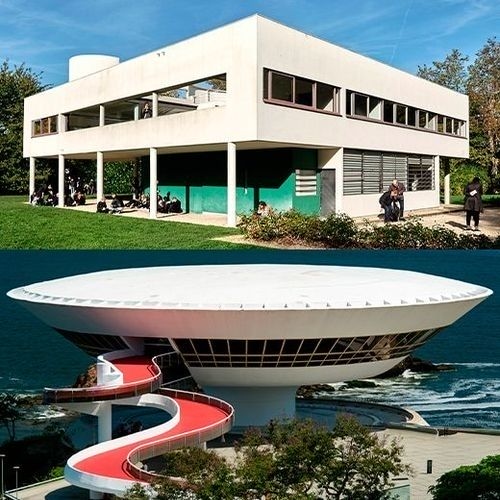
Designed by the Swiss-French architect Le Corbusier in 1929, Villa Savoye is one of the most famous modern architectural projects in the world. Located in Poissy, France, the house is famous for its cubic shape and its integration with nature. With a concrete and glass structure, Villa Savoye is considered one of the most important constructions of this movement.
MASP - São Paulo Museum of Art, by Lina Bo Bardi - Brazil
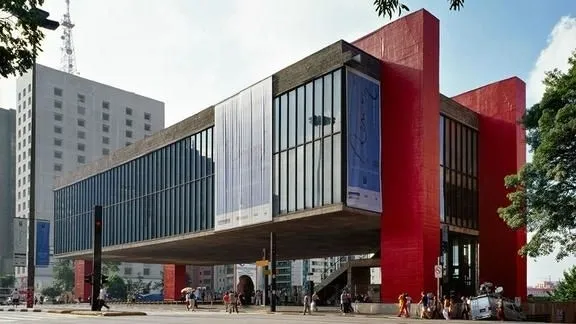
Located on Avenida Paulista in São Paulo, MASP is one of the most famous examples of the modern style in Brazil. Designed by the Italian-Brazilian architect Lina Bo Bardi in 1968, the museum is famous for its suspended structure and its rectangular shape. It has glass that allows natural light to enter and a facade composed of pillars. MASP is considered a masterpiece of Brazilian modernism.
Farnsworth House, by Ludwig Mies van der Rohe - United States
Located in Plano, Illinois, the Farnsworth House is one of the most famous examples of modern architecture in the world. Designed by the German architect Ludwig Mies van der Rohe in 1951, it is famous for its simplicity and its integration with nature. Its structure was developed in steel and glass and is on the list of the most important constructions of the modern style.
Modern architecture is a current that marked the history of world architecture, bringing new concepts, materials, and construction techniques. In Brazil, it developed from the 1930s with the influence of foreign architects. Oscar Niemeyer and Lina Bo Bardi are some examples of Brazilian architects who left their contributions to the movement.
In addition to the examples above, there are many other important works of modern architecture. We can mention the Glass House (Lina Bo Bardi), the Church of Saint Francis of Assisi (Oscar Niemeyer), and the Eiffel Building (Lucio Costa).
In short, the modern style left a legacy in the history of world architecture, with examples that became landmarks of the 20th century. In Brazil, it was mainly influenced by the work of great international architects, but also had national contributions.
What is contemporary architecture?
Contemporary architecture is an architectural style that developed from the 1950s and extends to the present day. It is characterized by the original and innovative aspect of projects, incorporating advanced technologies in construction.
One of the main characteristics of contemporary architecture is the valuation of form and aesthetics, seeking to create iconic and differentiated buildings. It also uses sustainable and more energy-efficient materials. 3D printing and artificial intelligence are also being increasingly explored by contemporary architects.
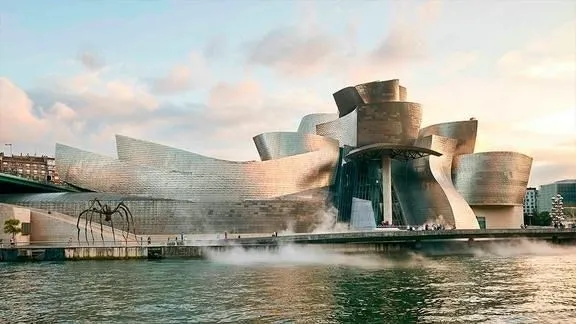
One of the main examples of contemporary architecture is the Guggenheim Museum Bilbao, designed by architect Frank Gehry. With its sinuous facade and organic forms, the museum has become an icon of contemporary architecture. It is considered today one of the most important constructions of the 20th century.
Another striking example of contemporary architecture is the Burj Khalifa in Dubai, designed by architect Adrian Smith. At 828 meters high, it is the tallest building in the world and incorporates advanced technologies in its construction. One of the technologies that stand out in the building is the cooling system that uses seawater.
In short, contemporary architecture is a style that values form, aesthetics, and the incorporation of advanced technologies in construction. With its constant search for innovation and originality, contemporary architecture has produced iconic constructions. It is a movement that challenges the limits of what is possible to build.
How did contemporary architecture emerge?
Contemporary architecture is a movement that developed from modern architecture and became popular in the 1970s. But where did it come from? What were its origins and influences?
Contemporary architecture emerges at a time of great changes in society. Globalization and the growing concern for environmental and social issues loomed in that period. The movement, therefore, is characterized by diversity and experimentation. Using innovation to create buildings that reflect the needs and values of today's society.
The origins of contemporary architecture are linked to the modern movement, which emerged in the early 20th century. This was a movement that rejected the historicist and ornamental styles of the past, as we have seen in previous topics. The modern style proposed a rational and functional approach to the creation of buildings. Its objective was to meet the practical demands of the population, valuing simplicity and clarity of form.
Over the following decades, modern architecture evolved and diversified, and new trends and movements emerged. Postmodern architecture, for example, proposed a more eclectic and expressive approach, which valued the plurality of styles and references. High-tech architecture, on the other hand, proposed a more technological and futuristic approach, which explored the possibilities of materials and new technologies.
Contemporary architecture is also influenced by the growing concern for environmental and social issues. Contemporary architects seek to create buildings that are sustainable and that take into account the environmental and social impact of their constructions. They explore new technologies and materials and seek innovative and efficient solutions to create buildings that are truly useful to society.
Another important influence on contemporary architecture is globalization. With the growing interconnection between countries and cultures, contemporary architects began to explore new forms of expression. They took into account cultural diversity and the interaction between different architectural traditions.
In short, contemporary architecture emerges as an evolution of modern architecture, which seeks to reflect the needs and values of today's society. Diversity, experimentation, and innovation are the central characteristics of this movement. It takes inspiration from the trends and influences of the past, creating creative and innovative solutions for the current challenges of society.
What defines contemporary architecture?
Contemporary architecture is an architectural style that emerged in the second half of the 20th century and extends to the present day. It is characterized by a great diversity of forms, materials, and techniques. Its influences come from the social, economic, and technological transformations of the current world.
Some of the characteristics that define contemporary architecture are:
Eclecticism: marked by a diversity of styles and influences, ranging from modernism to postmodernism and high-tech architecture. This mix of styles and trends reflects the cultural diversity and globalization of the contemporary world.
Sustainable solutions: it values sustainable aspects and respect for the environment. These are projects that seek energy efficiency, the use of renewable materials, and minimal environmental impact.
Flexibility: it values the flexibility and adaptation of spaces, with projects that allow for different uses and occupations over time. Spaces are designed to meet the needs of users, which may change over time.
Use of technology: it benefits from new available technologies, such as computer graphics, 3D printing, and automation. These technologies allow the creation of complex forms and structures, as well as optimizing the construction process.
Valuation of aesthetics: it values aesthetics and artistic expression, with projects that explore innovative forms and unusual materials. Contemporary buildings are often considered works of art and are designed to impress visually.
In short, contemporary architecture stands out for its diversity of styles, sustainable characteristics, and flexibility of spaces. The use of technology and artistic expression are also very present. Its aspects reflect the social, economic, and technological transformations of the current world and are present in the most innovative and daring constructions of today.
Examples of contemporary architecture in Brazil and the world
Contemporary architecture is marked by the search for innovation, the application of advanced technologies, and the creative use of materials and forms. It is a style in constant evolution, adapting to the demands of the population and the transformations of society. In Brazil and around the world, there are many examples of contemporary architecture that stand out for their innovation and daring. We have listed below some of the best-known examples of contemporary architecture in Brazil and the world.
Niterói Contemporary Art Museum - Brazil
Designed by architect Oscar Niemeyer, the Niterói Contemporary Art Museum is an iconic work of Brazilian contemporary architecture. Located on a cliff and with a circular shape, the museum is a landmark of the city of Niterói. It has become one of the main tourist attractions in the state of Rio de Janeiro.
The Guggenheim Museum Bilbao - Spain
The Guggenheim Museum Bilbao, designed by architect Frank Gehry, is one of the most important works of world contemporary architecture. With its curvilinear shape and its facade clad in titanium, the museum has become a landmark in the city of Bilbao, Spain. It is considered today a symbol of the urban revitalization of the region.
Casa da Música - Portugal
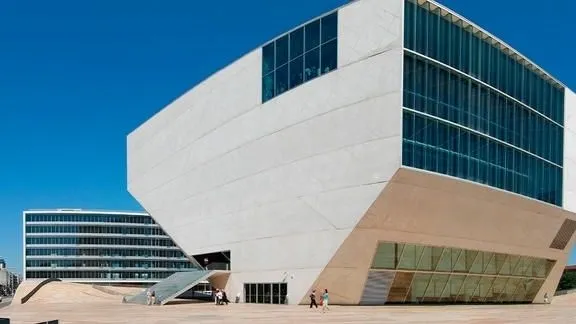
The Casa da Música is a work by the Dutch architect Rem Koolhaas and is located in Porto, Portugal. With an angular shape and a glass-clad facade, it is one of the main tourist attractions in the city. Its architecture has become an example of how the contemporary style can be integrated into the urban landscape.
The Shard - England
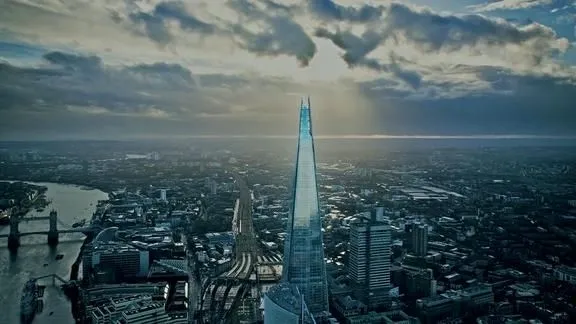
The Shard is a 95-story skyscraper located in London, England. Designed by the Italian architect Renzo Piano, the building is an example of how contemporary architecture can transform an urban landscape. With its glass and steel facade, the building has become an icon of the city of London.
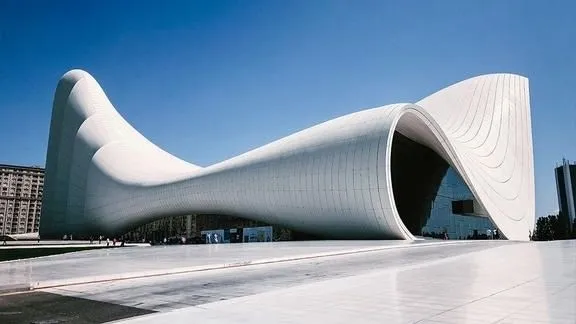
Heydar Aliyev Center - Azerbaijan
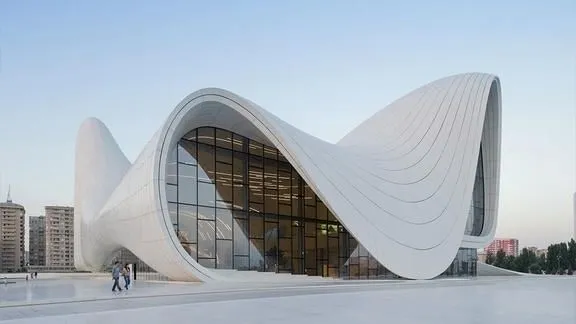
The Heydar Aliyev Center in Baku, Azerbaijan, is a work by the Iraqi architect Zaha Hadid. Its design explores a fluid form and highlights its smooth curves. The cultural center has become an example of how contemporary architecture can defy the laws of gravity. In this project, forms were created that previously seemed impossible.
In short, contemporary architecture is marked by creativity, innovation, and the use of advanced technologies. In Brazil and around the world, there are many examples of works that have become landmarks of the contemporary style.
What is the difference between modern and contemporary architecture?
Architecture is an artistic expression that is in constant evolution. Since the emergence of the first civilizations, constructions have been developing and adapting to the most diverse social, cultural, and technological contexts. Two architectural currents that stand out today are modern and contemporary. Although often confused, the two styles have significant differences - in terms of concept, aesthetics, and purpose.
Modern architecture emerged as a response to the urban and social problems of the early 20th century. Modernist architects sought to create functional buildings that met the practical needs of society, without worrying about ornamentation and decoration. Form followed function, and the style was marked by simplicity, pure geometry, and industrial materials.
On the other hand, contemporary architecture emerges as an evolution of modern architecture. It incorporates new technologies and materials, as well as a greater concern for sustainable and social aspects. Contemporary architects seek to create spaces that provide unique experiences and a harmonious interaction with the surrounding environment.
One of the main differences between modern and contemporary architecture is the use of materials. While modern architecture values industrial materials, contemporary architecture incorporates more sustainable materials. While in the former we have reinforced concrete and steel, in the latter we find certified wood, recycled glass, and other organic materials.
Another significant difference is the approach to form. Modern architecture seeks pure and geometric forms, often symmetrical and with straight and simple lines. Contemporary architecture, on the other hand, is more flexible, incorporating curves, organic forms, and asymmetries. Contemporary architects are motivated by innovative drawings and more artistic designs.
The contemporary style is also more sensitive to the context in which it is inserted, seeking a peaceful integration with the surrounding environment. Contemporary architects prioritize more sustainable spaces that interact with nature. They are also more adaptable to the changes and needs of society, compared to the modern style.
In short, although both architectural currents share many values and principles, contemporary architecture is an evolution of modern architecture. Its development involves new materials, technologies, and environmental and social concerns. There are differences in the valuation of the user experience and in the harmony with the environment that surrounds them.
Advantages and disadvantages of modern architecture
Advantages of modern architecture:
Function: modern architecture prioritizes the function of spaces, seeking to maximize the efficiency and practicality of built environments. This means that modern buildings are designed to meet the practical and daily needs of their users.
Economy: the use of new materials in construction, such as reinforced concrete, allowed for a reduction in the costs and construction time of buildings. In addition, the concern with energy efficiency can also contribute to a reduction in the consumption of electricity and water.
Aesthetics: modern architecture is characterized by simplicity and minimalism, with clean lines and defined geometric forms. This gives buildings a timeless beauty, which remains current even after decades of their construction.
Disadvantages of modern architecture:
Dehumanization: the search for function and economy can lead to the dehumanization of built spaces. This means that the concern with efficiency can end up ignoring the needs and desires of users, creating impersonal and unwelcoming environments.
Standardization: the minimalist aesthetic of modern architecture can lead to a standardization of buildings, with little variation between projects. This can end up making cities less interesting and less identifiable.
Aging: although modern buildings have a timeless beauty, they can also age more quickly than old buildings. This is due, in part, to the use of new materials that have not yet been tested in the long term.
Advantages and disadvantages of contemporary architecture
Advantages of contemporary architecture:
Sustainable architecture: contemporary architecture is concerned with using sustainable materials and creating more ecological architectural solutions. This means that contemporary buildings are constructed taking into account their environmental impact.
Social aspect: contemporary architecture is concerned with creating spaces that are socially just. In other words, they seek to meet the demands of the communities where they are located. This means that contemporary buildings are designed to be accessible and inclusive, promoting social equality.
Innovation: contemporary architecture is an architectural current that is in constant evolution, always seeking new solutions and technologies. Its goal is to design spaces that are even more efficient and sustainable than the previous ones.
Disadvantages of contemporary architecture:
Cost: the use of sustainable materials and the search for innovative architectural solutions can increase the cost of contemporary buildings. This can end up limiting access to these buildings by low-income communities.
Aesthetics: the aesthetics of contemporary architecture may not appeal to everyone, being considered by some as cold and impersonal. This can end up alienating a part of the public that prefers a more traditional aesthetic.
Durability: although contemporary architecture seeks to use sustainable materials, these materials are not always the most durable. This can end up limiting the lifespan of contemporary buildings.
Conclusion
Modern architecture and contemporary architecture represent two distinct styles that emerged at different times in history. Modern architecture is characterized by rationalism, simplicity, industrial materials, and the valuation of function over aesthetics. Contemporary architecture, on the other hand, is more diverse, presenting a wide variety of forms, materials, and techniques. It is based on sustainable principles, technological innovation, and the relationship with the environment.
By knowing the characteristics of each style, it is possible to identify their differences and choose the one that best meets your demands and expectations. If you are planning to build a house or a building, consider the advantages and disadvantages of each style. It is important to remember that architecture is an art in constant evolution, and new styles and trends can emerge at any time.
Remember that architecture is an expression of personality, values, and worldview of each person. It is directly responsible for the well-being and quality of life of the people who inhabit and frequent the built spaces.
ArchShop is redefining the concept of residential architecture in Brazil, making high-quality projects accessible to everyone. Combining over 20 years of expertise in the construction sector with technological innovation, the company offers a complete digital platform that simplifies and democratizes the process of building the dream home.
We believe that the best ideas arise from the exchange of experiences and the sharing of different perspectives. Open the doors to new opportunities and be part of our blog! If you have an interesting article, an amazing work, a product or service that deserves to be highlighted, contact us.