Archshop,
Jul 1, 2026
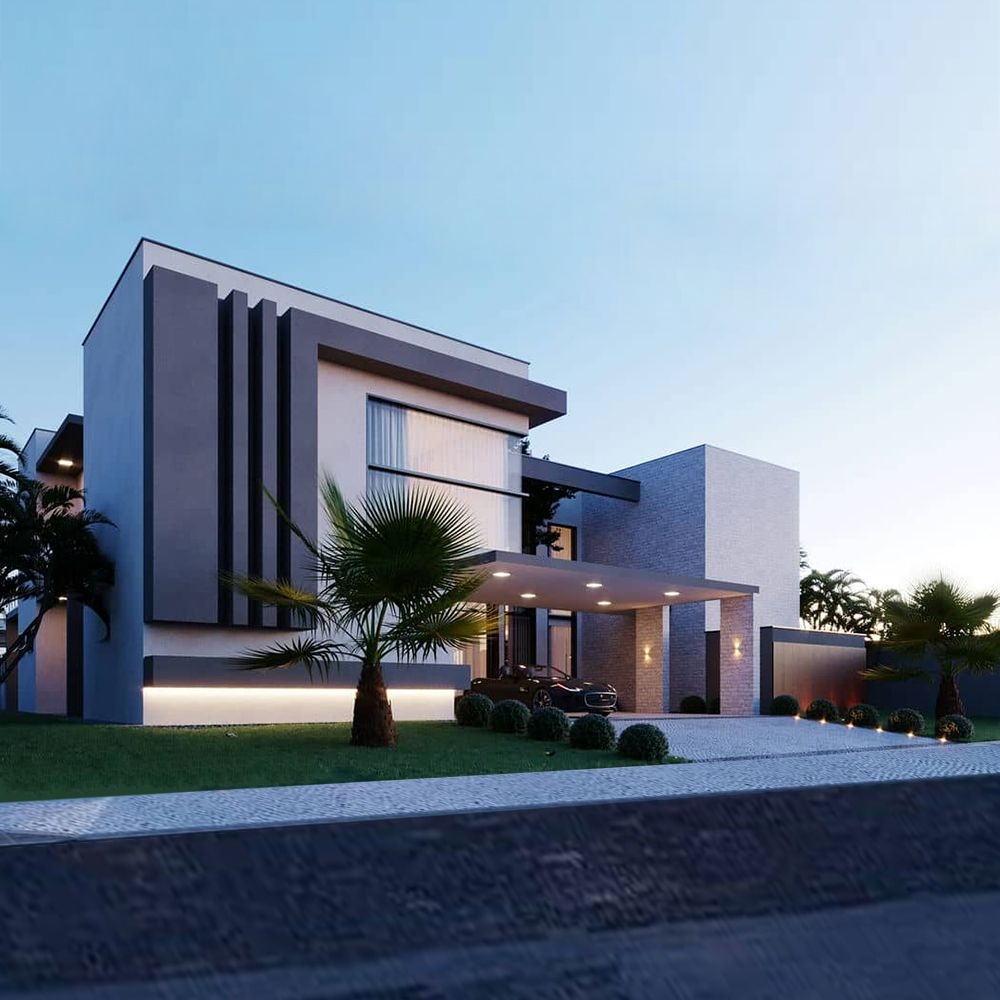
Luxury Two-Story House
Understand what a true luxury two-story house is. Come check out its essential characteristics so you don't make a mistake when transforming a beautiful project.
 https://creativecommons.org/licenses/by-nc-nd/4.0/https://creativecommons.org/licenses/by-nc-nd/4.0/ArchShopArchShop
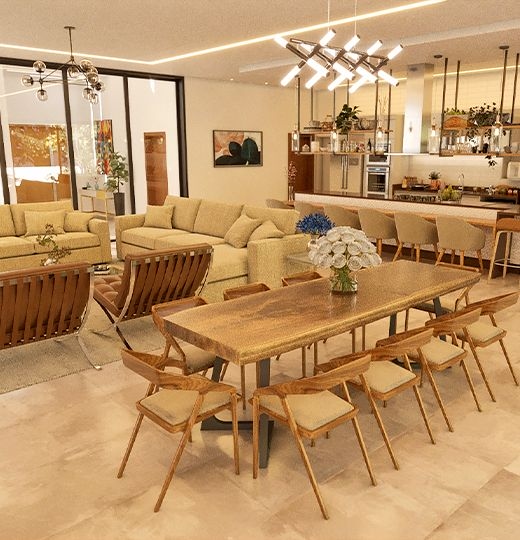
The open concept is a trend in modern architecture and consists of integrating the social spaces of the house. In this article, we will delve into the origins of the open concept in architecture, its forms of application, and its benefits.
Open-concept (or open floor) houses are a trend in modern architecture and consist of integrating the social spaces of the house. In this concept, the divisions between rooms are minimized or eliminated completely, creating a more spacious and fluid environment. Instead of having separate rooms for the living room and kitchen, for example, we have a single space that accommodates these functions.
This opening of spaces can be achieved in various ways. Removing walls or doors, using openwork elements, or incorporating islands and counters for the transition of environments. The goal is to create a sense of continuity and fluidity between the spaces, generating greater interaction among the people who use them.
The open concept can be applied to houses of different sizes and styles. From small apartments to large luxury residences, its flexibility of application has been one of the main attractions. In addition to promoting a sense of spaciousness and integration, it can also provide space savings and better air and natural light circulation.
In this article, we will delve into the origins of the open concept in architecture, its forms of application, and the benefits of this architectural trend. We will also cite some examples of open concepts developed in large and small houses.
In architecture, the open concept is a design approach that emphasizes the openness and fluidity of a house's interior spaces. This can include removing walls, using sliding or glass doors, and creating interconnected and multifunctional spaces. The goal is to create a sense of continuity and integration between the different environments of the house, allowing natural light and air circulation to flow freely through the space.
This design style is popular in modern and contemporary homes, where the emphasis is placed on functionality and user experience, rather than focusing on isolated individual rooms or spaces. The open concept can also promote interaction and communication among the occupants of the house, by allowing them to move freely through the space and connect with each other in different areas of the house.
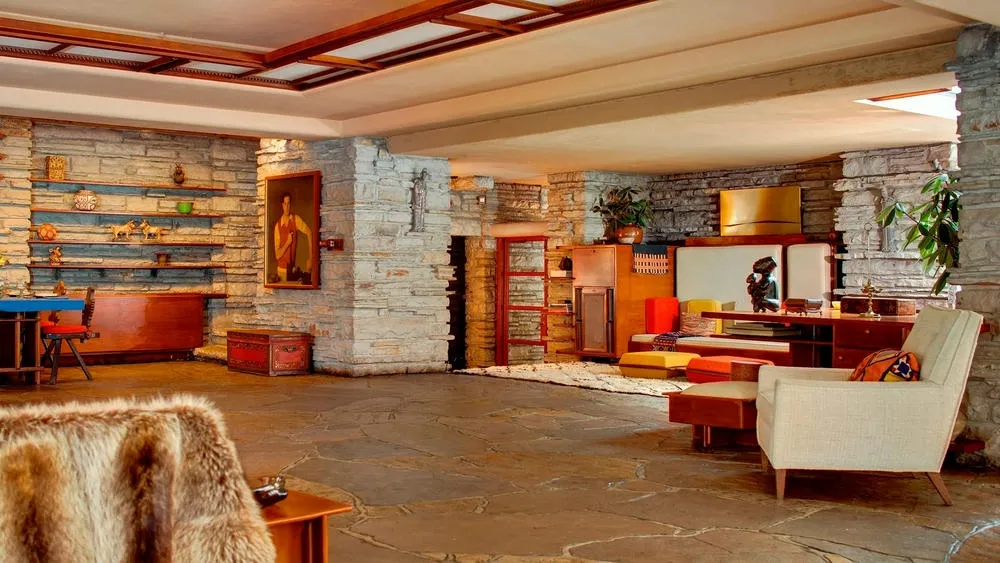
The open concept in architecture emerged in the early 20th century, fostered by the modernist movement. It sought large open spaces to replace the small, enclosed rooms of the time. The goal was to create a continuous flow between environments, optimizing circulation and practicality for the residents. By the mid-20th century, the open concept was becoming increasingly popular, promoting a casual lifestyle.
In the post-war context, the rise of suburbs and informal entertainment led many architects to adopt the open concept. Large open living areas were increasingly in demand to accommodate large groups of people. Today, the concept remains a frequent solution in residential architectural projects. It is a favorite when it comes to creating a sense of spaciousness and promoting social interaction among residents.
One of the main influences for the creation of the open concept was the Arts and Crafts movement. Dating from the late 19th century, the movement emphasized simplicity and craftsmanship in architecture. Open spaces were favored, generating airier and more spacious rooms. The integrated layout was contrary to that found in the Victorian era, which featured rooms with little lighting and were more cramped.
Another significant influence was the work of modernist architects, such as Le Corbusier and Walter Gropius. They believed that architectural designs should meet the needs of modern society. They saw the open concept as a way to promote social interaction and create flexible spaces that could be used in various ways.
Frank Lloyd Wright was also an important figure in the development of the open concept. His residential projects included large living spaces with open layouts and a sense of unity and harmony. Although it is difficult to attribute the invention of the concept to a single person, Frank Lloyd Wright is usually cited as a leading name and largely responsible for the popularization of this approach.
Henry Hobson Richardson, an American architect from the late 19th century, was also an important name for the open concept. Although not usually credited with creating the concept, he advocated for the importance of open and fluid spaces in his projects. His works emphasized simplicity, space, and the function of rooms, which helped shape the open concept we know today.
The open concept in architectural projects has become increasingly popular. It is common to find homeowners looking for ways to apply it in their own residences. If your house project was not planned with an open concept, we will explore some ways to adopt this concept below. Transforming traditional house plans into open concept plans can ensure more spacious, flexible, and functional spaces for your project.
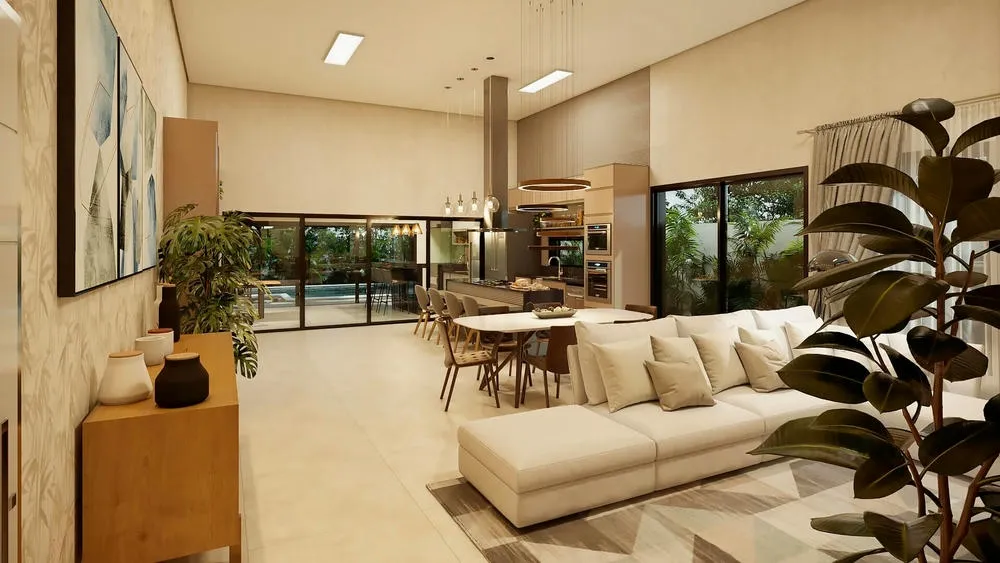
One of the simplest ways to apply the open concept in houses is to remove the walls that separate different rooms. The wall between the kitchen and the dining room, for example, can be removed. The integrated space proposes better circulation between environments and generates more complete rooms. It is important to consult a professional to know which walls can be removed and how this will affect the structure of the house.
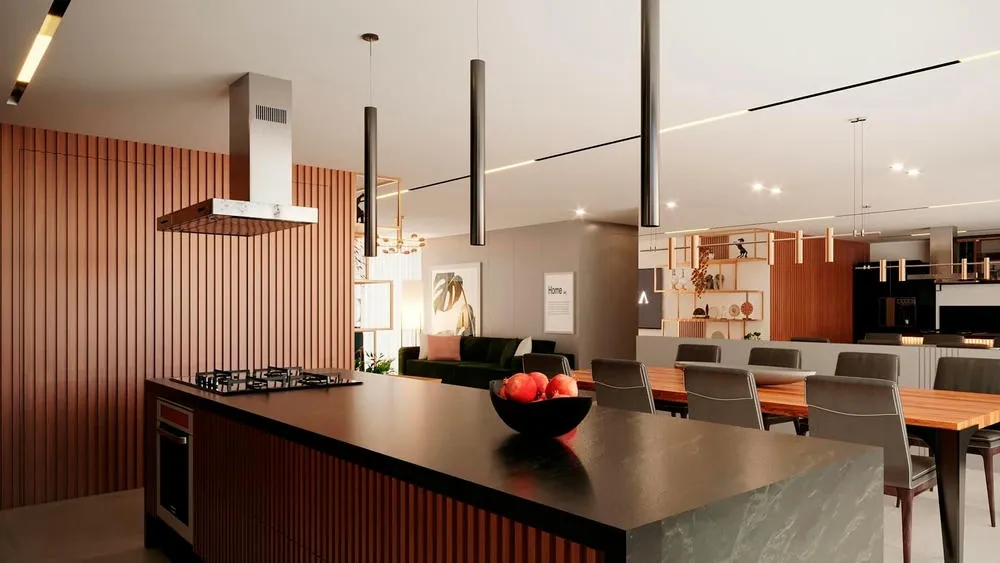
A kitchen island can serve as a central point of integration with the living or dining room. The island can be used as a space for preparing food and also for serving meals and drinks. It creates a natural transition between the different areas of the house without losing the premise of the open concept. In addition to the island, a counter can also be applied to delimit the rooms. While each niche is defined within the layout, the integration of the environments is maintained.
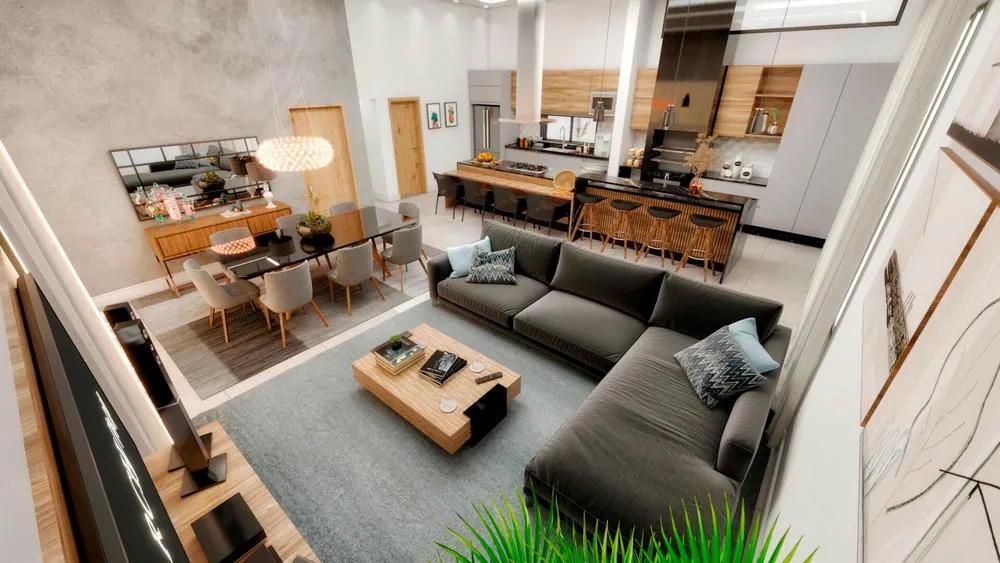
Choosing multifunctional furniture is an easy way to apply the open concept in residential projects. A table, for example, can be used for both meals and home office. This multifunctionality contributes to saving space and allows for greater flexibility in the use of the environment. In addition to the table, another practical example of multifunctional furniture is retractable beds or sofa beds. The inclusion of this furniture allows for the creation of an additional room and saves more space in the floor plan.
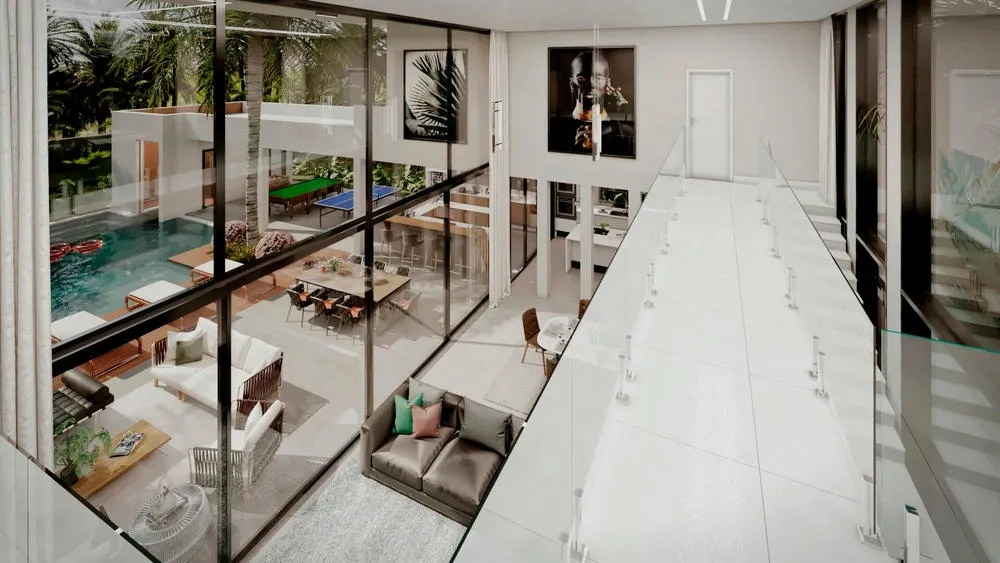
Creating a visual and physical connection between the interior and exterior of a project is an effective way to apply the open concept. This solution can be achieved through the use of large windows, sliding doors, or glass walls. The goal is to allow ample natural light and better air circulation, creating healthier and more pleasant environments. Contact with the outside of the house also helps in the feeling of spaciousness, increasing and integrating with the internal spaces.
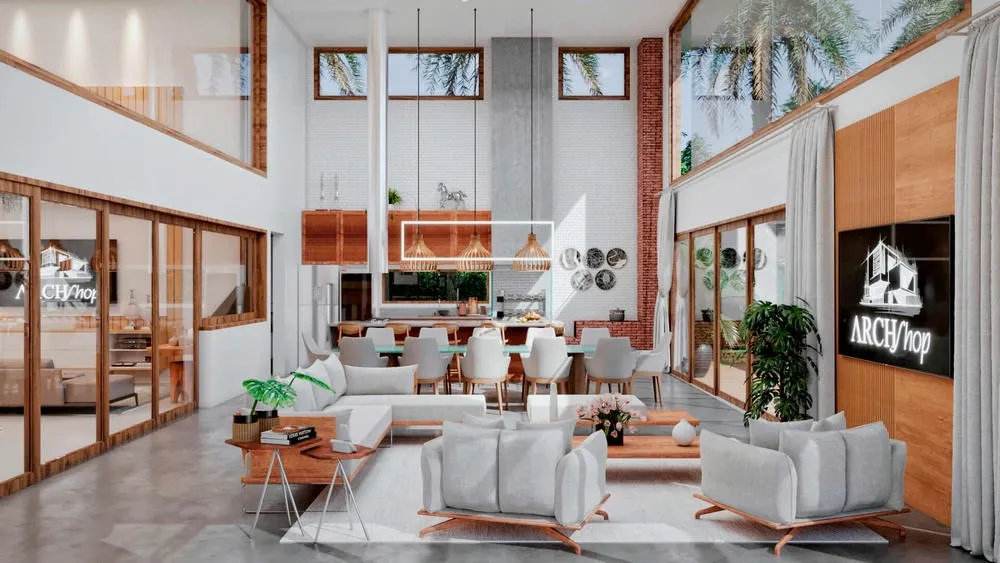
It is important to maintain visual and aesthetic unity in all environments of the house, especially when they are integrated. This can be achieved through the use of cohesive colors, textures, and materials. They help create a sense of continuity and harmony throughout the space. The interior design project is important to develop a suitable composition that allows for the creation of a more pleasant and functional environment.
The open concept in architecture is an effective way to create more spacious, flexible, and integrated spaces. The tips above can help homeowners apply this concept in their own residences. It is important to remember that success in applying the open concept depends on a good understanding of the structure and needs of the house. Therefore, the presence of a professional is essential not only to do the planning but also to accompany its process. Having knowledge about the proper use of colors, textures, and materials is also essential.
One of the main advantages of an open-concept house is greater socialization. Without walls or doors separating the common areas, residents can easily communicate with each other without having to move between rooms. This creates a more welcoming and sociable space, which can be especially beneficial for families with young children. Open-concept areas are also excellent for hosting family and friends gatherings.
With fewer walls and doors, an open-concept house allows natural light to circulate freely throughout the space. This means the house can be brighter and more luminous, as well as saving electricity during the day. The increase in natural light also has health benefits, as it helps regulate the body's circadian rhythm.
An open-concept house is perfect for those who enjoy hosting friends and family at home. With an integrated and barrier-free space, it is possible to easily accommodate larger groups of people. In addition, the living room, dining room, and kitchen become a large and functional area that facilitates their use and social conviviality.
An open-concept house offers more versatility in the use of space. Residents can easily rearrange furniture and decor to meet their needs at different times. In addition, the integrated space can be used in different ways, depending on the activities and needs of each resident or group of people.
Open-concept houses are a growing trend in the real estate market. Having an integrated and well-planned space can appreciate the property and make it more attractive to potential buyers. This can be especially important in areas where competition for buyers is high.
The lack of privacy is one of the main disadvantages of the open concept in the social areas of the house. Everything that is said or done in one room can be easily heard and seen by those in another room. This can be a problem when there are visitors in the house or in situations where one wants to have a more private conversation.
Without walls or partitions separating the environments, sound travels freely. This can be a problem in situations where more than one activity is happening at the same time. For example, if someone is watching TV in the living room while other people are talking in the kitchen. The sound of the two activities can mix, making it difficult for residents to hear and understand.
Dirt can spread easily in an open-concept house, which requires a more extensive, complex, and laborious cleaning. Since the kitchen is integrated with other environments, it is necessary to always be attentive to keep the areas clean and organized. Dirt and grease can reach the furniture, carpets, and curtains of the space. It is important that the interior planning is smart and comfortable, anticipating this type of problem.
Open-concept houses can make it difficult to define living areas. The dining room, for example, may be too close to the living room and interfere with the use of the other. This can be especially problematic in situations where residents want to use different areas for different purposes. One person may want to watch a movie in silence while another wants to cook or socialize in another part of the room.
An open-concept house can be harder to heat or cool. This is because the air spreads quickly throughout the house, making it more difficult to maintain a comfortable temperature. Depending on the size of the space, heaters and air conditioners may not cover the entire environment.
In addition to uneven distribution, the open concept can also create areas with uncomfortable and unpleasant temperatures for residents. Another factor that aggravates this problem is the presence of large windows or glass doors. They allow excessive sunlight and heat to enter, which increases the internal climate of the house.
To solve this problem, many strategies can be adopted. Whether from architectural solutions in the project itself or in the smart installation of heating and air conditioning systems. It is also possible to adopt thermal insulation options that help control the entry of heat or cold into the residence. Blackout curtains and double-glazed windows are two examples.
The open concept in architecture can bring several benefits to many projects, whether large or small. Its approach consists of a design that emphasizes the openness and fluidity of the interior spaces of the house. The goal is to create a sense of continuity and integration between different environments, allowing the entry of natural light and better air circulation.
In large, high-end houses, the application of the open concept seeks to create spacious, integrated spaces and bring sophistication to the project. The environments become more pleasant and functional, ensuring practicality for the residents. In addition, the integration of spaces improves air circulation and invites natural light into the internal areas. This feature can help reduce energy consumption and create a more comfortable climate for residents.
The open concept also allows for the creation of personalized and adaptable environments. In professional projects made by qualified architects, it presents smart design solutions that value the property.
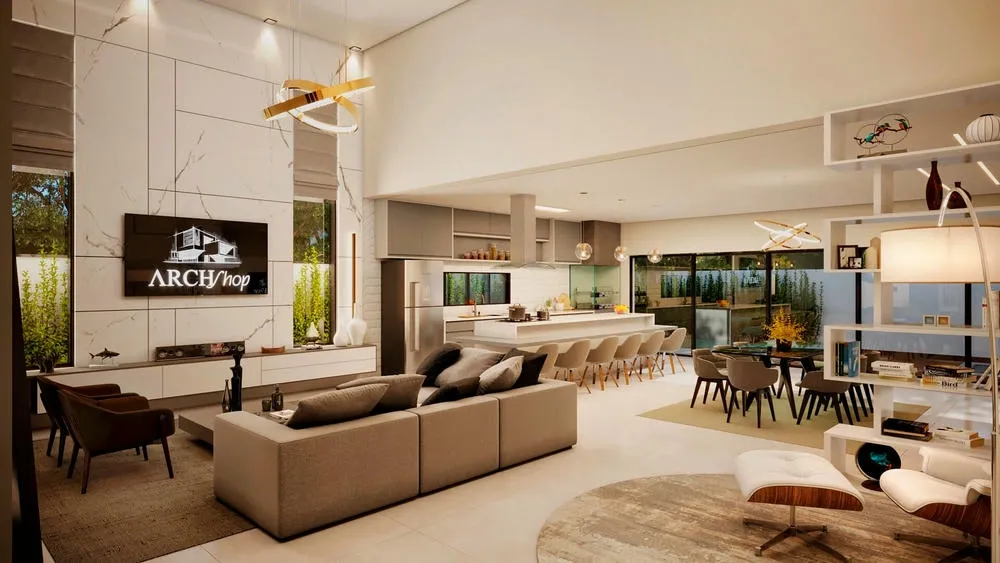
The Montevideo Project is a ready-made floor plan for a single-story house with an open concept. It was developed on a 17x30 lot, with 246.28m² of built area, 3 suites (1 master suite), 5 bathrooms, 3 garages, an office, gourmet area, and pool. The open concept in this project involved the living room (37.50m²), dining room (30.55m²), and gourmet kitchen (18.48m²). The planning also includes a reading area with an armchair and an open-shelf bookcase. The entire design of the environment was thought for sophistication and included luxurious elements. The project adopted neutral and cozy tones present in the almost 90m² of open concept. You can check out the complete project here!
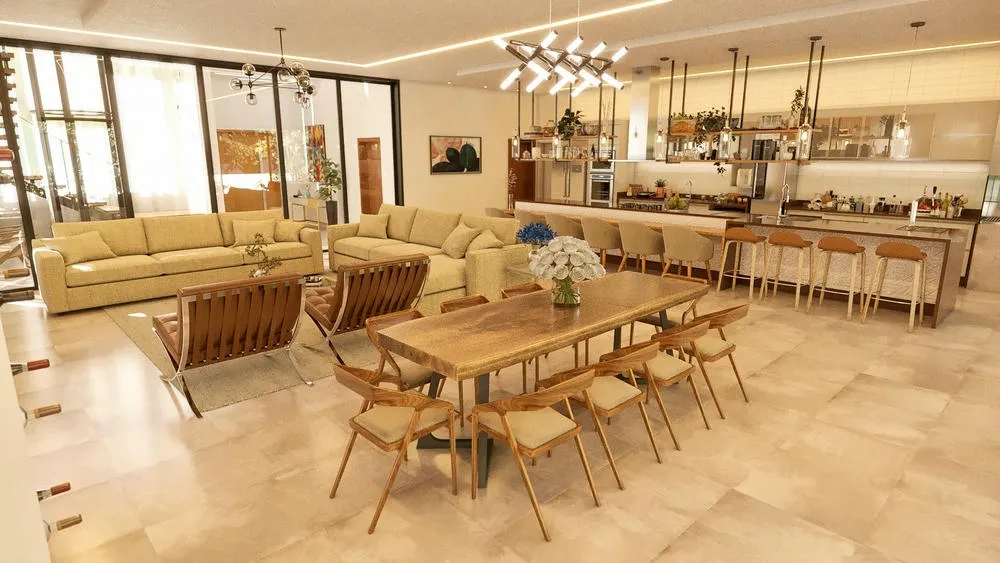
The Los Angeles Project is a modern house plan developed on a 20x35 lot. It has 555.9m² of built area and features 4 suites (1 master suite), 7 bathrooms, 3 garages, an office, gourmet area, and pool. The open concept embraced the TV room, dining room, and gourmet kitchen of the house. Its planning prioritized creating a warmer and cozier atmosphere. For this, the space features woody tones, refined decoration, and intimate lighting. Its 110.25m² of open concept are further expanded by the adoption of glass panels and doors. With access to the living room and the leisure area at the back, they make the ground floor of the project even grander. You can check out the complete project here!
In small houses, the application of the open concept can optimize the available space and make the environment more functional and inviting. The integration of environments creates a greater sense of spaciousness and comfort in smaller projects. The union of the living room and kitchen, for example, can be a solution to avoid very cramped rooms. The integration of social areas with the backyard can also expand the environments, creating new fields for leisure and coexistence.
In addition, the open concept in small houses values the economy and sustainability of the project. Just as in larger, high-end houses, the ample entry of natural light can contribute to the well-being of the residents. For both types of projects, the open concept aims to create a cozier and more welcoming environment.
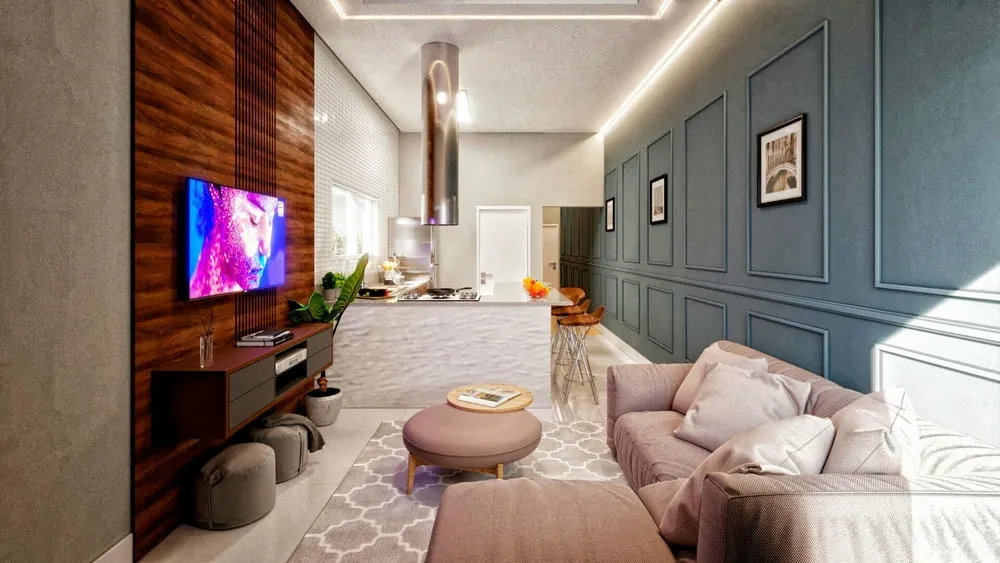
The Kyoto Project is a ready-made plan developed on a 5x25 lot, with 59.97m² of built area, 2 bedrooms, 1 bathroom, and 1 garage. For this project, the open concept was essential to create a more comfortable internal environment. By integrating the living room (9.76m²) and the kitchen (11.52m²), it was possible to plan a more spacious and pleasant room for the residents. The goal was to convey a sense of spaciousness, avoiding the feeling of confinement common in small houses. The inclusion of a kitchen counter allowed the niches to be maintained without losing the open concept. Other architectural elements also contributed to the composition of this space: from the lighting to the feature wall. You can check out the complete project here!
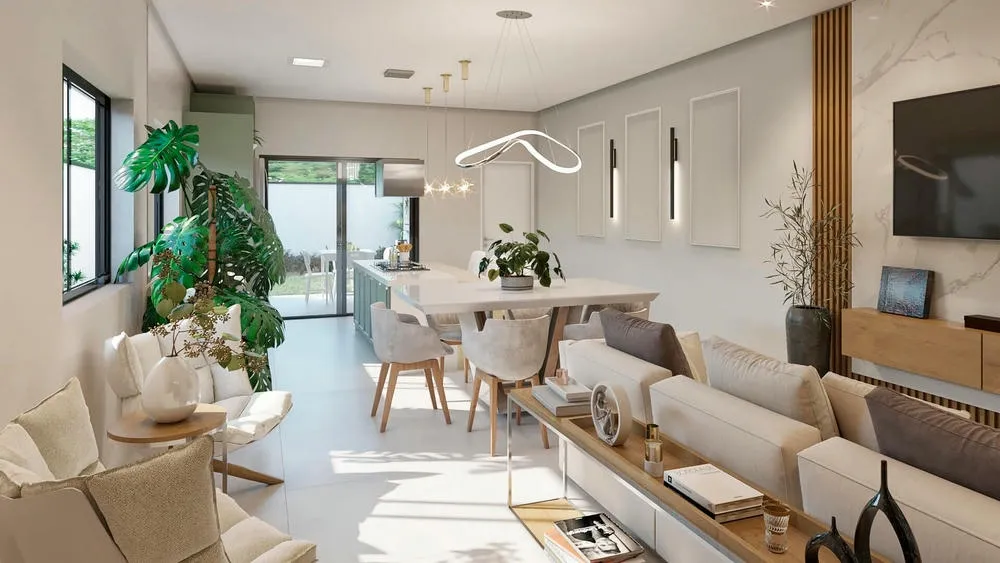
The Turkey Project is a small and modern house project made on a 6x24.5 lot. It has 150.57m² of built area, 3 bedrooms (1 suite), 3 bathrooms, 1 garage, and a gourmet area. In this small two-story house, the open concept was developed on the ground floor, integrating the social areas. The living room and kitchen (34.44m²) established a spacious and functional living area. The mild tones applied throughout its extension guaranteed greater fluidity in the design of each room. The design of the glass door at the back further increased the dimensions of the open concept and embraced the gourmet area and the garden. You can check out the complete project here!
In summary, applying the open concept can bring several benefits to large, high-end houses and small houses, such as creating more spacious and integrated spaces, optimizing available space, improving air and natural light circulation, saving energy, sustainability, flexibility in decoration, and increasing property value. To apply this concept efficiently, it is important to have a qualified and experienced professional in architectural projects, who can guide in choosing the best solutions for each type of environment.
To see more architectural projects with an open concept, visit the ArchShop catalog!
 https://creativecommons.org/licenses/by-nc-nd/4.0/https://creativecommons.org/licenses/by-nc-nd/4.0/ArchShopArchShop
ArchShop is redefining the concept of residential architecture in Brazil, making high-quality projects accessible to everyone. Combining over 20 years of expertise in the construction sector with technological innovation, the company offers a complete digital platform that simplifies and democratizes the process of building the dream home.
See also
Understand what a true luxury two-story house is. Come check out its essential characteristics so you don't make a mistake when transforming a beautiful project.
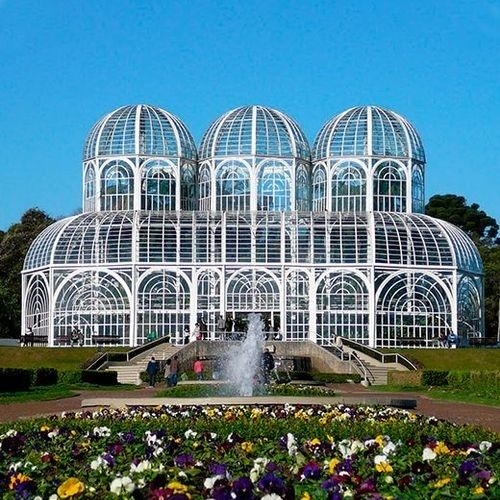
In this article, we will present 5 Brazilian cities that are a reference in architecture and that enchant visitors with their imposing constructions and beautiful urban landscapes.
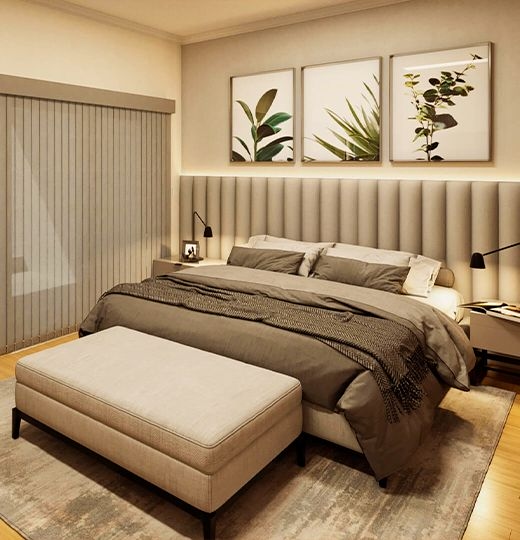
Looking for a 3-bedroom house plan that meets the needs of the whole family? Check them out below!
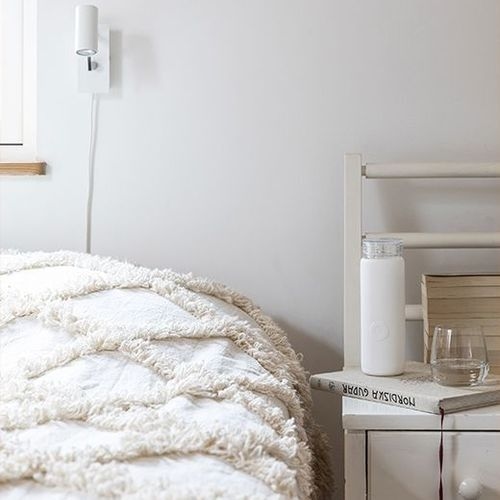
Inspired by the rich history of the region, it has evolved to embrace minimalism, a clean aesthetic, and an unwavering appreciation for the beauty of natural materials.
Advertise or Publish
We believe that the best ideas arise from the exchange of experiences and the sharing of different perspectives. Open the doors to new opportunities and be part of our blog! If you have an interesting article, an amazing work, a product or service that deserves to be highlighted, contact us.