Archshop,
Jul 1, 2026
How to Optimize Small Spaces in Apartments and Houses
In this article, we will share valuable tips on how to optimize small spaces in apartments and houses.
 https://creativecommons.org/licenses/by-nc-nd/4.0/https://creativecommons.org/licenses/by-nc-nd/4.0/ArchShopArchShop
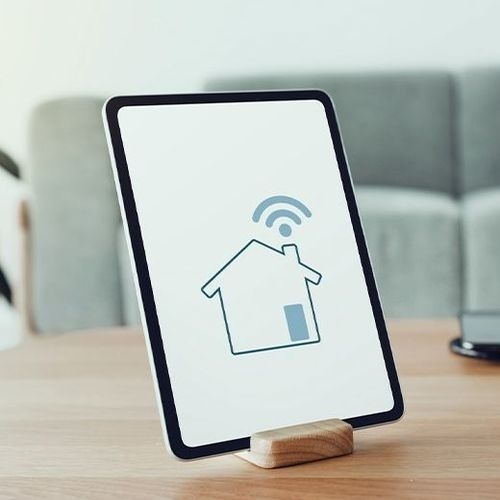
Home automation is a set of systems and devices that allow the control and management of various functionalities of a house.
Home automation is a technology that has become increasingly popular in modern architecture. It is a set of systems and devices that allow the control and management of various functionalities of a house. Lighting, temperature, security, and entertainment are all optimized in an automated and integrated way. With the growing search for practicality and comfort, home automation has aroused great interest among architects and consumers. In this article, we will explore in detail what home automation is and how to apply this new trend that is here to stay.
Let's go!
Home automation is a set of technologies that allow controlling different systems present in a house in an automated and integrated way. With automation, it is possible to program the operation of various equipment and devices. Lighting, air conditioning, and curtains are some examples that can be optimized in a personalized way, making it more convenient for residents.
Home automation can be controlled through devices such as smartphones, tablets, and voice assistants. They facilitate the management of the house's systems from anywhere and at any time. In addition, home automation can bring several benefits: comfort, security, energy efficiency, and practicality. By programming the operation of the systems, it is possible to save energy and money, in addition to avoiding the waste of resources.
In a simplified way, home automation is a technological solution for the control and management of the different systems of the house. It brings numerous benefits to the daily life of residents, such as comfort, security, and economy.
Contrary to what many may think, home automation is not a new concept. Its roots date back to the 1970s, when the first automation systems were developed. Its initial objective was to control the lighting and temperature systems of residences and commercial buildings. At that time, automation was an exclusive solution for high-end constructions and companies, due to the high cost of implementation and maintenance.
Over the years, technology has evolved and home automation has become more accessible and viable for the general public. The popularization of the internet and the development of mobile devices allowed automation to be controlled remotely. In a more simplified and attractive way, smartphones and tablets made automation even more possible for all consumers.
Currently, home automation is a growing trend in the real estate market and is widely used in new construction and renovation projects. In addition, automation is also a popular solution for smart homes. It integrates security, lighting, audio, and video systems to offer greater convenience and security to users. With the continuous advancement of technology, home automation tends to become even more accessible and integrated into people's daily lives. This new reality is here to facilitate the management and control of the house's systems, providing a more comfortable and efficient experience.

Home automation works through the integration of different systems present in a house. Lighting, air conditioning, curtains, sound system, security cameras, among others. All are connected to a network and controlled by electronic devices. These devices include smartphones, tablets, voice assistants, remote controls, or even specific automation panels.
The first step to implementing home automation is to select the systems that will be part of the automation. It is important to assess the needs of the residents and which systems will be most suitable to meet these needs.
Next, it is necessary to install the electronic devices needed to control these systems. This includes sensors, actuators, and control modules. They will be responsible for receiving commands from the control devices and executing the corresponding actions on the systems. The installation of home automation can vary according to the systems to be integrated and the type of electronic devices chosen for control.
With the devices properly installed, it is now time to program the desired automation functions. That is, in this step it is possible to define the operating times of each system and make its personalized programming. Define lighting scenarios, create activation rules for security systems, among many other possible functions.
Once programmed, home automation is ready to be used. The residents of the house can control all integrated systems from the chosen electronic devices. In this way, monitoring the operation of each system and making adjustments to the settings becomes even more practical - even from a distance.
In addition, home automation can be configured to operate autonomously, according to the residents' preferences. For example, it is possible to program the house lighting to turn on automatically when someone's presence is detected, or to adjust the air conditioner temperature according to the ambient temperature.
Home automation, therefore, works through the integration of different systems in a network controlled by electronic devices. This integration and control allow the management of the systems to be personalized and automated. They provide greater comfort, security, and energy efficiency for residents.
To do home automation, some basic requirements are needed. First, you need to have the systems that will be integrated into the automation, such as lighting, air conditioning, security cameras, among others. In addition, you need to have electronic devices that allow the control of these systems. This includes smartphones, tablets, voice assistants, remote controls, or specific automation panels.
Another important requirement is to have a stable and secure communication network, capable of connecting electronic devices to the systems to be controlled. In this sense, it is recommended to have a high-speed Wi-Fi network and an updated router.
Another important point is to have professionals specialized in home automation. They will be responsible for installing the necessary devices and configuring the automation functions according to the residents' needs. These professionals can also help choose the most suitable systems to meet the residents' needs and assess the compatibility of electronic devices with these systems.
Finally, it is important to define a budget for the implementation of home automation. The cost can vary according to the number of integrated systems, the complexity of the automation functions, and the type of electronic devices chosen.
Home automation has become increasingly popular among homeowners, bringing a series of benefits to the daily routine. However, many people still do not understand how it interferes with building installations. Before explaining the relationship between these two concepts, it is important to understand what building installations are.
Building installations are responsible for bringing basic services into a building, such as water, gas, electricity, and sanitation. That is, they are essential for a property to function correctly. When we talk about home automation, we are referring to the use of technology to make life easier for the residents of a house or apartment. This technology can include lighting, sound, security, air conditioning systems, among others.
Home automation interferes with building installations by requiring a specific infrastructure to function correctly. For example, a lighting automation system may require the installation of sensors and control devices, which need to be integrated into the house's electrical network. A sound system may require the installation of speakers at strategic points in the residence.
Therefore, it is important that home automation is planned and executed by qualified professionals. They can safely assess the specific needs of each project and indicate the best solutions. In addition, home automation can also bring benefits to building installations. The system can help optimize electricity consumption and reduce water waste, for example. In this way, it is possible to have a more sustainable and economical house.
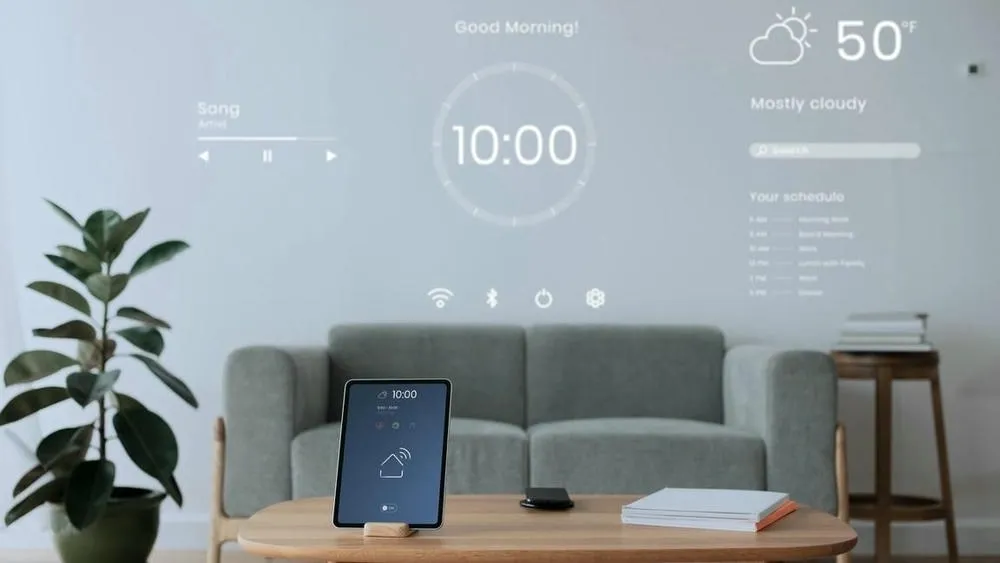
Home automation is a growing trend in the architecture market, bringing more and more practicality and comfort to homes. With the evolution of technology, it is possible to find several options of systems that allow the automation of different household tasks, offering more convenience and security for residents. Below, we list the main types of home automation found in the market:
These are just some of the main types of home automation available on the market. Increasingly sophisticated, these systems bring more practicality and comfort to homes, in addition to contributing to the energy efficiency and security of residents. Consult a specialized architect to find the best solutions for your home.
With the popularity of virtual assistants, home automation has become even more accessible and practical. Alexa, Amazon's virtual assistant, is one of the most popular options on the market, allowing the control of various smart devices in the house through voice commands. If you are thinking of doing home automation with Alexa, check out the following tips:
Home automation with Alexa brings more practicality and convenience to the home, in addition to enabling greater control over smart devices. It is important to choose compatible devices and follow the configuration instructions to make the most of the virtual assistant's features.
Home automation is an increasingly popular trend, bringing practicality and comfort to homes. However, many people still think that this technology is expensive and inaccessible. But the truth is that it is possible to do home automation simply and at a low cost, without giving up quality and efficiency. Check out some low-cost solutions for those looking for home automation:
These are some low-cost solutions for those looking for home automation. It is important to highlight that it is necessary to choose compatible devices and follow the configuration instructions to make the most of the features of home automation.
Home automation is a technology that brings numerous possibilities for modern architecture. In addition to increasing comfort and practicality, home automation can also assist in energy efficiency, security, and cost control. With technological advancement, home automation has become an increasingly present trend in architectural projects. Home automation has made the house of the future a present reality. It is up to consumers and architecture professionals to explore its potential in creating intelligent and connected spaces.
 https://creativecommons.org/licenses/by-nc-nd/4.0/https://creativecommons.org/licenses/by-nc-nd/4.0/ArchShopArchShop
ArchShop is redefining the concept of residential architecture in Brazil, making high-quality projects accessible to everyone. Combining over 20 years of expertise in the construction sector with technological innovation, the company offers a complete digital platform that simplifies and democratizes the process of building the dream home.
See also
In this article, we will share valuable tips on how to optimize small spaces in apartments and houses.
Explore 23 projects with a gourmet space, from compact houses to high-end models with a pool and barbecue. Find the perfect plan for your home!
In this article, we will highlight the trends that continue to evolve, while also presenting some exciting new developments in the field of architecture, interior design, and decoration.

In the world of colors, there are three main categories that describe their visual and emotional characteristics: warm, cool, and neutral colors.
Advertise or Publish
We believe that the best ideas arise from the exchange of experiences and the sharing of different perspectives. Open the doors to new opportunities and be part of our blog! If you have an interesting article, an amazing work, a product or service that deserves to be highlighted, contact us.