Archshop,
Jul 1, 2026
How to Optimize Small Spaces in Apartments and Houses
In this article, we will share valuable tips on how to optimize small spaces in apartments and houses.
 https://creativecommons.org/licenses/by-nc-nd/4.0/https://creativecommons.org/licenses/by-nc-nd/4.0/ArchShopArchShop
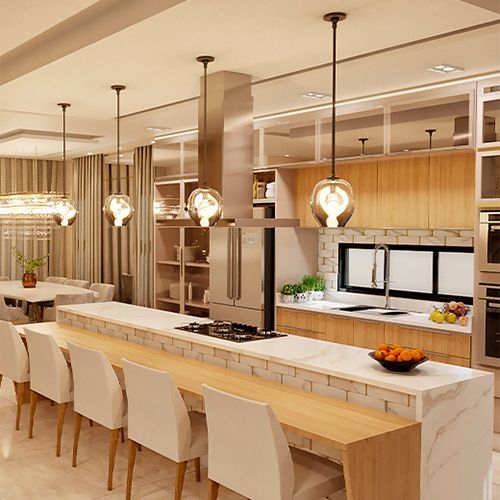
Everything you need to know about planned kitchens. We also list the main architectural trends in the market and present the best materials, layouts, and lighting types for this environment.
Planned kitchens have been gaining more and more space in the decoration of houses and apartments. For those looking for a functional, stylish, and organized room, they are often cited as the best option. However, for many people, the question may still exist: what are planned kitchens? And how to plan my kitchen?
In this article, we aim to cover everything you need to know about the subject. We mention their origin, definition, advantages, and the best tips for planning. We also list the main architectural trends in the market and present the best materials, layouts, and lighting types for this environment. Keep reading and discover how to have a dream planned kitchen!
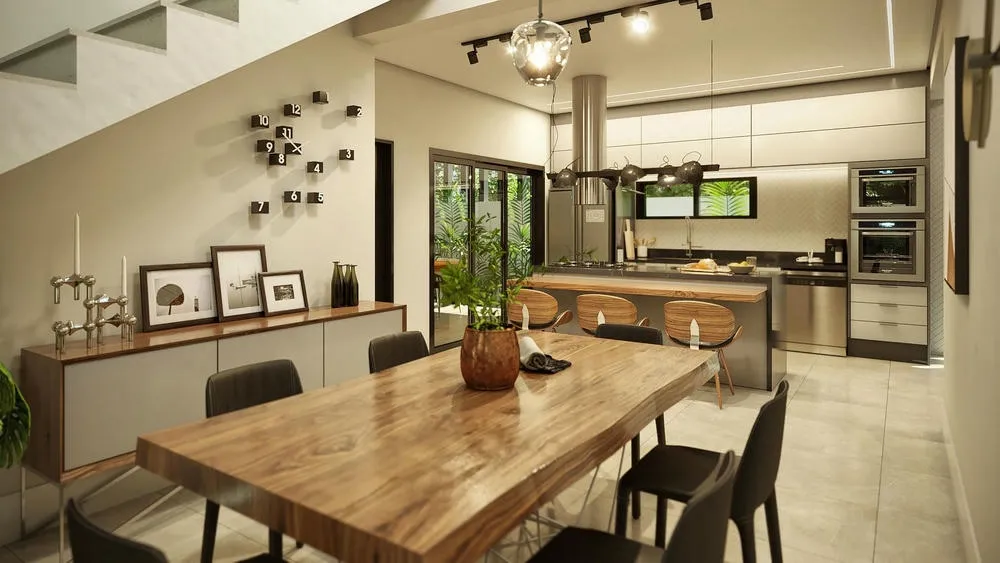
Planned kitchens are customized rooms designed to meet the residents' needs. This type of space aims to be highly functional and efficient, combining the best solutions in design and architecture. Planned kitchens include built-in cabinets and countertops, adequate lighting, and an efficient arrangement of appliances.
Each element in a planned kitchen receives special treatment. They are intelligently distributed, designed to maximize space and create a more pleasant environment for the user. Planned kitchens have become a popular choice for those who want a unique and exclusive room. They offer advantages over conventional kitchens and positively transform the resident's daily life.
For those looking to renovate or build a new house, planned kitchens can be the best option. Through a well-done project, it is possible to create a fully functional and more comfortable environment. Kitchens can add organization, create smart storage spaces, and present a more attractive design.
Planned kitchens are kitchen spaces designed according to the owner's needs and preferences. These kitchens are planned to be highly functional, efficient, and attractive, combining design and practicality.
Planned kitchens emerged in the 1920s, when modern architecture began to gain popularity. At that time, architects started creating planned kitchens to maximize available space and allow for better organization.
Over time, planned kitchens evolved to include features like built-in cabinets, countertops, and adequate lighting. These features allowed kitchens to become more efficient and functional, meeting the owner's needs.
Planned kitchens are important for several reasons. First, they are highly functional, allowing owners to create a kitchen space that meets their specific needs. Built-in cabinets and countertops help maximize space, while adequate lighting makes the room safer and more comfortable.
Furthermore, planned kitchens are attractive and can add value to the property. A well-executed project can transform the kitchen into a more pleasant and inviting space. It is in this environment that the resident will spend more time and can enjoy meals with family and friends. Good planning also offers durability, ensuring that the kitchen remains functional and attractive for a longer time.
Planned kitchens are kitchen spaces designed to meet the owner's needs and preferences. They emerged in the 1920s as part of modern architecture and have evolved over time. Today, they include features that optimize their use, making the spaces highly functional and enjoyable.
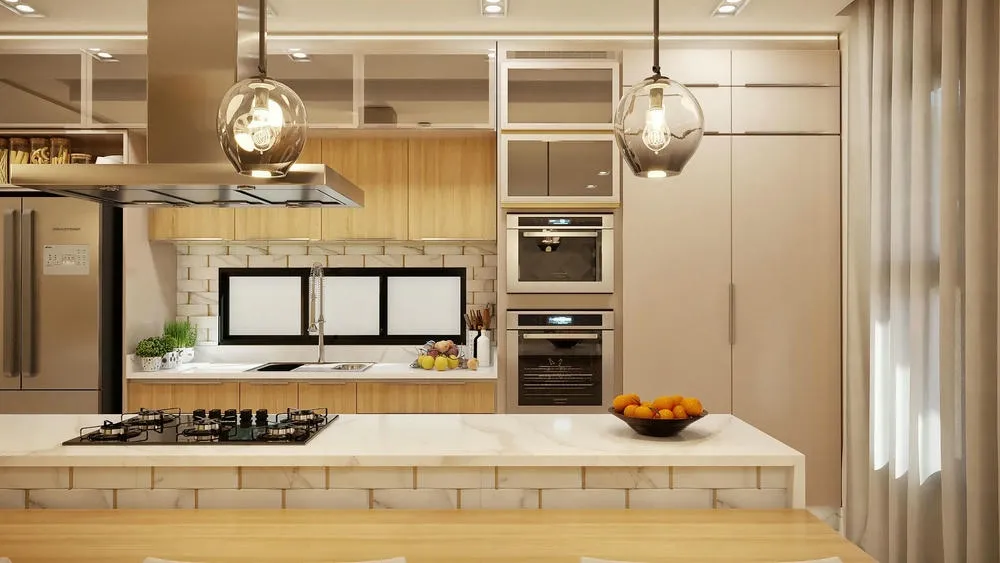
One of the main advantages of planned kitchens is the possibility of customization. With a planned project, it is possible to create a kitchen space that meets the owner's needs and preferences.
Planned kitchens are designed to be highly efficient, maximizing available space and offering better organization of elements.
It uses built-in cabinets and an efficient arrangement of elements to ensure more ample and functional storage.
Planned kitchens are designed not only with function in mind but also form. Their furniture is attractive and boasts a visually pleasing, inviting, and unique design.
Investing in a planned kitchen can increase the resale value of your property. This type of kitchen is highly valued in the market by buyers.
With a planned project, it is possible to make better use of the available space in the kitchen. The environment offers good circulation and a more comfortable room.
Planned kitchens offer more practicality in daily life. Each element is carefully thought out to make using the kitchen easier and more efficient.
Planned kitchens offer several advantages over conventional kitchens. Today they can be found as one of the most popular options for modern and contemporary house projects. It is ideal for owners who want a personalized kitchen space that reflects efficiency and practicality in daily life.
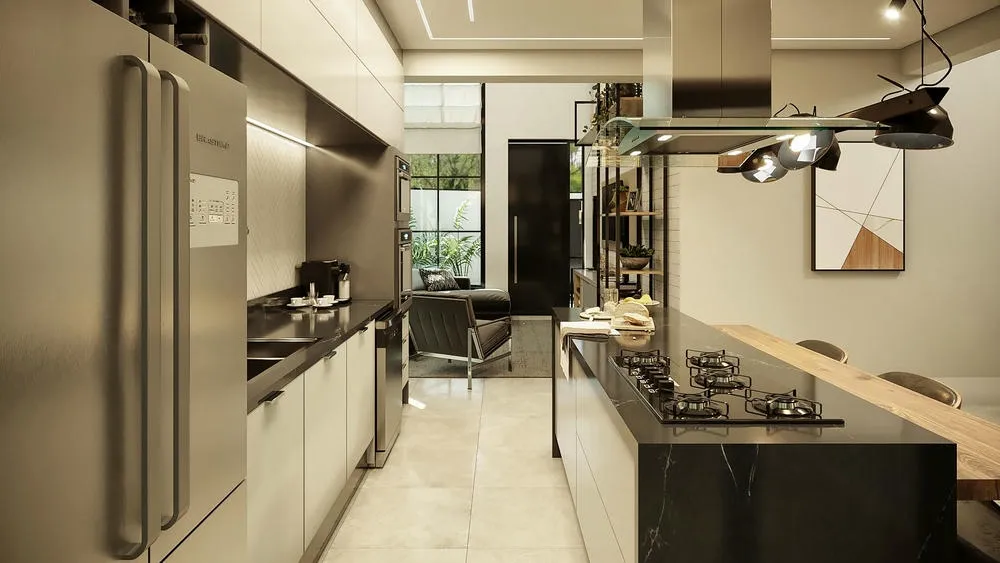
Planning a kitchen is a process that involves several steps, from the conception of the idea to the final execution of the project. Check out some tips below on how to plan a planned kitchen.
The first step in planning a kitchen is to define your needs and preferences. Think about how you use the kitchen and what you would like to improve. Also, consider your lifestyle and the design of your home.
Kitchen planning can be done by an interior designer, architect, or a specialized company. It is important to choose a professional with experience and skills to ensure the overall quality of the project.
Evaluate the available space in your kitchen and check which elements need to be kept or modified. Also, consider the lighting and ventilation of the space.
Choose the materials and finishes that will be used in the kitchen, such as types of wood, stone, and metals. These materials should be chosen based on their function, durability, and aesthetics.
Think about the arrangement of kitchen elements, with cabinets, countertops, appliances, and sinks. Consider their ergonomics and use, ensuring that everything is within reach and facilitates work in the kitchen.
An option for those who want a planned kitchen is to hire a company specialized in the subject. One of the options on the market is ArchShop, an online architecture store that offers interior planning for its projects. With ArchShop, you can customize your kitchen to meet your preferences and demands. The room becomes a unique space and dialogues with the other elements and finishes of the house, bringing visual harmony.
A planned kitchen requires careful and detailed design. To ensure a safe and high-quality result, it is important to choose a professional or specialized company in this area. One of the market options is ArchShop, which offers interior planning for all its projects (ready-made and exclusive).
When designing a planned kitchen, the choice of materials is crucial to achieve a functional and aesthetic result. There are several types of materials that can be used in planned kitchens, from wood to marble and stainless steel. In this topic, we will analyze the main types of materials available for planned kitchens.
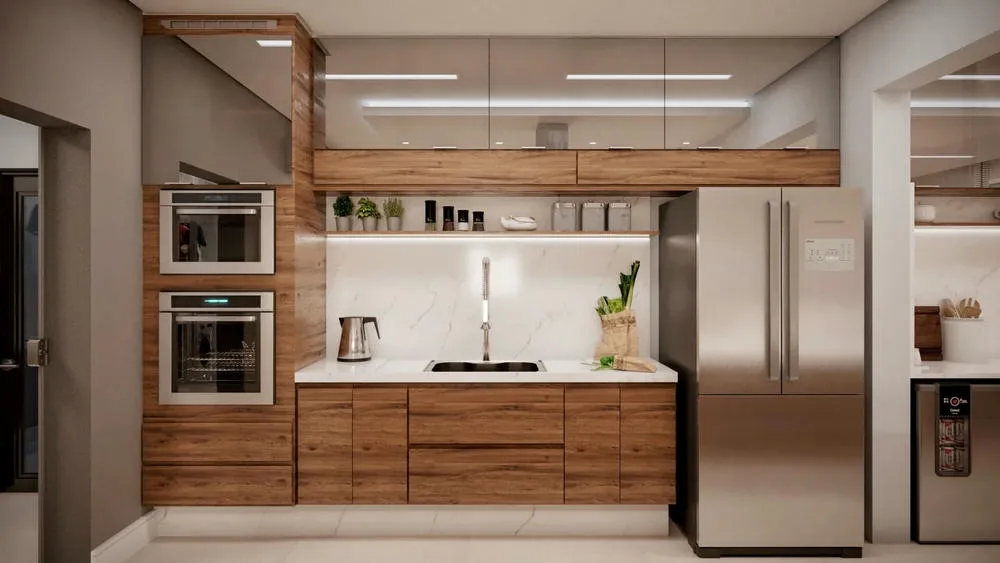
Wood is a classic and versatile material that can be used in various elements of a planned kitchen. Cabinets, countertops, floors. Solid wood is recommended for those looking for a durable and moisture-resistant material. Laminated wood (MDF), on the other hand, is a more affordable and easy-to-clean option.
Wood can also be painted, varnished, or left in its natural color. This variety of options offers a collection of styles to best suit the resident's tastes.
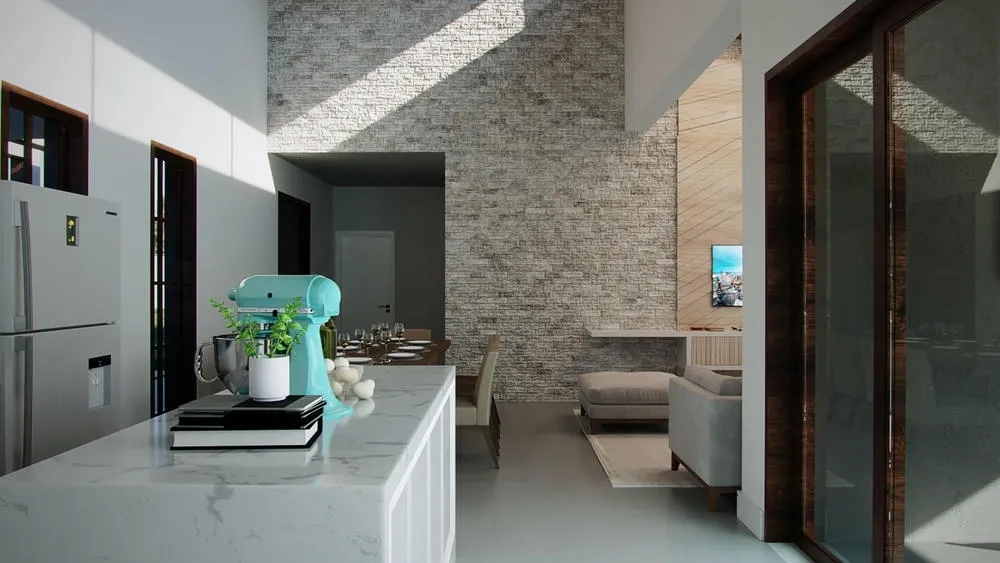
Stone is another popular material for kitchen countertops and floors. Granite, marble, and quartz are some of the most used types of stone in planned kitchens. Granite is resistant and easy to maintain, while marble is more delicate and must be sealed regularly to avoid stains. Quartz is durable and resistant to stains and scratches.
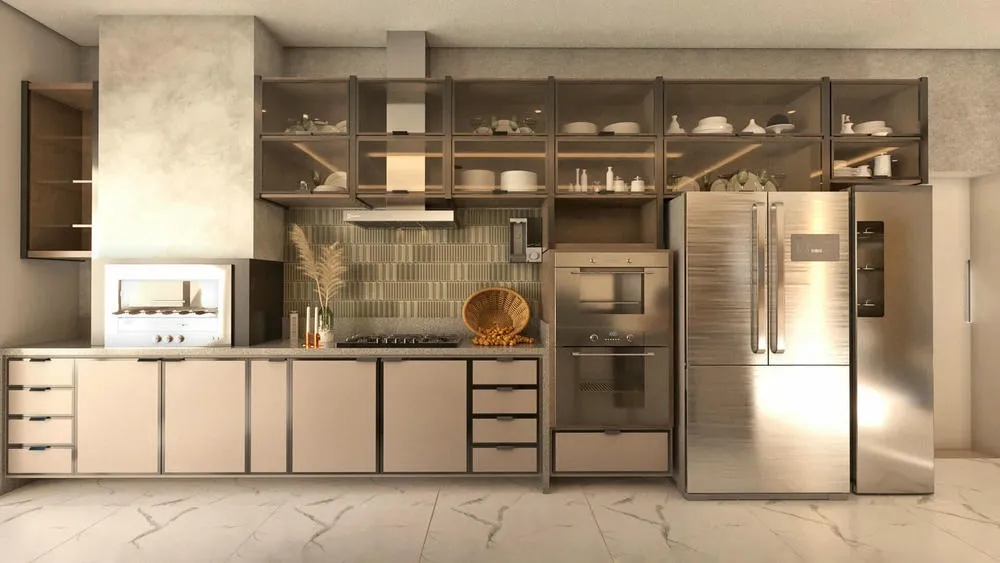
Stainless steel is a resistant and practical material that can be used in kitchen sinks, appliances, and cabinets. It is durable and corrosion-resistant, making it a popular choice for commercial and residential kitchens. Stainless steel is also easy to clean and can be combined with other materials, such as wood and stone.
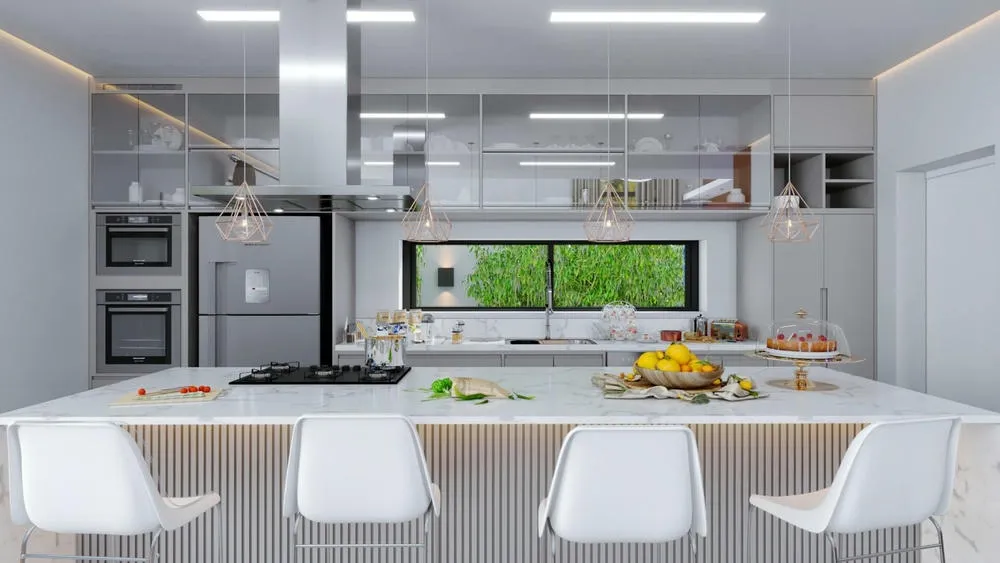
Glass is a modern and elegant option for planned kitchens. It can be used in countertops, cabinets, and even as a wall covering. Tempered glass is more resistant and safer than common glass and can be customized with different colors and textures.
The choice of materials is an important part of the planning process for a planned kitchen. Wood is classic and versatile, and stone is resistant and elegant. Stainless steel is durable and practical, and glass is modern and stylish. It all depends on the resident's needs and the style applied to the house.
When planning a kitchen, one of the main decisions to be made is about its layout. The right layout can make the room more functional and pleasant to use. The wrong layout, however, can make food preparation difficult and the environment uncomfortable. In this topic, we will explore the main layouts for the kitchen and the advantages of each one.
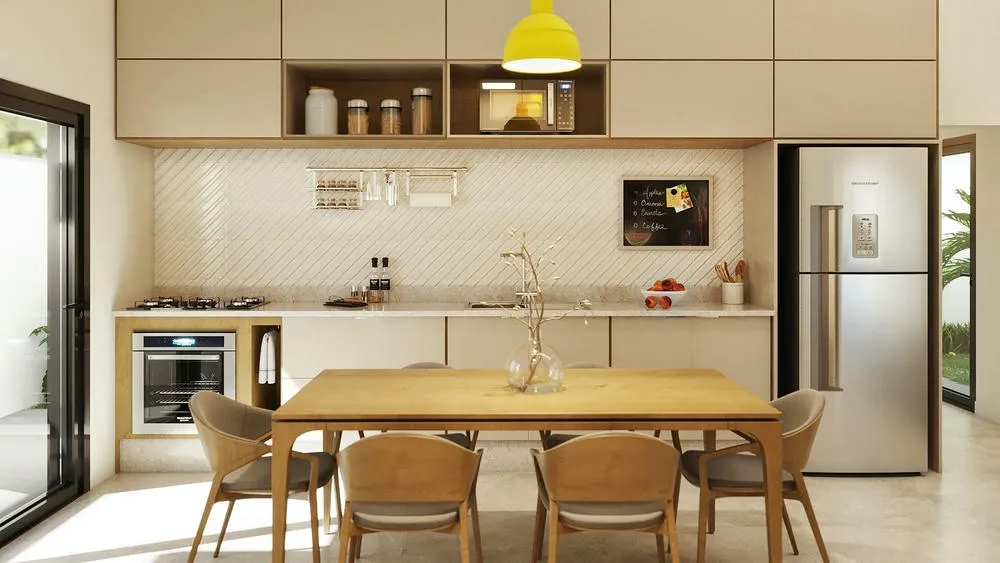
The linear layout focuses on having all the main kitchen elements (such as sink, stove, and refrigerator) aligned on a single wall. This maximizes the available space and creates a sense of fluidity and simplicity in the environment. The linear layout can also help improve the functionality of the kitchen, making the workflow easier. In addition, the simplicity of the design can be combined with decorative elements to create a more elegant kitchen.
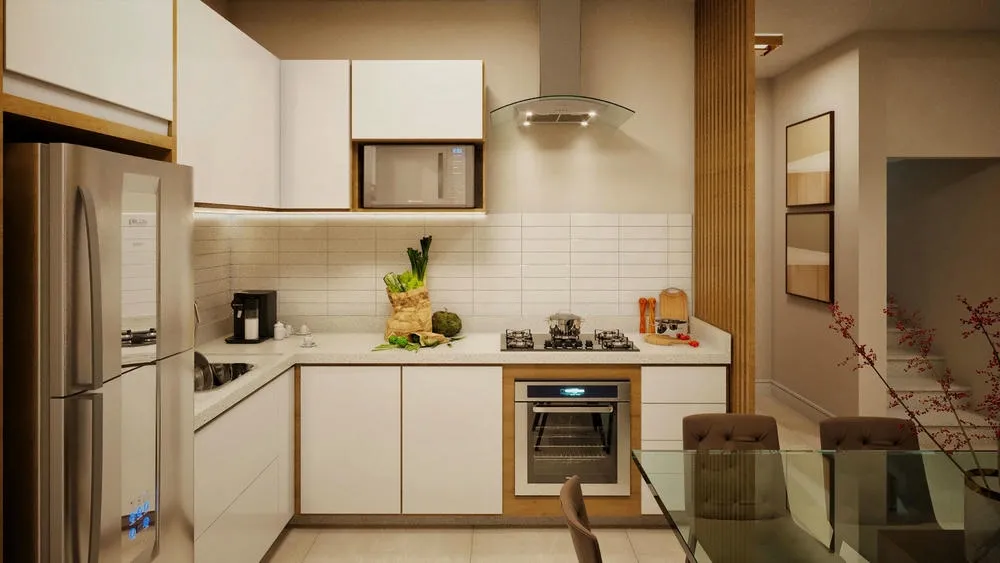
The L-shaped layout in the kitchen involves creating two perpendicular countertops that form a 90-degree angle, creating an L shape. This configuration can help maximize available space and make the kitchen more functional and efficient. Usually, one of the countertops is reserved for food preparation, while the other is used for washing and storage. The L-shaped layout can also offer greater design flexibility, allowing for the inclusion of dining areas and other decorative elements that can help create an elegant and comfortable kitchen.
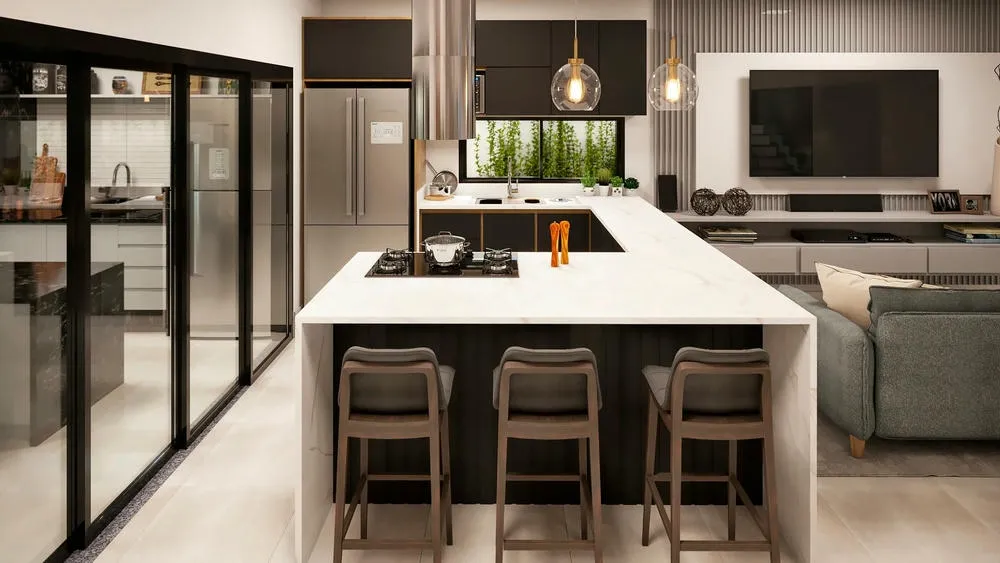
The U-shaped layout is a type of layout that involves creating a U-shaped countertop, with kitchen elements arranged on three sides. This allows a larger amount of space to be used, creating a more spacious and functional kitchen. The U-shaped layout also offers a large amount of storage space and can be easily adapted to include dining areas, islands, or peninsulas, creating a multifunctional and cozy kitchen. However, it is important to remember that the U-shaped layout can be more difficult to implement in smaller spaces, as it can lead to a feeling of tightness and hinder the circulation of people.
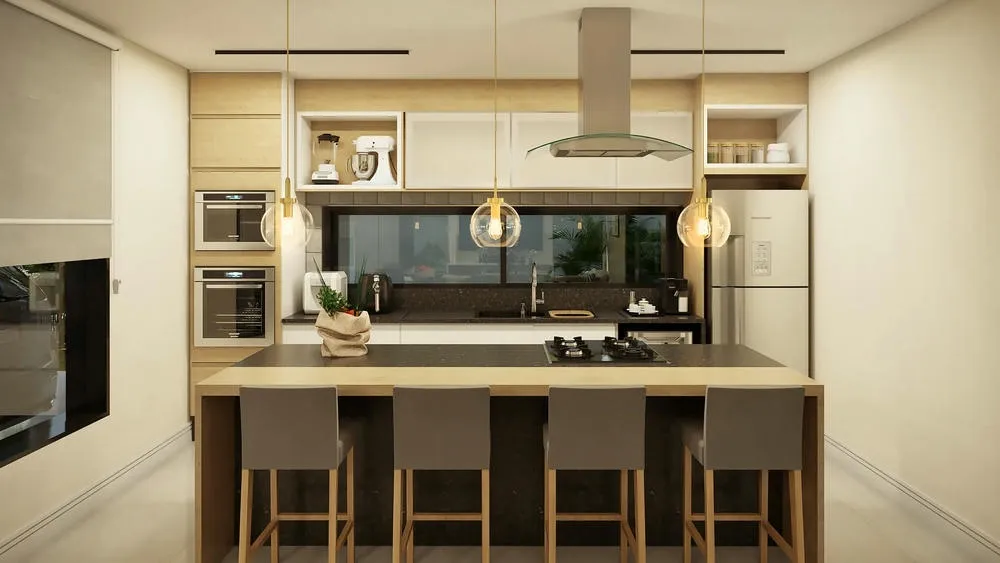
The layout with an island is a type of layout that involves creating a central island in the kitchen, usually with a countertop and space for storage and food preparation. The island can be used for a variety of functions, from food preparation to a dining area, becoming a focal point for the kitchen. In addition, the layout with an island allows for greater flexibility in the arrangement of kitchen elements, making it ideal for open spaces or larger kitchens.
However, it is important to remember that implementing a layout with an island may require considerable space in the kitchen, which can be a disadvantage in smaller kitchens. In addition, it is necessary to keep in mind the need for circulation around the island to ensure an efficient and safe workflow in the kitchen.
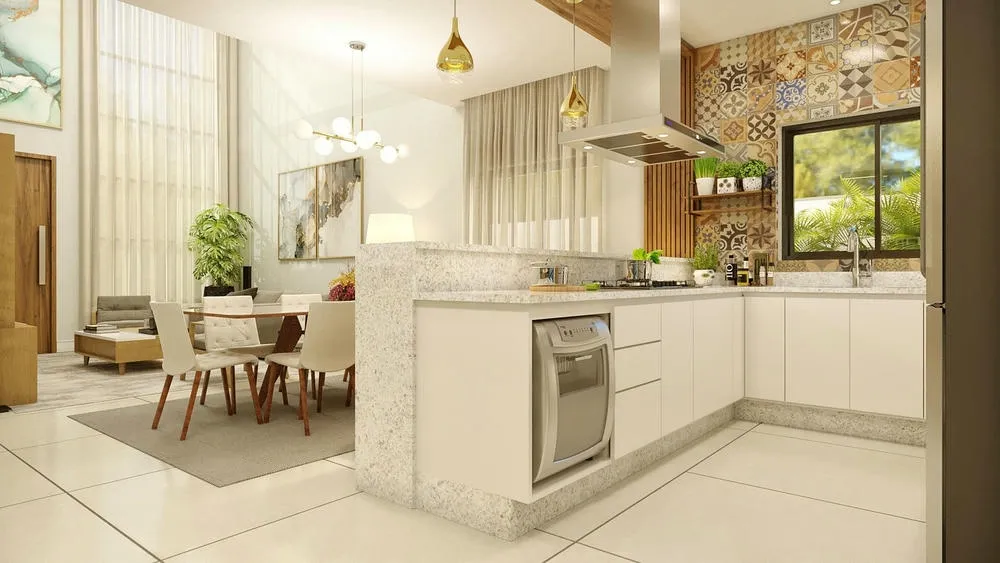
The layout with a peninsula is an option very similar to the layout with an island, but with some notable differences. While an island is an independent element in the center of the kitchen, the peninsula is an extension of the main countertop, connected to the wall or another kitchen element. This means that the peninsula is a great option for kitchens that do not have enough space for an island but still want a focal point in the kitchen design. The peninsula can also be used to divide the kitchen from other living areas, such as the dining room or living room, creating a sense of visual separation.
In addition, the peninsula can be used to create an additional dining area or to place a sink or cooktop, adding more functionality to the kitchen. However, as with the layout with an island, it is important to ensure there is enough space for circulation around the peninsula for a safe and efficient workflow in the kitchen.
When choosing the layout for your planned kitchen, consider the following factors:
The size of your kitchen influences the type of layout you can choose.
Consider how people move through the kitchen and plan a layout that allows for good circulation.
Think about how you use your kitchen and choose a layout that meets your needs. For example, if you like to cook and entertain friends, an island or peninsula layout might be a good choice.
Make sure the layout you choose allows for easy access to your kitchen utensils, appliances, and ingredients.
Choosing the perfect layout for your planned kitchen is an important part of the planning process. The different types of layout offer options for kitchens of all sizes and lifestyles. It is important to consider the factors mentioned above to choose the ideal layout and thus create a pleasant, functional, and beautiful planned kitchen.
A planned kitchen must have good storage space so that utensils, appliances, and ingredients can be stored efficiently. If the storage space is insufficient, the kitchen can become disorganized and impractical. In this topic, we will explore how to maximize storage space in a planned kitchen, including smart storage solutions.
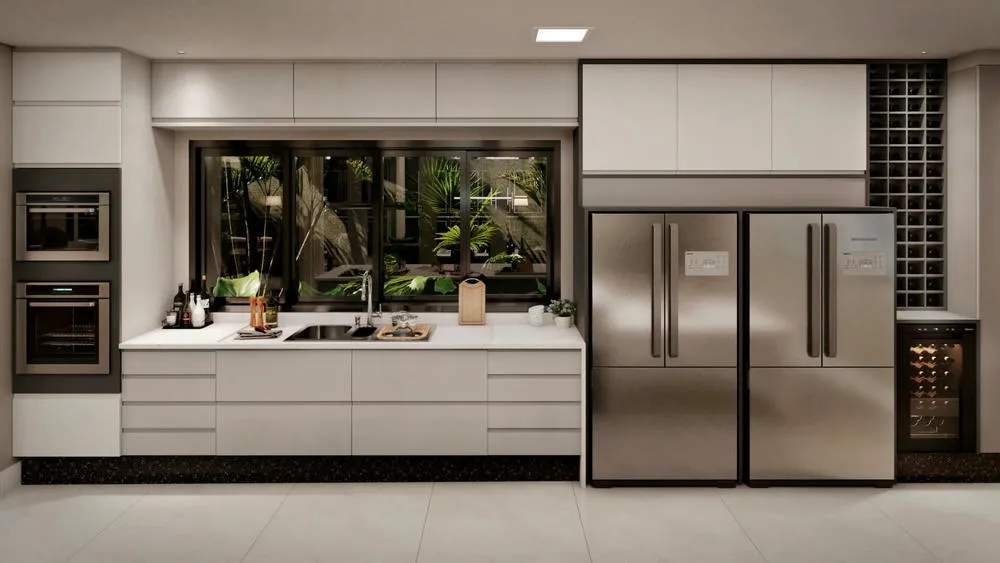
One of the simplest ways to maximize storage space is to use floor-to-ceiling cabinets. This allows you to take advantage of the entire vertical space of the kitchen.
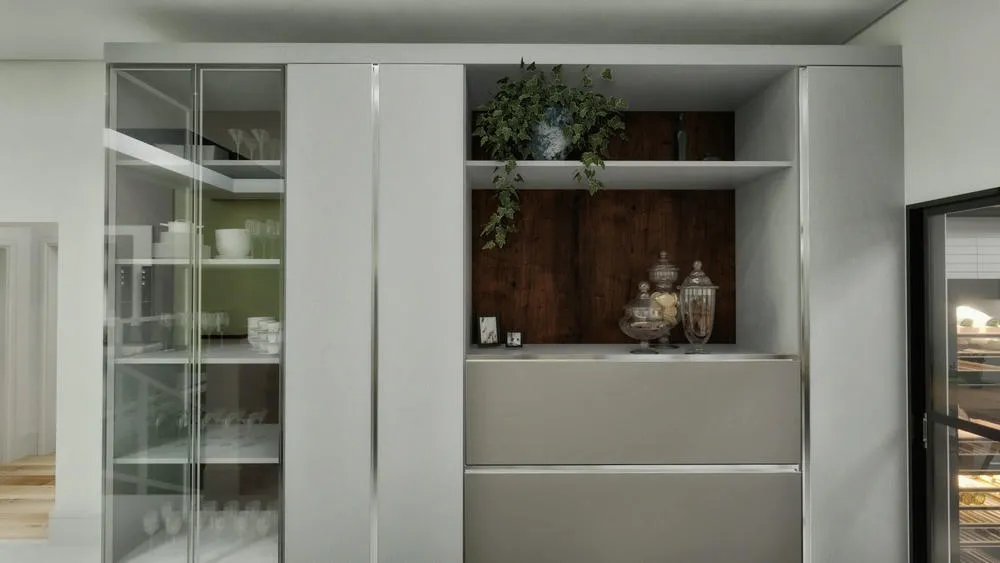
Open shelves are a popular option for modern kitchens, as they allow you to display beautiful utensils and dishes. They can also save space in cabinets, especially if you have many large and bulky items.
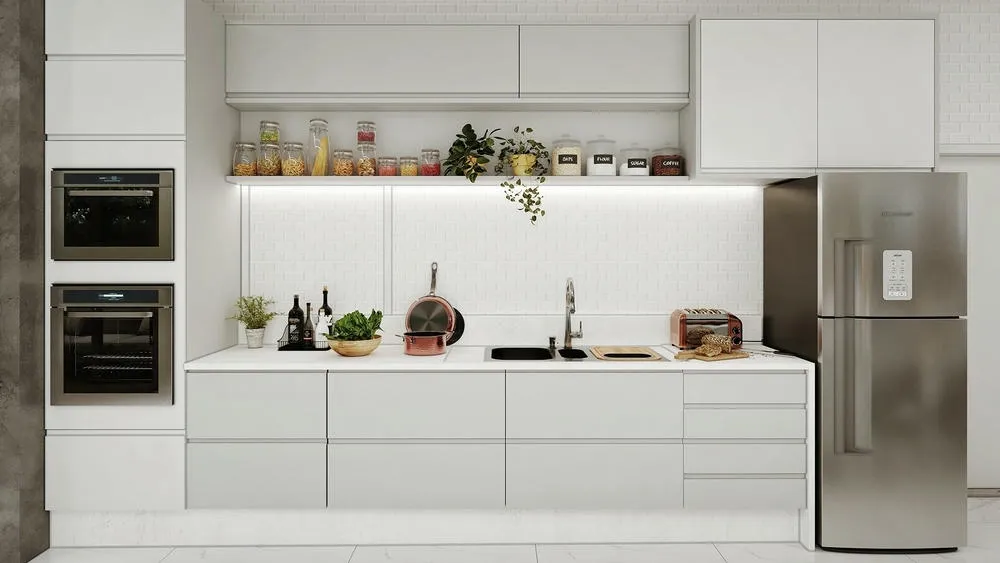
Drawers are a great option for storing cutlery and kitchen utensils. They allow you to have better organization of all items. In addition, single-width drawers can be used to store pots and pans.
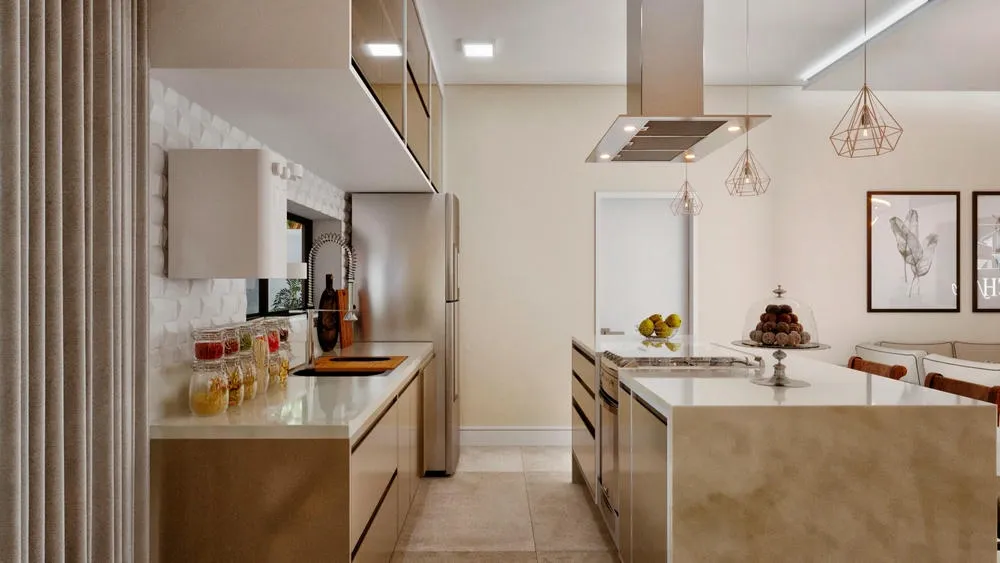
Cabinets with sliding shelves are a great option to maximize storage space in deeper cabinets. These shelves slide out, allowing easy access to items stored at the back of the cabinet.
Pull-out shelves are another smart storage solution for planned kitchens. They can be installed inside cabinets and pulled out when needed. This helps to maximize storage space in narrower cabinets.
Maximizing storage space in a planned kitchen is essential to ensure that the kitchen is practical and organized. By using smart storage solutions, it is possible to create a room that offers enough space for all your kitchen items.
Lighting is an important element to consider when designing a planned kitchen. When applied correctly, it not only creates a warm and pleasant atmosphere but also helps in the functionality of the kitchen. In this topic, we will provide tips for choosing the perfect lighting for a planned kitchen, citing examples.
Take advantage of natural light as much as possible. It is a healthier light source and helps save energy. Make sure you have large windows and use light curtains to let the light in.
General lighting should be uniform and illuminate the entire kitchen space. Recessed ceiling lights are a great option for general lighting.
Add directional lighting: Directional lighting can be added to highlight specific areas, such as the sink, countertop, and work area. Pendant or track lights are good options for directional lighting.
Task lights are especially useful in areas where brighter lighting is needed. The food preparation area is a good example. LED lights are ideal for this space as they are more energy-efficient and last longer.
The color temperature of the light can affect the appearance and mood of the kitchen. Cool white lights are better for work areas, while warmer lights are better for dining and social areas.
Here are some examples of lighting in planned kitchens:
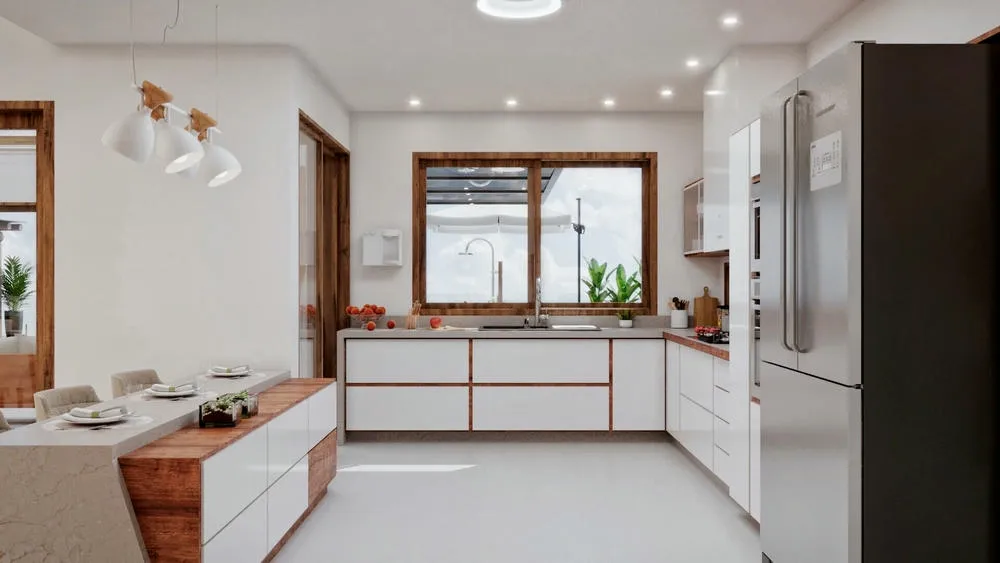
Recessed ceiling lights are a popular option for general lighting in planned kitchens. They are discreet and uniformly illuminate the entire kitchen space.
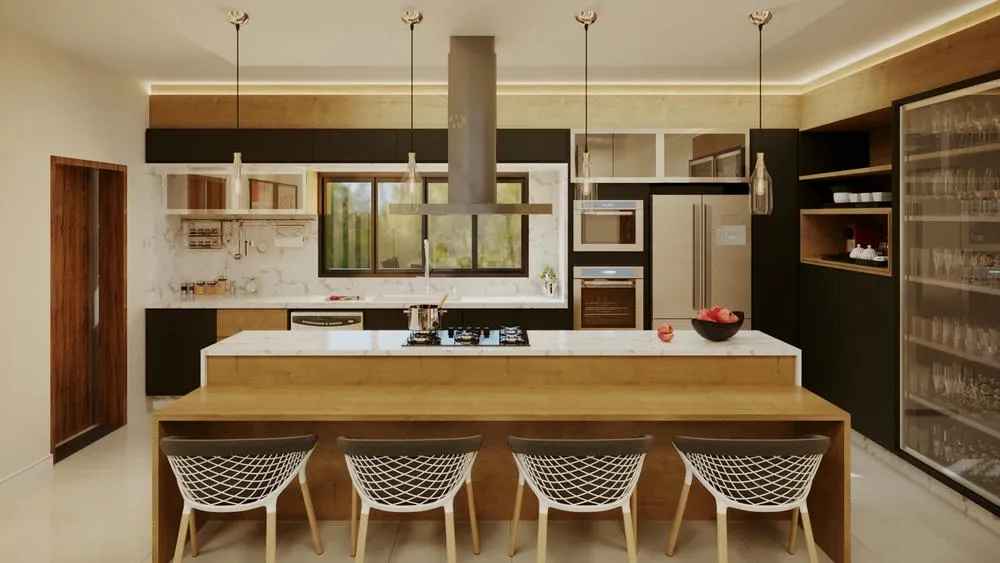
Pendant lights are ideal for directional lighting in specific areas, such as the kitchen countertop or dining table. They are versatile and can be used to create a modern and elegant look.
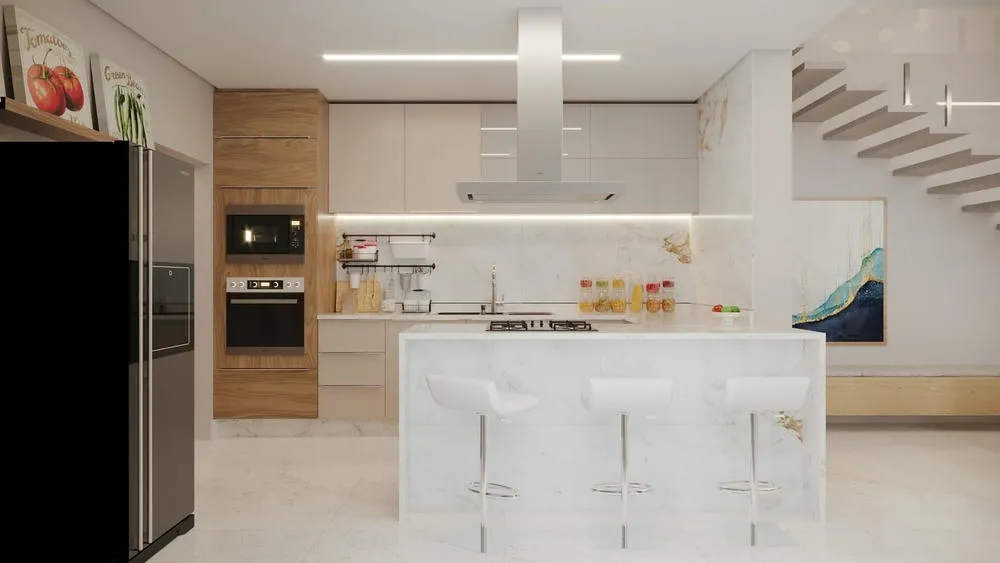
LED lights under the cabinets are a great option for task lighting in the food preparation area. They provide bright and focused lighting, helping to increase visibility and safety.
Choosing the perfect lighting for a planned kitchen is important to create a functional, comfortable, and safe environment. By considering natural light, artificial lighting, and choosing the right types of fixtures, it is possible to ensure a well-lit and cozier kitchen.
In recent years, the design of planned kitchens has become increasingly popular. With the coronavirus pandemic, many people started cooking and eating at home more often. This led to an increase in demand for planned kitchens that are functional, practical, and aesthetically pleasing. In this topic, we will explore the main market trends and cite some tips to inspire you even more.
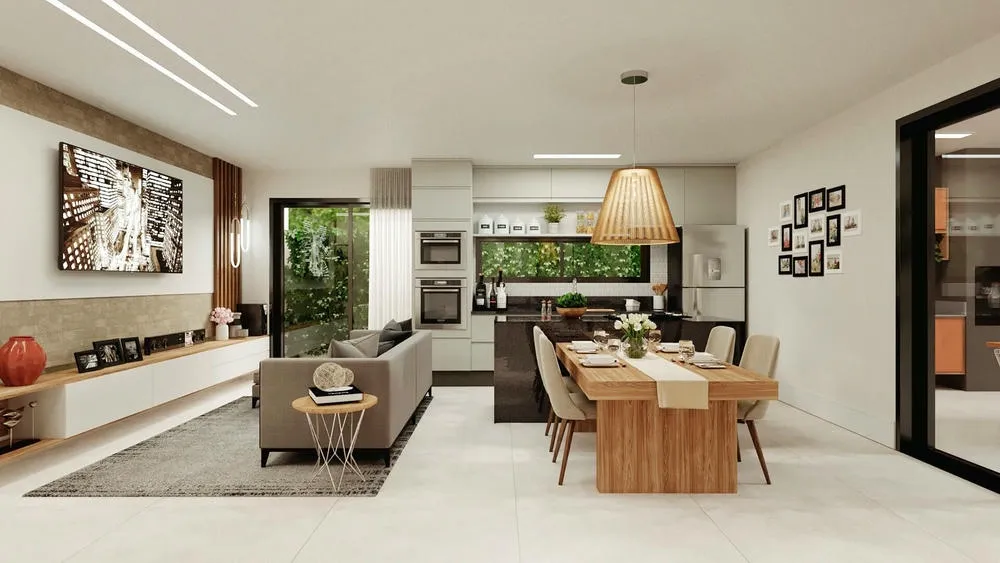
The trend of kitchens integrated with the living room continues to be very popular. This is a classic approach that allows the kitchen to become an integral part of the house. The created space can offer more dynamism to users and provide a larger and more functional living environment.
A tip for integrating living rooms and kitchens is to combine an island with a high countertop. The island can be used for food preparation, while the high countertop can serve as an informal dining table. This design is ideal for residents who prioritize agility in the kitchen, with more practical and optimized meal preparation.
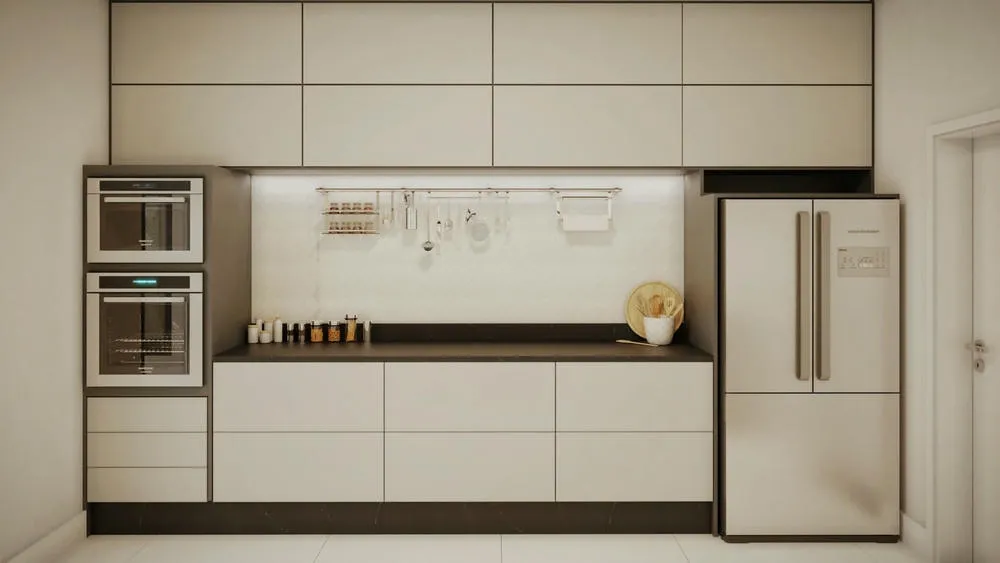
Minimalist cabinets remain among the most popular trends of the moment. Their design is characterized by straight lines and neutral colors, designed to be functional without sacrificing beauty. Minimalist furniture is perfect for those who seek a more sober and modern style for interior design. It conveys a sense of cleanliness, organization, and simplicity.
For those who prefer minimalist cabinets, we recommend those with light wood or white finishes. Their handles can be discreet or even absent. This type of cabinet is easier to clean and makes your kitchen more attractive.
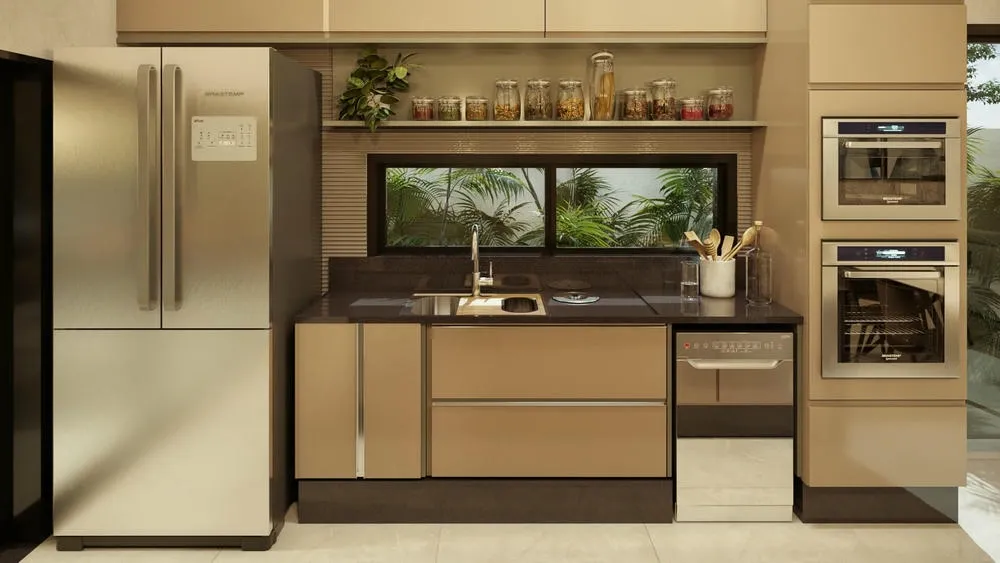
When it comes to planned kitchens, integrated appliances are almost unanimous. The furniture design starts to include the appliances, creating specific places for each one to fit. This integration not only helps save space but also makes your kitchen more functional and elegant.
A great example of integrated appliances is refrigerators and freezers that blend into the kitchen cabinets. This is an increasingly common interior design project. The integration ensures that the appliances camouflage into the aesthetics of the cabinets, creating a minimalist and uniform look.
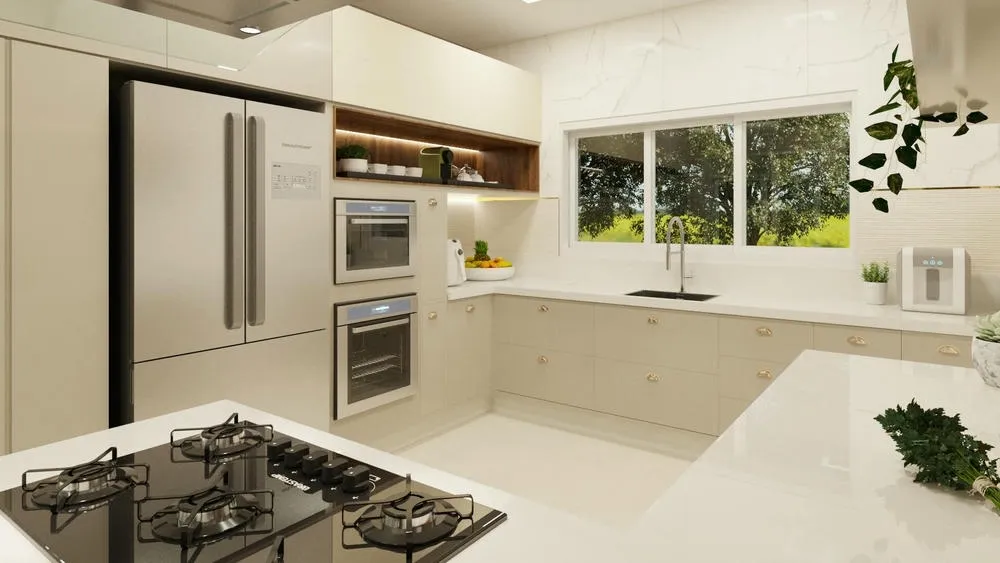
Quartz countertops are becoming a popular choice for planned kitchens. Quartz is a durable, resistant, and aesthetically pleasing material. Its bright and minimalist appearance ensures a perfect design for modern, elegant, and functional kitchens. It is also quite versatile and can be found in a range of shades.
A tip for applying quartz countertops in your project is to study the style you want to create. Through it, you can understand which type of quartz fits best in your kitchen. Quartz countertops are elegant and easy to clean. If you want the effect of quartz but can't spend a lot, we recommend adhesive stickers and resin to wrap the stone.
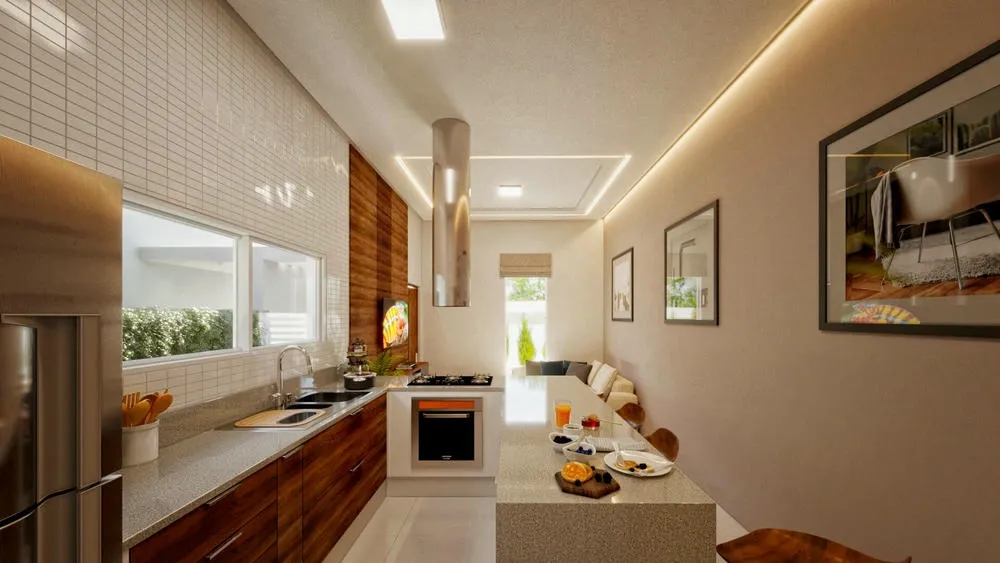
Recessed lighting is another growing trend in interior design. This approach seeks to generate cozy and functional atmospheres for the kitchen, making the space more welcoming and inviting. The lights can be recessed in plaster, PVC ceilings, and other materials that allow their installation.
A tip for thinking about recessed lighting in a kitchen is to identify the needs of each area. Recessed lights can create general ambient lighting, highlight decorative elements, and even enhance meal preparation points.

Even though light tones are more popular for kitchen projects, darker tones have become a market trend. Palettes with black, gray, brown, and dark blue have become more chosen for planned kitchens. Dark tones add a sophisticated, unique, and more elegant look to the house's design.
An example of dark colors for a planned kitchen could combine: black cabinets, a white quartz countertop, and recessed lighting. This design creates an interesting contrast between the shades and makes the environment more attractive.
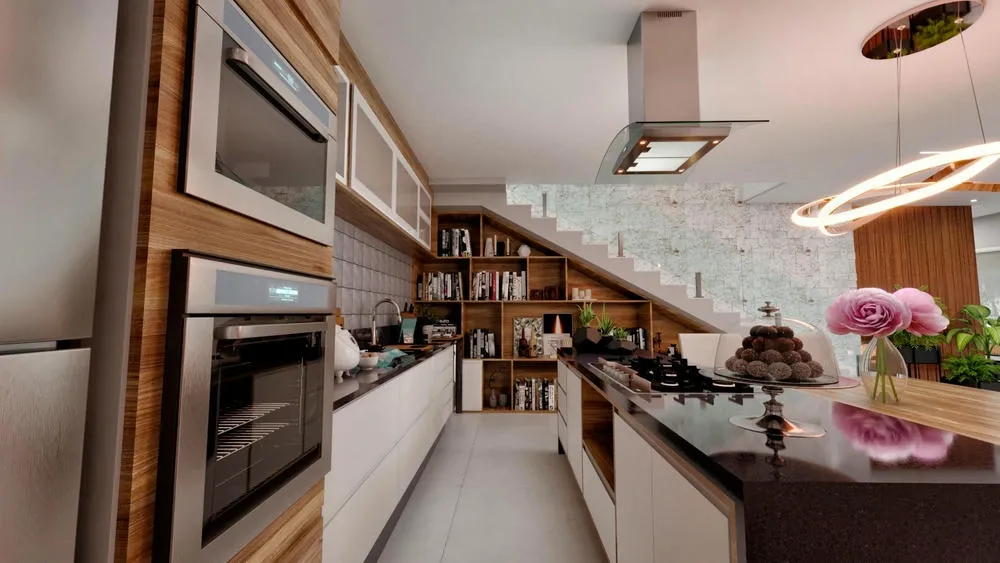
Open cabinets in the kitchen have gained popularity in recent years. They are characterized by the absence of doors and by their more accessible nature. Open cabinets are indicated for residents who prefer to have kitchen utensils arranged and at hand.
This type of design combines mainly with wooden shelves and minimalist furniture. The open approach helps create a unique look for the kitchen, using the items themselves as decorative elements. They are a functional option and allow utensils to be accessible and organized.
From integrated areas to dark colors and open cabinets, trends in planned kitchens are always evolving. If you are thinking of renovating or building a new kitchen, consider some of these trends to create your space. Remember that, above all, the kitchen should meet your demands and your lifestyle. Only then will it become a functional, practical, and aesthetically attractive environment for you.
 https://creativecommons.org/licenses/by-nc-nd/4.0/https://creativecommons.org/licenses/by-nc-nd/4.0/ArchShopArchShop
ArchShop is redefining the concept of residential architecture in Brazil, making high-quality projects accessible to everyone. Combining over 20 years of expertise in the construction sector with technological innovation, the company offers a complete digital platform that simplifies and democratizes the process of building the dream home.
See also
In this article, we will share valuable tips on how to optimize small spaces in apartments and houses.
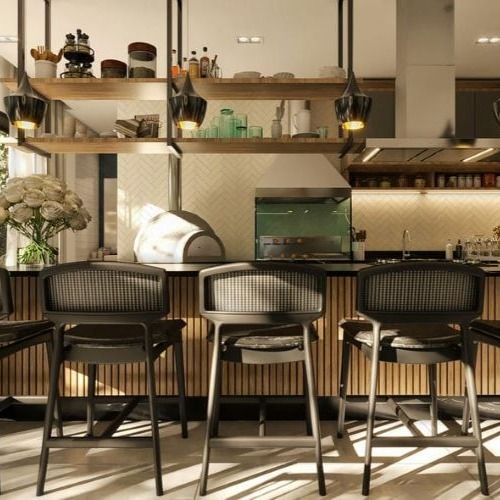
Explore 23 projects with a gourmet space, from compact houses to high-end models with a pool and barbecue. Find the perfect plan for your home!
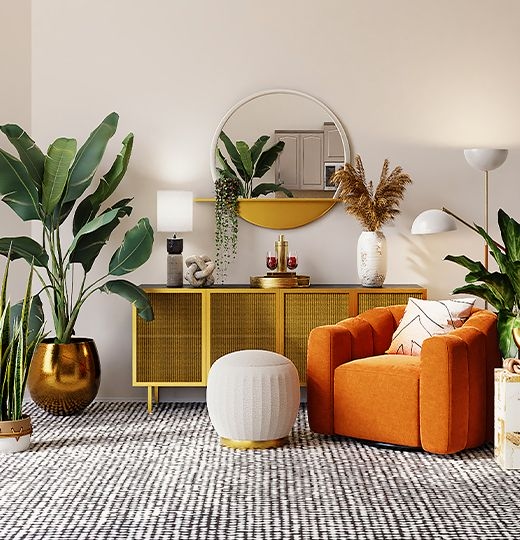
In this article, we will highlight the trends that continue to evolve, while also presenting some exciting new developments in the field of architecture, interior design, and decoration.

In the world of colors, there are three main categories that describe their visual and emotional characteristics: warm, cool, and neutral colors.
Advertise or Publish
We believe that the best ideas arise from the exchange of experiences and the sharing of different perspectives. Open the doors to new opportunities and be part of our blog! If you have an interesting article, an amazing work, a product or service that deserves to be highlighted, contact us.